Sunday, June 9, 2013

Review of Christopher Ward C60 Trident Automatic

Model # C60
 
Brand:  Christopher Ward
Model:  C60 Trident Automatic

Movement:  Swiss automatic
Material:  stainless steel case, leather strap
Complications:  date display
Price:  MSRP  $550 USD


Plenty of photos follow the review.  Click on the pictures to enlarge.

 
I was initially excited to receive this Christopher Ward C60 Trident automatic.  After seeing them online and looking at their designs and believing the hype on their web site, I was sold.  Let me state this right now, the Christopher Ward C60 is a good watch, but not a great watch.  The company is trying to produce a decent piece and overall their customer service is very good, but not perfect.  More on these two items in a bit.  Suffice to say, even though I rate this watch as ‘good’, I am disappointed enough with this watch and my experience with the company to not purchase a Christopher Ward product again.  I will explain fully later in the review.

Christopher Ward is a relatively new (since 2004) and small British company that has their watches manufactured in the Jura region of Switzerland.

The company prides itself on customer service and tries to market their watches as keepsakes to be handed down from generation to generation with exceedingly high quality and strong value.  This is laying it on a little thick.  Judging from the C60 I purchased, this watch is really nothing special and is almost worth the money they charge, but only after they make some QC adjustments.  There are better values around, as in Tissot and Hamiltons of comparable design and price.  Hey, if these small watch companies want to compete in the rough and tumble world of watches, they need to know where they stand in regards to their product and that’s why I do these reviews.

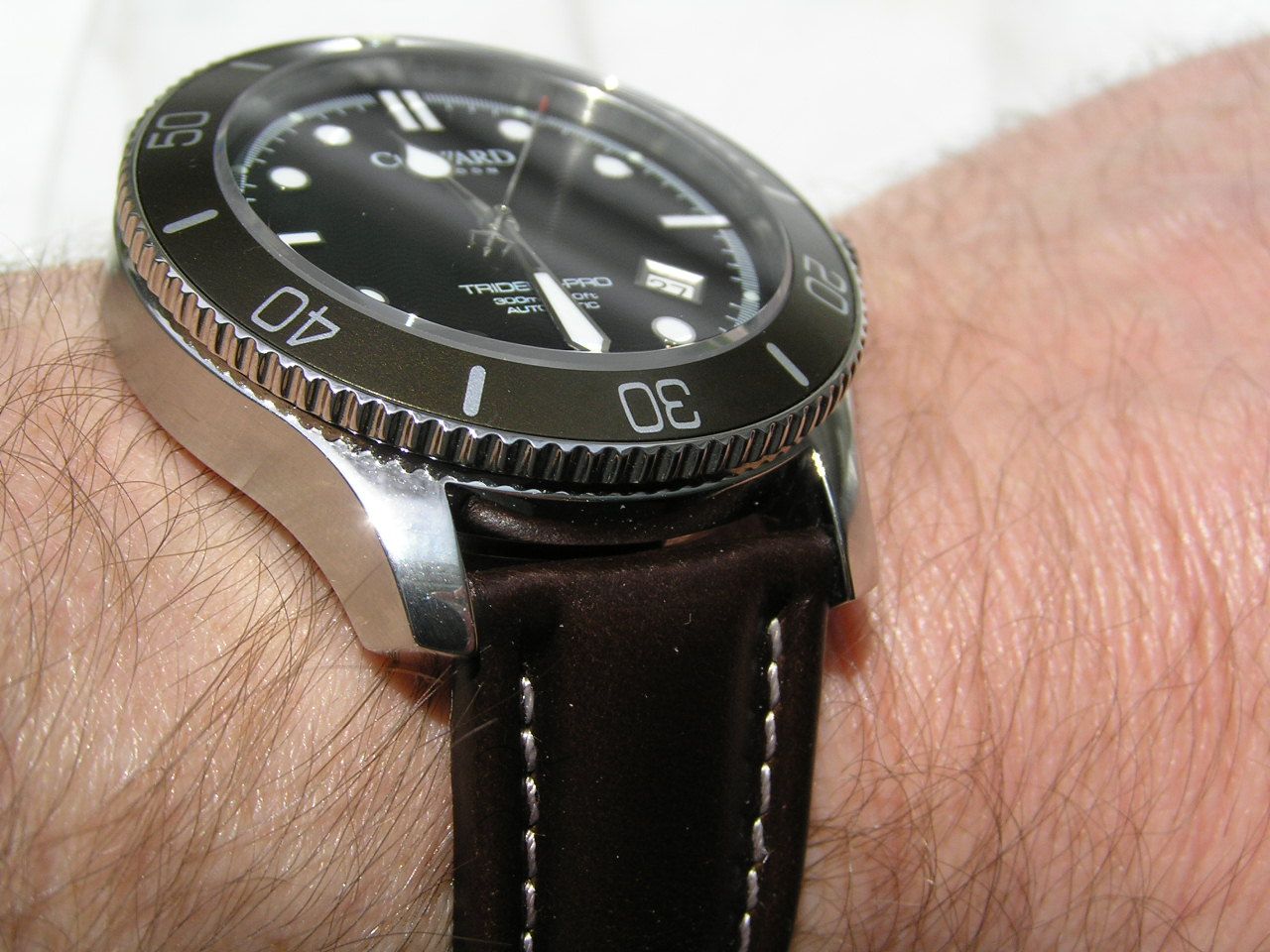
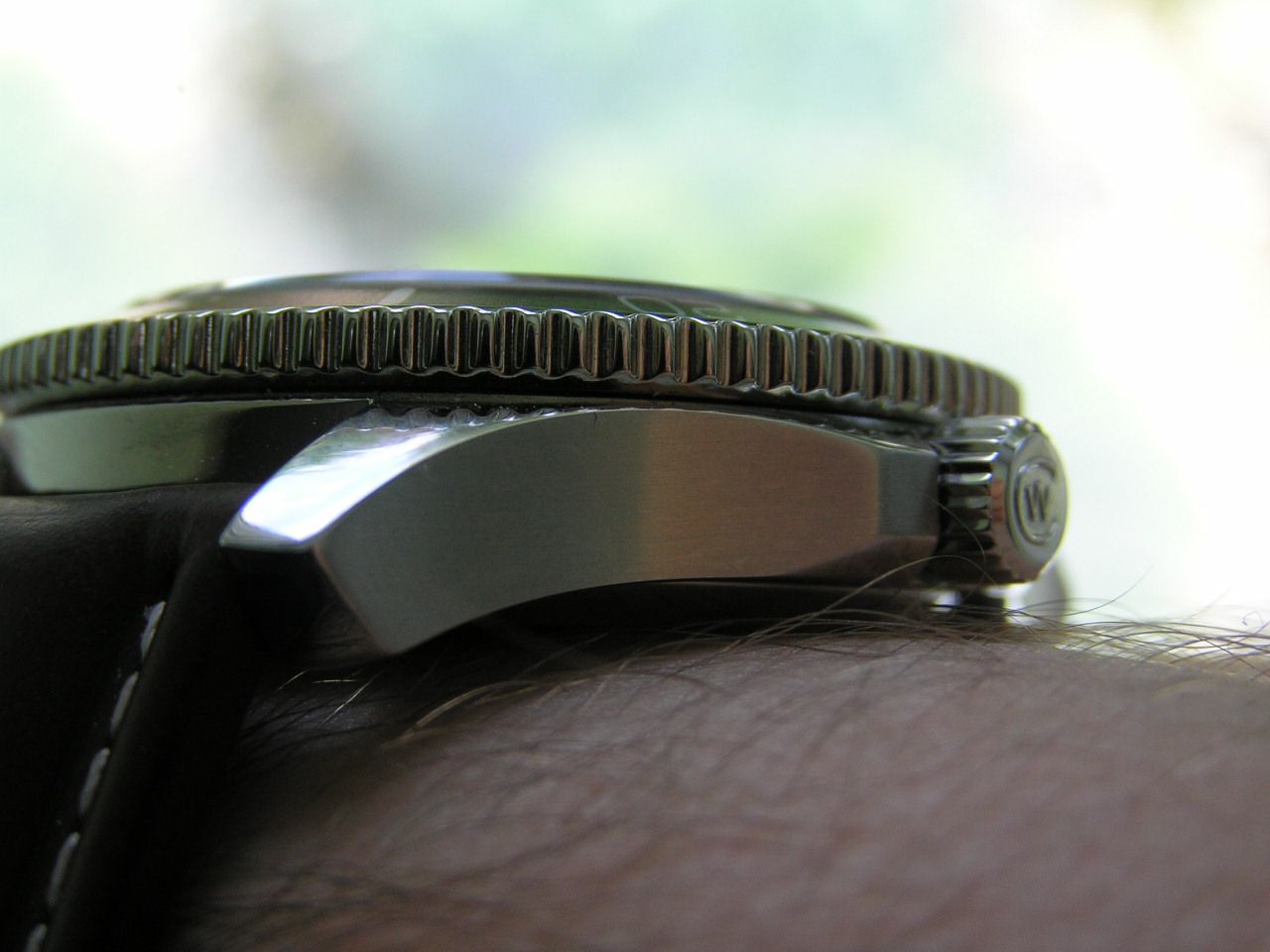
To begin with, the C60 Trident sports a ‘marine grade’ stainless steel case with brushed and polished finish.  The lugs have a somewhat awkward cut to them at the bottom that looks too severe to my eye.  This design doesn’t cause any discomfort while wearing, it just makes the lugs look too stubby.  Case diameter is 43mm without the signed, screwdown crown; 47mm crown inclusive.  Case thickness is 12.6mm, lug spacing is 22mm.  The case flares out a bit to form crown guards that run about one-third the way up the crown, not overly protective, but not obtrusive, either.  The crown does screw down a satisfying three-plus turns to lock.

The caseback is polished and screws down.  The caseback is decorated with a trident logo and has the wording ‘Deus Maris Altum’ which means ‘Deep Sea God’ in Latin.  Okay, this watch is rated at 300 meters of watch resistance, which to me is more ‘Medium Sea God’ instead of ‘deep sea’, but I guess I’m just being difficult.

One of my quality control quibbles pertains to the case, specifically the finishing (or rather, lack thereof) on the inside edges of the lugs and the sloppy, shallow spring bar holes in the lugs.  I realize that many watches lack proper finishing on the inside edges of the lugs and/or between the lugs because often, you can’t see this area, but for a watch that is sold on both a bracelet or strap, the lugs should be finished properly to prevent any unfinished areas from showing when the watch it worn or when it is held and examined. 

If you look closely, you can see the lack of finishing on the insides of the lugs on the C60.  Worse, the spring bar holes are incredibly shallow and sloppy looking.  Luckily, the strap has remained in place without popping off, but I was terribly disappointed in the quality of the spring bar holes, so much so that I let the three principles of the company (Chris Ward, Peter Ellis and Mike France) know about this problem, since they solicit feedback directly on their web site, but alas, I heard nothing back from any of the three.  Disappointing again, especially if you tout customer service and ask for feedback directly.  Note to Mr. Christopher Ward, respond directly to your customer’s complaints or stop asking for their feedback!

The dial on the C60 was one of the elements that initially attracted me to this model.  It is a black wave-pattern dial somewhat reminiscent of the older Omega Seamaster wave dials.  The dial has round applied markers, a double rectangular marker at the 12 position and single rectangular markers at the 3, 6 and 9 positions. 

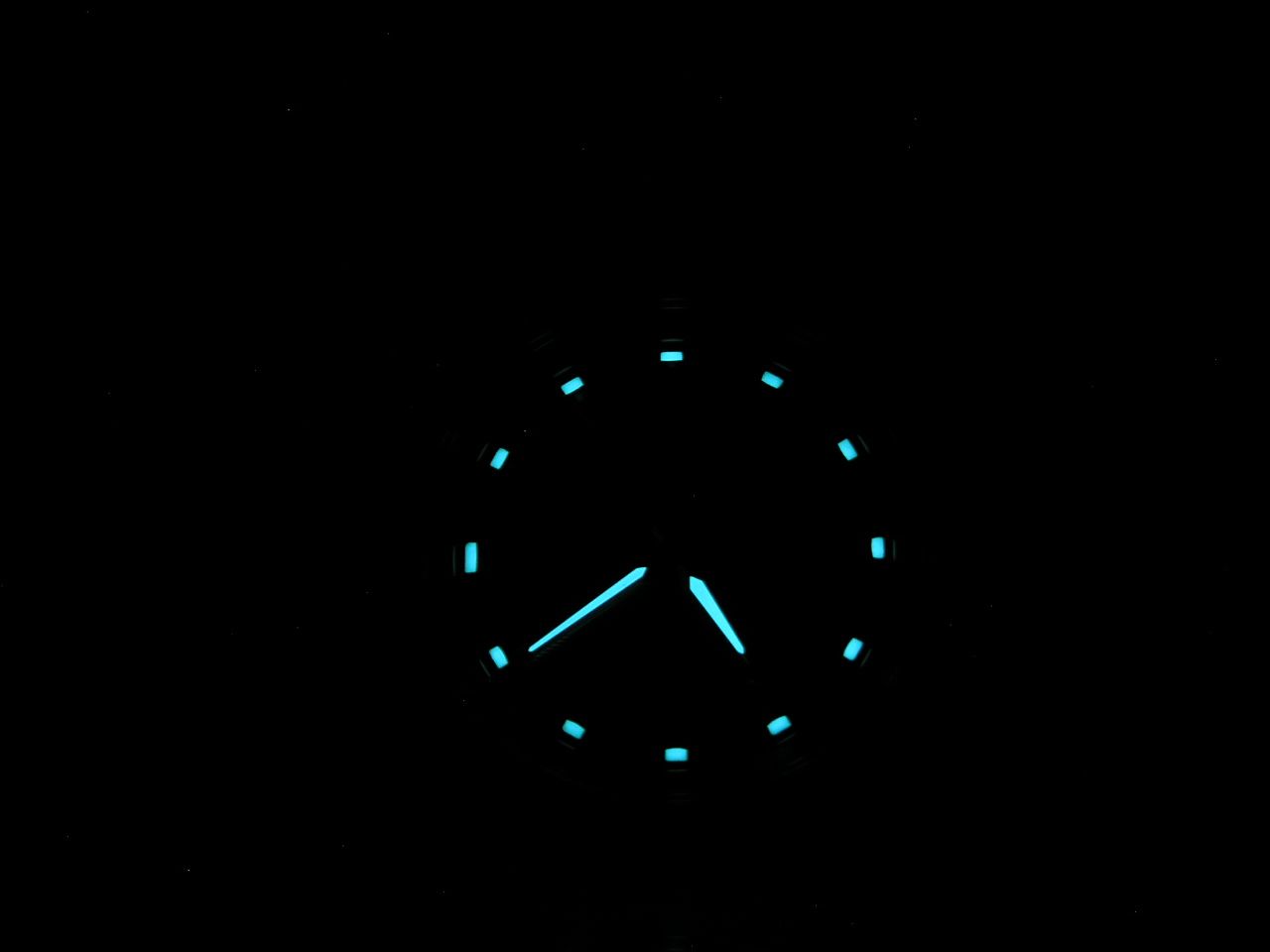
All the markers are filled with white lume, as are the hour and minute hands.  The seconds hand is a simple stick style with a red tip (no lume) and a cool trident fork on the tail end.  There are also small lume dots on the outer edge of the applied markers that are set in a printed chapter ring with minute and smaller hash marks.  These lume dots tend to glow brighter than the larger markers.  Lume is SuperLuminova and the quality is good, being the in-vogue blue color, while the lume pip on the bezel glows the standard green.

The hands are semi-skeleton (semi because they are only skeletonized for a small portion of their overall length).  The handset is rather unique and does look good.

The wording ‘Chr. Ward’ and ‘London’ appear below the 12 position, while ‘Trident-Pro’, ‘300m/1000 ft’ and ‘automatic’ appear above the 6 position.

A quickset date window is located at about the 4:30 position on the dial.  The window is surrounded by a silver frame and the date wheel is black on white.  Alignment within the window is good. 

Many WISes I have talked to find the location of the date window on the C60 to be off-putting and not in keeping with the overall clean lines of the watch.  It does look a bit odd being at 4:30 as opposed to even just the 4 position.

The dial is capped by a flat 4mm anti-reflective sapphire crystal that protrudes slightly above the bezel.  The bezel is a 120-click unidirectional type that rotates easily and has a moderate about of backlash.  The first 15 minutes are marked off with printed markers, while the remainder has standard arabics every 10 minutes with a larger marker between the arabics at the five minute marks.  Overall bezel action on my C60 is acceptable, but I have heard from another WIS that the bezel action on his brand-new C60 was not acceptable to him (too much free play and bad alignment), so again, QC issues are rearing their ugly head.

The C60 Trident is available in a couple of dial colors and a variety of bezel colors and the other reason I purchased this watch was because of the khaki (olive greenish) colored bezel.  It is a nice color that you don’t see on very many other watches.

Inside the C60 is a Swiss automatic movement, either an ETA 2824-2 or a Sellita SW200-1.  Again, I have a problem with this.  The Sellita is a fine movement and some of the Sellitas I own perform better than the comparable ETA, but the Sellita is basically a copy of the ETA and is NOT an ETA.  The way they describe it on their web site, they make it sound like the movements are the same but they are not.  Come on, Christopher Ward, have transparency here and let us know exactly what movement is in the C60 each of us buys.

Since the watch has no display back, I don’t know what is inside my C60.  It’s like buying a General Motors car when they started using engines from all their divisions and you never knew if your Chevy had a Chevy engine, a Buick engine or a Pontiac engine in it.

I suspect my C60 has the Sellita in it, that’s my guess.  The movement winds and sets fine and has performed without any problems, running at -4/24 hours with an expected power reserve of 41.5 hours.

I originally ordered my C60 Trident on the stainless steel bracelet, but upon receiving the watch and attempting to size the bracelet, my enthusiasm for Christopher Ward pretty much went out the window.  The bracelet utilizes those irritating and insufferable pins and collars and the bracelet that was on my watch had the tightest pins and collars I have ever encountered on the hundreds of watches I have sized.  I could only successfully remove one pin and move about one-quarter of another before I gave up in utter frustration.

I contacted Christopher Ward’s (‘CW’ for short) customer service, explained my problem and they did get back to me promptly and didn’t give me any guff about the situation, so I did appreciate that, but they also did not address the problem, other than accepting the bracelet back for a refund and exchanging it for one of their leather straps. 

So I sent the bracelet back to them, they refunded the extra cost of the bracelet ($85 USD) and sent me the leather strap I selected (or so I thought).  When my new strap arrived, it was not the model I ordered; it was a pilot style with rivets and a deployant clasp (I wanted a standard strap with a standard pin buckle). 

They did refund the cost of my initial return shipping on the bracelet which I applaud them on, but I was not about to go through this song and dance again to return the mistakenly shipped strap for the one I really wanted.  I put the CW strap on a different watch and installed the aftermarket 22mm oily dark brown leather strap that is shown in the pictures.

To CW’s credit, the quality of the leather strap I received was very good and the strap itself looks nice and wears decently, although I am still not a fan of deployant clasps on straps, especially butterfly style deployants.

After this experience, I came away with more thoughts on the company.  First, if you are to compete in the United States, you have to have a U.S.-based customer service and repair center to accommodate people like me that don’t want to wait two-weeks to mail stuff back to England and then receive replacements from England, not to mention the costs involved in doing so.  I don’t think I’m out of line here. 

Secondly, while overall, CW’s customer service was responsive, they shipped me the wrong item.  We all make mistakes, but after the lousy QC on the bracelet, the sloppy spring bar holes and the lack of inside lug finishing on the case, I decided to wipe my hands clean of this experience and sell my C60 for a substantial loss.  I was past their generous 60-day return policy (which in hindsight I should have used and just returned the entire watch to them for a refund) but we all live and learn, I suppose.

The bracelet was a solid link stainless steel three-link design with a signed clasp and machined deployant, but it had a somewhat cheapish feel to it.  The same WIS friend that had the bezel issues with his C60 also had bracelet problems with overly tight pins and collars and an ill-fitting spring bar/bracelet end link and a rattle-prone clasp.  So I am not alone here.  And just so you know, this bracelet represents the second, improved design for the C60.  Hmmm.

Presentation consists of a large pale yellow two-piece outer box with a black padded inner box.  It looks fine, but they also offer a deluxe box for an extra cost.  The standard box is perfectly suitable.

I did my best to be friends with the C60 and there are elements of the watch that I do like, but the combination of not knowing exactly what movement is inside, the QC issues (which I feel are not that trivial), the customer service snafu and the lack of response from Mr. Ward himself all have conspired to leave me with a negative overall view of this watch and the company.  Sorry, gents, that’s the way I see it. 

Pros:  nice wave dial, unique handset, great bezel color, cool trident on end of seconds hand
 
Cons:  niggling QC issues, cheapish bracelet, some design elements don’t jive, ponderous customer service, what is the movement?
 
Verdict:  while CW is trying their best, it’s not good enough.  My experience with a Christopher Ward watch was less than perfect.  IMHO, there are better values out there for your hard-earned dollar at this price point.

 
Thanks for reading and enjoy the pictures.
 
Excelsior!
 
-Marc


Thursday, May 23, 2013

Review of Omega Seamaster Pro Ceramic

Model # 212.30.41.20.03.001


Brand/Model:  Omega Seamaster Pro Ceramic
Movement:  Swiss automatic
Material:  stainless steel case and bracelet, ceramic bezel insert
Complications:  date display
Price:  MSRP $4,400 USD


Plenty of photos follow the review.  Click on the pictures to enlarge.


I’ve been looking forward to writing this review for quite some time. The Omega Seamaster Pro is one of those truly iconic watches that every serious watch collector should have in their collection.  About two years ago, Omega upgraded the Seamaster with several new features and practically every one of the upgrades made the watch better.  

I have owned both the ‘standard’ and ceramic bezel versions of this watch, and I am firmly in the new ceramic bezel camp.  Don’t get me wrong, the older version is still a great watch and can be had used at very good prices, while the newest version is now becoming more available on the used market, selling for roughly 30-percent less than the MSRP listed above.  A clean, used Omega Seamaster is an excellent value.

First off, I wanted to run down the changes Omega made between the old and new version.  The biggest change is the bezel, going from metal (I believe aluminum insert or steel insert, not exactly sure, so don’t quote me) to a ceramic insert, which is all the rage these days (Rolex, Tudor, ORIS, Audemars Piguet and many others are all using ceramic bezel inserts on various models).  

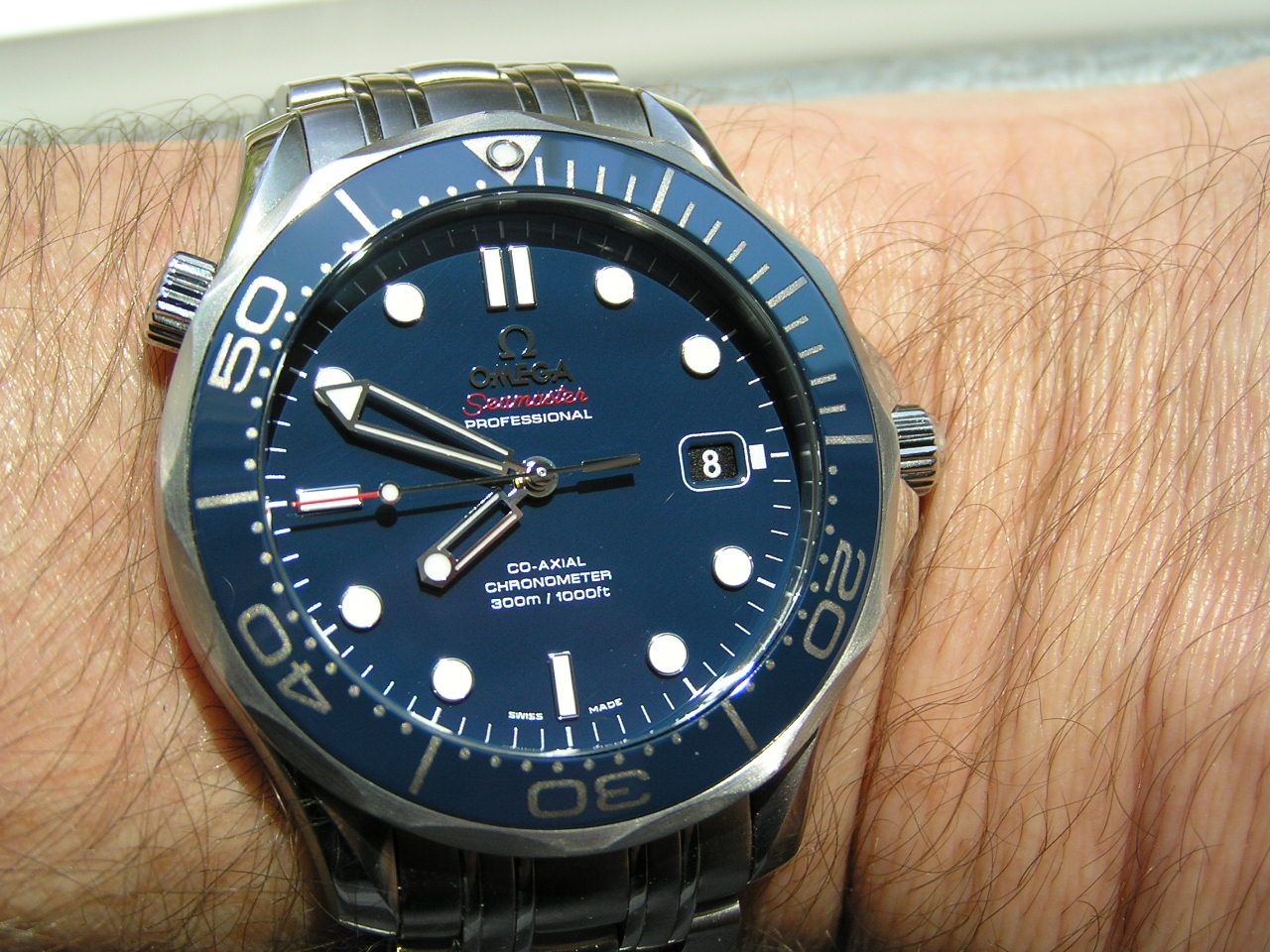
The dial on the new version drops the ‘wave’ pattern dial (probably the one feature most people decry losing) and moves to a solid, gloss finish.  The updates also include applied markers, applied logos, a white on black date wheel instead of a black on white wheel, blue lume on the markers and green lume on the minute hand and bezel pip only instead of all green lume, an improved bracelet with screws that neatly secure the link pins instead of those dreaded pins and collars (big improvement here!) and a slightly different clasp and pushbutton assembly.

Many of the most liked features (the skeleton hands, the case size, the style of the bracelet links, the chronometer rated Co-Axial escapement movement, 300 meter water resistance, HEV) remain the same.  As I said earlier, Omega did a bang up job renewing the Seamaster without changing its most iconic elements.  It’s just a better watch now and still a stone-cold classic.

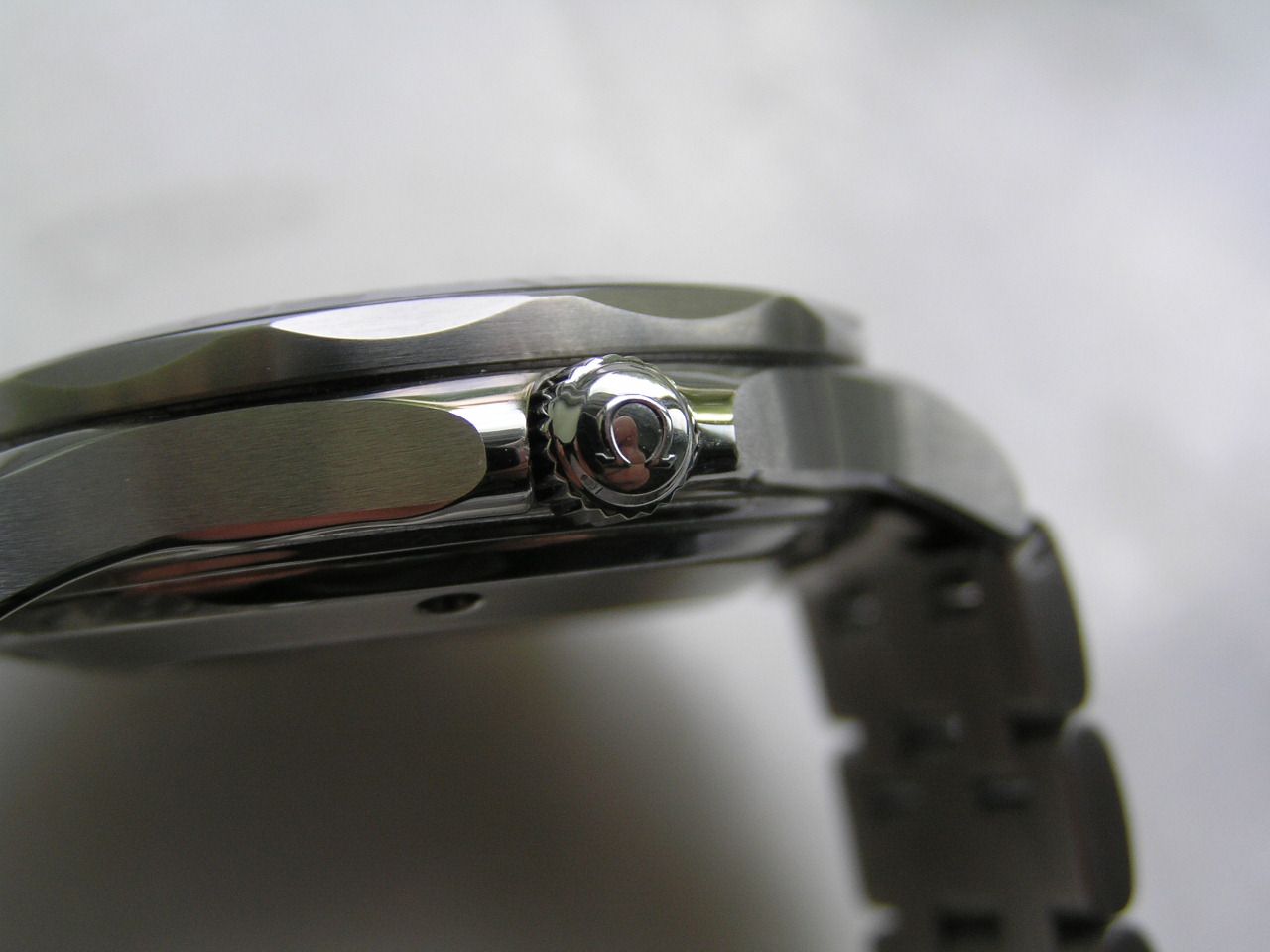
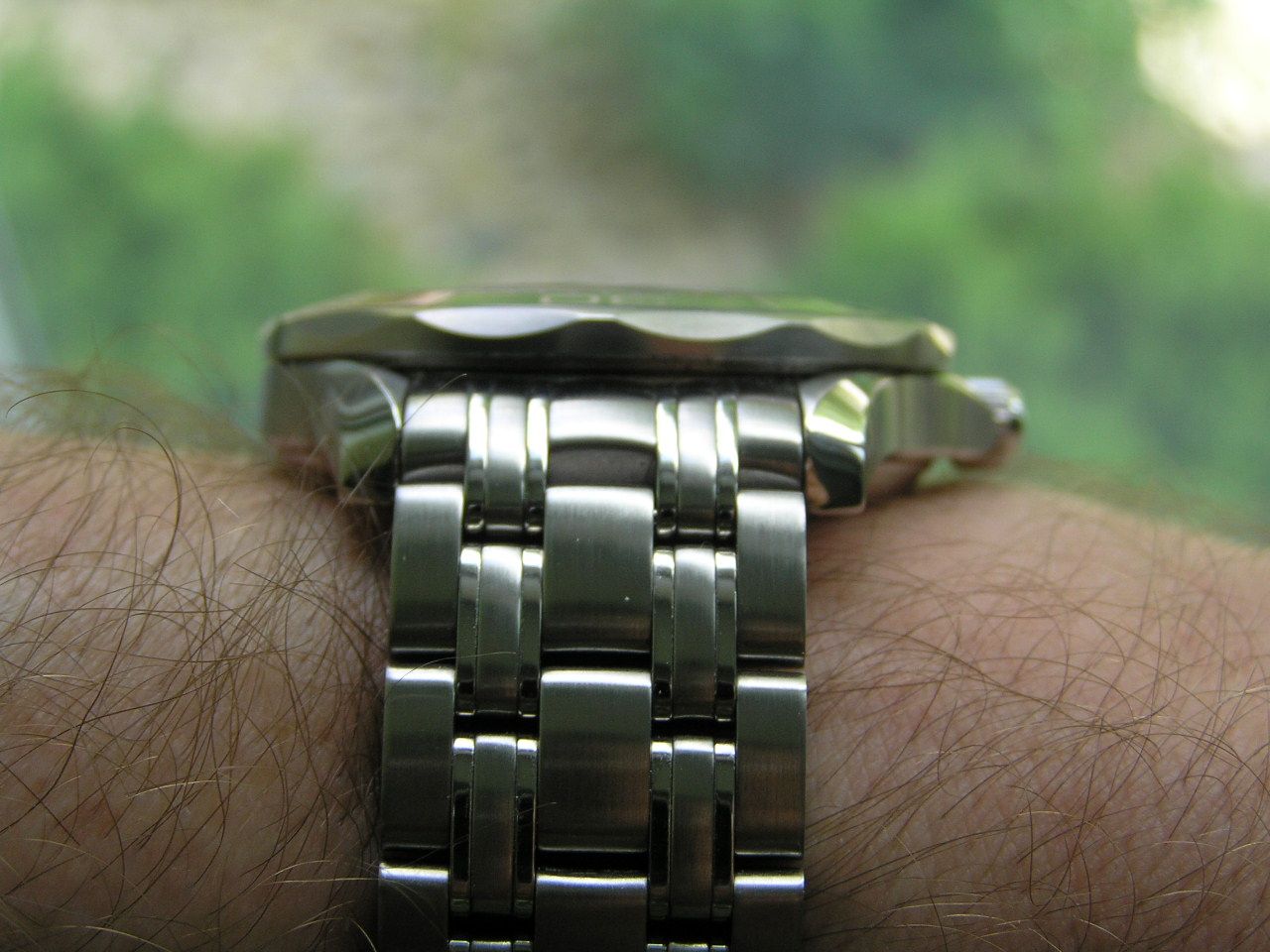
The ceramic Seamaster starts with a beautifully brushed and polished stainless steel case (with those sensual Omega curved lugs) that measures 41.1mm without the signed screwdown crown, 45.5mm with the crown included.  A signed helium escape valve (HEV) is located at the 10 position on the left side of the case.  Case thickness is 12.8mm, lug width is 20mm.  

The caseback is heavily embossed with the Seamaster seahorse logo and screws down.  Omega does a wonderful job with the embossing of their casebacks...they often remind me of a proof coin, they are so smooth, shiny and finely detailed.  Job well done!

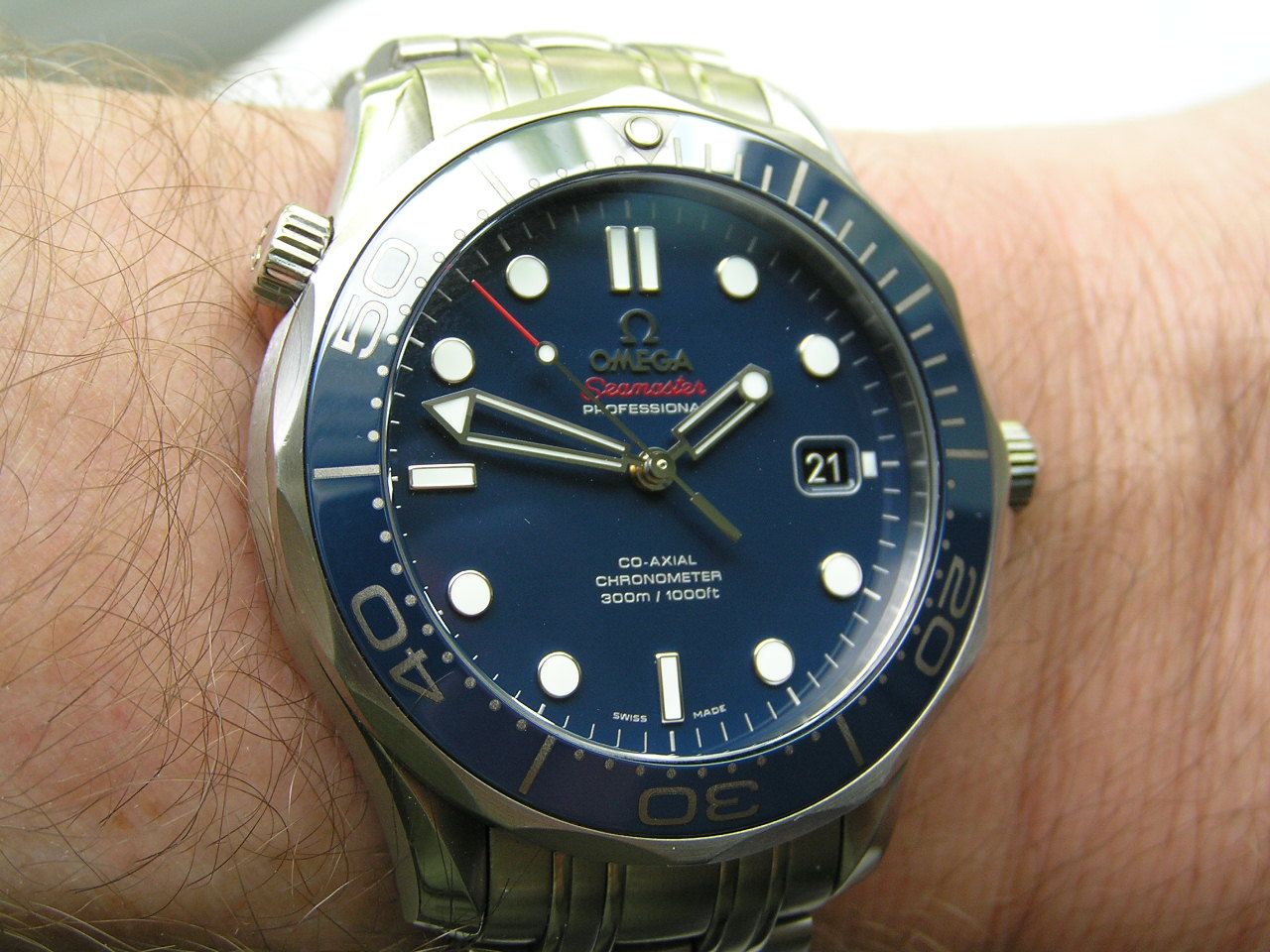
The dial on the ceramic Seamaster, while not the famous wave design, has such a deep gloss finish, it looks like a freshly waxed car in certain light.  It’s a true stunner!   The shade of blue is just about perfect and will change a bit depending on the lighting conditions, but most of the time it’s a pure, pleasant shade of medium blue.  

The round markers are applied, with a double rectangular marker at the 12 position and single rectangular markers at the 3, 6 and 9 positions (abbreviated at the 3 due to the date window).  The Omega logo is applied and looks great, the right touch of class on an overall clean dial.  Below the Omega logo is the wording ‘Seamaster’ (in red) and ‘Professional’ below that.  Above the six position, are the words ‘Co-Axial’, ‘Chronometer’ and ‘300m /1000ft’.  It might sound like a lot of text, but it’s not intrusive and doesn’t detract from the functionality of the dial.

While I’ve never been a big fan of skeleton hands, and to be honest, they were pretty much the only feature that kept me from purchasing a Seamaster for a long time, I have come to really like the hands on the Seamaster.  They are crafted in such a way as to look expensive yet purposeful at the same time and they are easy to read, thanks to the luminous material at their ends and along their sides.  The seconds hand is a simple stick style with a ball end and a red tip, just like the older version.

The date window has radiused edges and is outlined in white for easier viewing.  The white on black date wheel is a big improvement and is easy to see.  The quickset function works fine and wheel alignment inside the window is perfect.

Compared to the torch-like green lume of my first Seamaster, the new blue lume on the ceramic Seamaster is a bit of a let-down to me.  It’s also a bit odd that they made the ends and edges of the minute hand in green lume and the rest of the dial in blue lume.  The bezel pip is also in green lume.  The blue lume doesn’t glow as brightly as the green used to.  The lume quality is still good, but it doesn’t scream Omega! like it used to.  I’ll let you be the judge.

The dial is capped by a slightly domed sapphire crystal.  The much talked about ceramic bezel looks good surrounding the dial.  The ceramic is finished in the same blue color as the dial, is glossy and smooth and has matte silver arabics and markers.  A lume pip inside an inverted triangle is located at the 12 position on the bezel.  The bezel is a 120-click unidirectional type.  Bezel action is smooth and precise and this bezel is much easier to turn (but not too easy) than my first Seamaster, which is a welcome change for me.

The Seamaster is a true dive watch and many owners use theirs for actual diving and wear them in wet conditions.  The Seamaster is factory rated at 300 meters of water resistance.  Needless to say, overall fit and finish is first rate.

Inside the ceramic Seamaster beats the venerable and well-regarded Omega Co-Axial automatic movement.  Caliber 2500D is based on an ETA 2892 movement with 27 jewels and beating at a somewhat odd 25,200 vibes per hour.  The Seamaster is chronometer certified and both Seamasters I have owned (standard and Co-Axial movements) have kept outstanding time.  The new ceramic Seamaster in my possession runs about +1 second over 24 hours and has an excellent 54 hour power reserve.  The movement winds butter smooth, sets and runs precisely and is just a joy to operate and wear.  Kudos to Omega for continuing to make this exceptionally accurate and reliable movement.  It just makes the Seamaster than much better.

The bracelet is a solid link multi-piece design crafted in stainless steel with brushed and polished pieces that look and feel great.  I’m so glad Omega ditched the annoying pin and collar link pins and replaced them with what I feel is the most elegant, simple and well-designed link pin system around.  All they did was design two easily removable screws (one on each side of the link).  You remove the screws, the pin comes out and then you replace the screws.  What could be easier?  Why more watch companies don’t use a system this simple and elegant is beyond me.

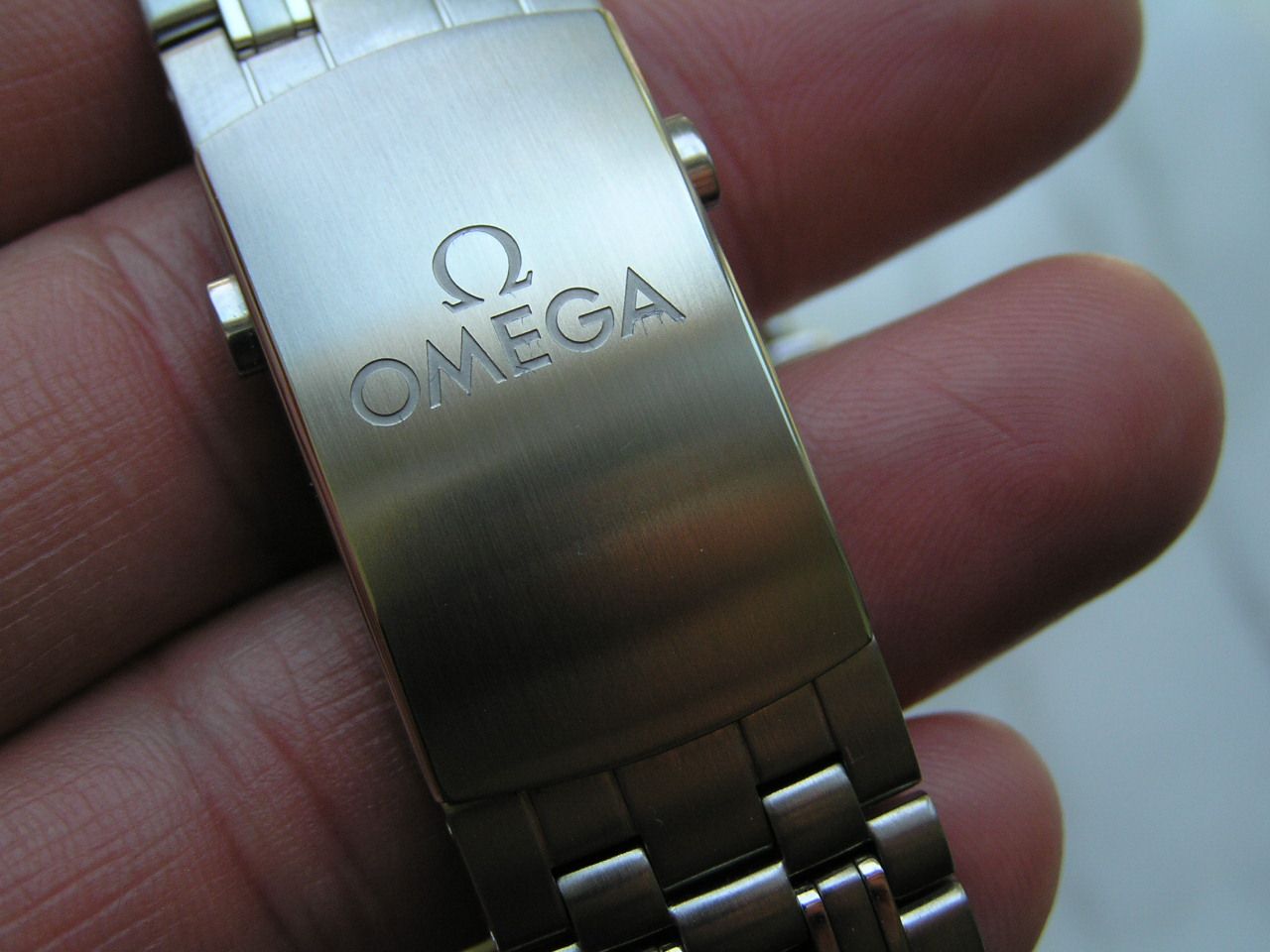
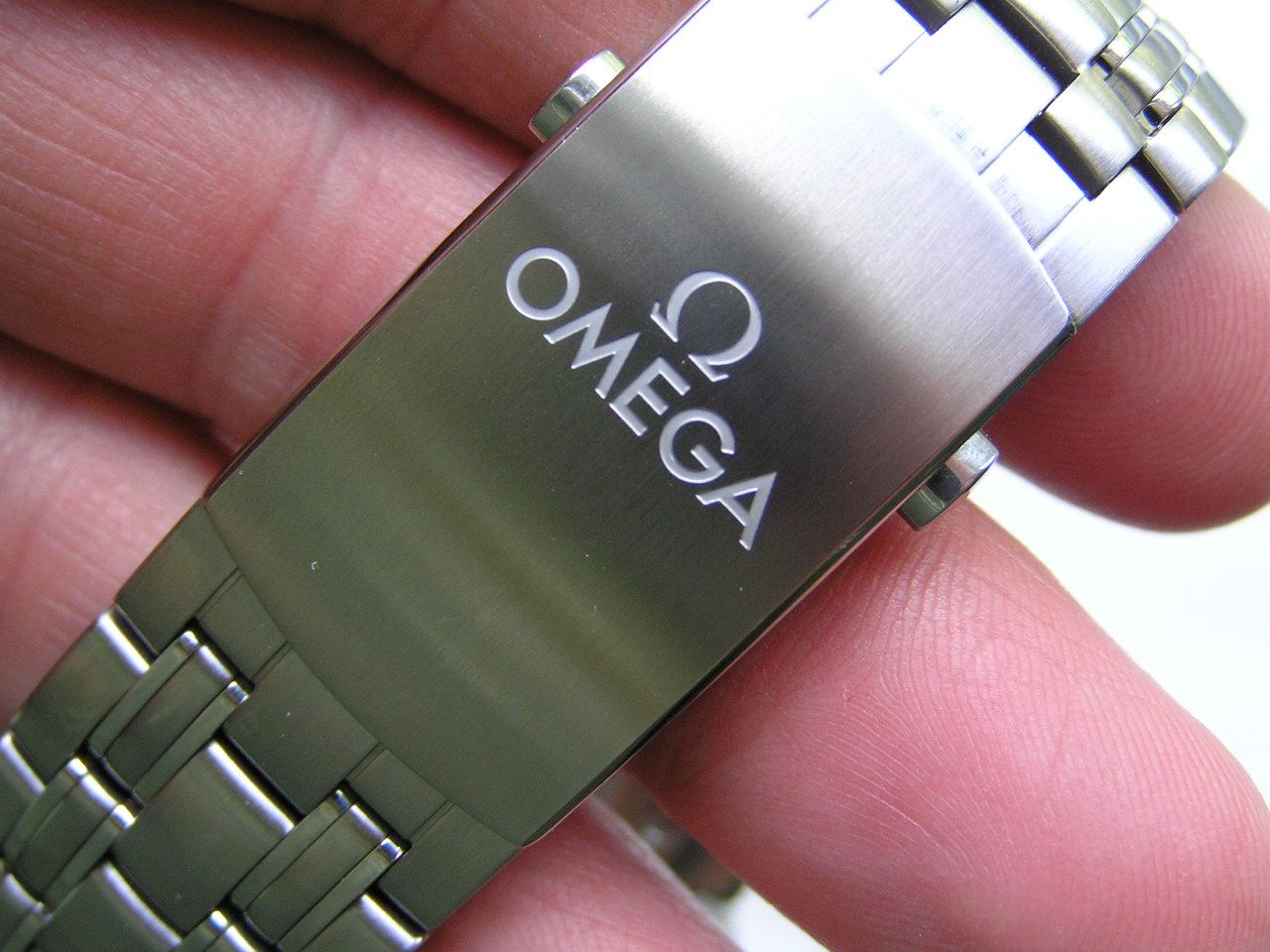
The bracelet measures 20mm both at the lugs and the clasp.  The clasp is signed and has larger pushbuttons to open the clasp, revealing the machined deployant.  The operation of the clasp is first rate.  A machined dive extension pops out from the rear of the clasp.  Since the lugs on the Seamaster are the popular 20mm size, you can put on a variety of stock or aftermarket straps or bracelets, making the versatility of the Seamaster one of its best features.

Presentation is standard Omega:  a heavy gauge white cardboard outer box and a big padded red inner box with a vinyl ‘wallet’ containing the warranty card, chronometer card, pictograms, etc.  Perfectly fitting for a watch in this price range.

Obviously, I think the Seamaster ceramic is a great watch.  It’s one of those pieces that could suffice if you had to choose just one watch to own, it’s simply that versatile, rugged, dependable, good-looking and iconic.  Do yourself a favor and buy a Seamaster Pro, preferably the new ceramic bezel model.  You will not be disappointed!

Pros:  useful and well-thought out upgrades to an already iconic watch, great movement, great accuracy, ceramic bezel, lovely dial, great build quality, easy to use link pin system

Cons:  new blue lume disappoints to a degree, crown could be a tad larger

Verdict:  one of the all-time greats!  The Omega Seamaster Pro ceramic is a winner through and through.  Just a superb overall watch that continues to shine in most all regards.

Thanks for reading and enjoy the pictures.

Excelsior!

-Marc


Saturday, April 20, 2013

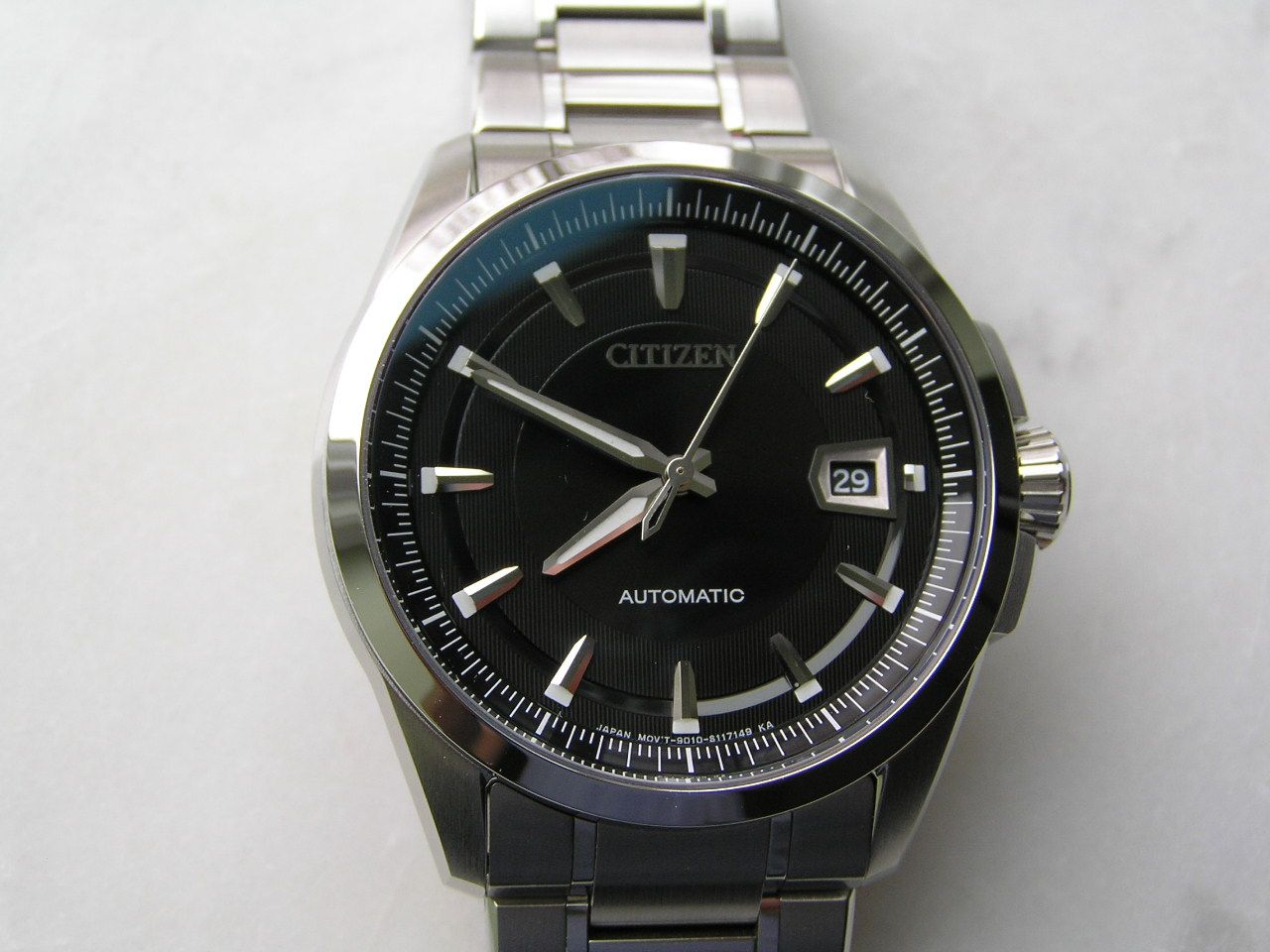
Review of Citizen Signature Series Grand Classic Automatic


Model # NB0040-58E

Brand/Model:  Citizen Signature Series Grand Classic Automatic
Movement:  Japanese automatic
Material:  stainless steel case and bracelet
Complications: date display
Price:  MSRP $999 USD


Plenty of photos follow the review.  Click on the pictures to enlarge.

Every now and then, I get the itch to explore the high end offerings of the Japanese watch brands like Seiko and Citizen.  For quite some time, Citizen did not have a high end automatic in their U.S. lineup.  Most of their high end pieces consist of Eco-Drive quartz or high accuracy quartz models, so I was pleasantly surprised and pleased when as part of their new Signature Series that Citizen included three automatic models on their high end available in the states.  

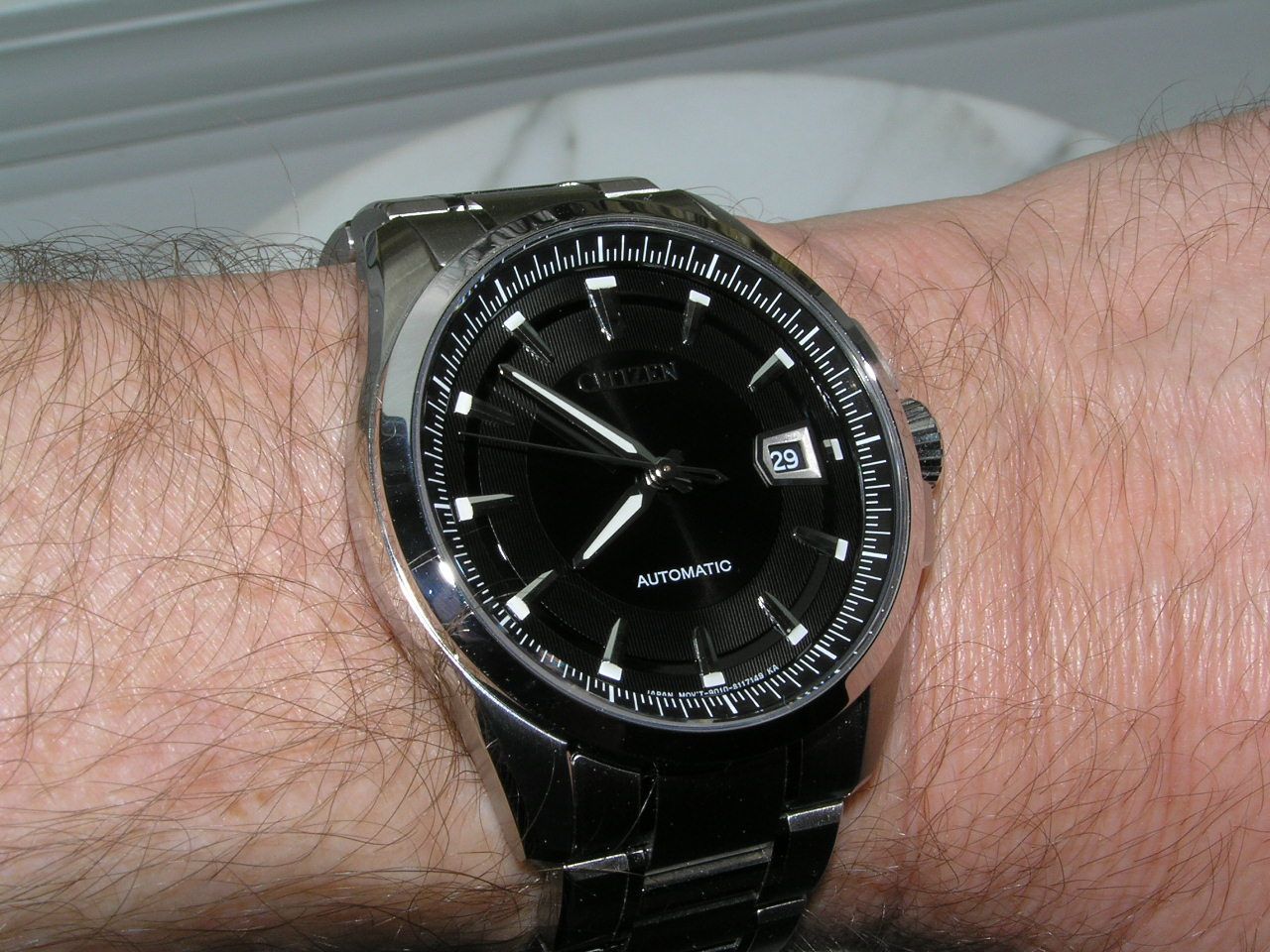
The Signature Series are watches that display a high degree of detail and hand-craftsmanship, whether they be quartz or automatic.  The Grand Classic automatic that is the subject of this review comes in three flavors, the black dial seen here, a silver/white dial with blue hands and a silver dial with silver hands on a leather strap.  I chose the black dial because it is the most traditional and is a versatile piece that can play the dual roles of sporty and dressy.

The Grand Classic automatic starts with a nicely finished all stainless steel case that is both polished and brushed, with a polished fixed bezel.  Diameter is 41.5mm without the crown, 44.5 mm crown included.  

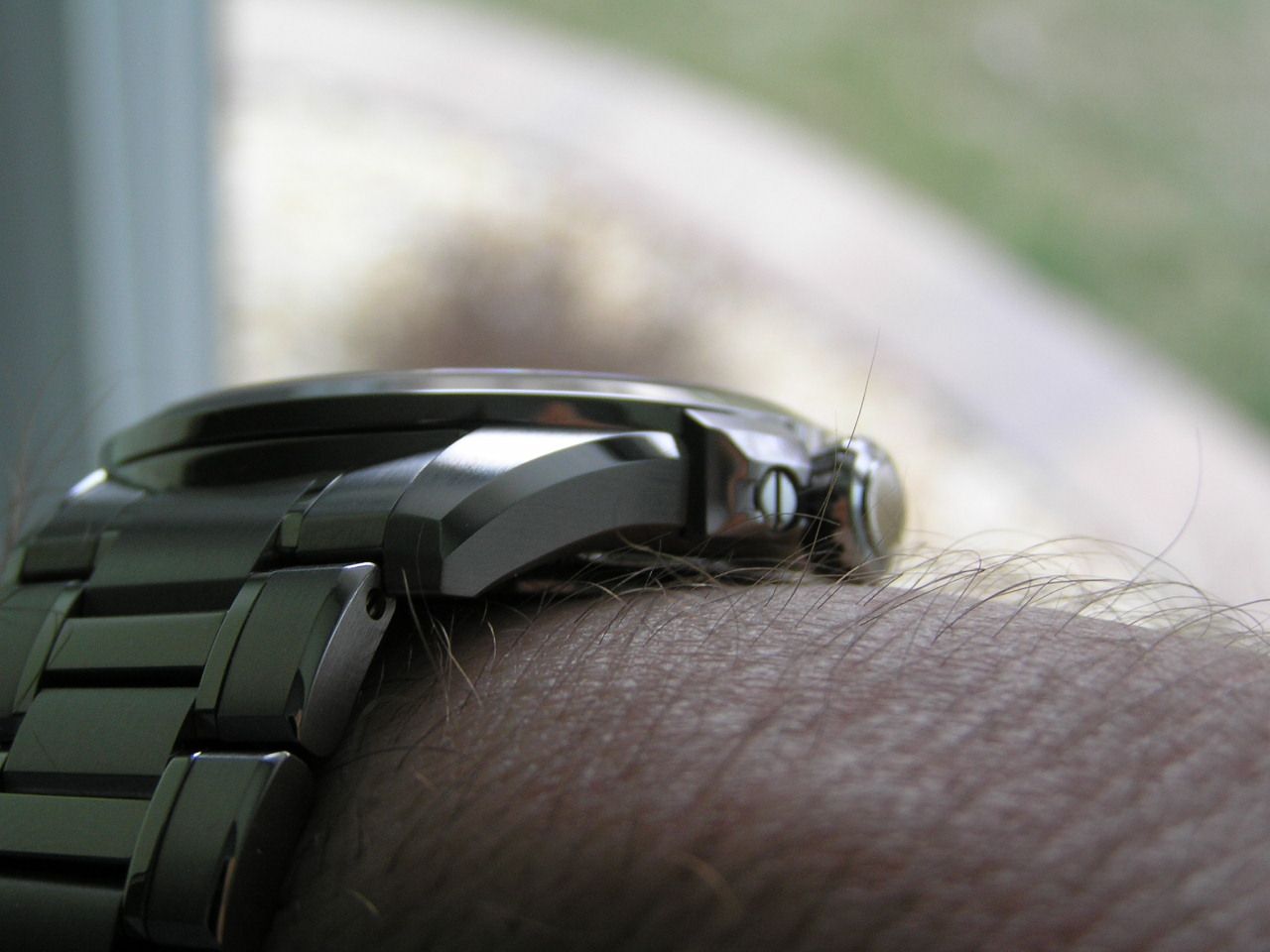
The crown is a suitable size and tapers inwards slightly towards the case, a subtle but nifty touch.  The crown does not screw down nor is it signed.  I really enjoy signed crowns and I would think that because this is the high end of Citizen’s line that they would have taken the extra time to install a signed crown on this watch, but unfortunately, they did not.  

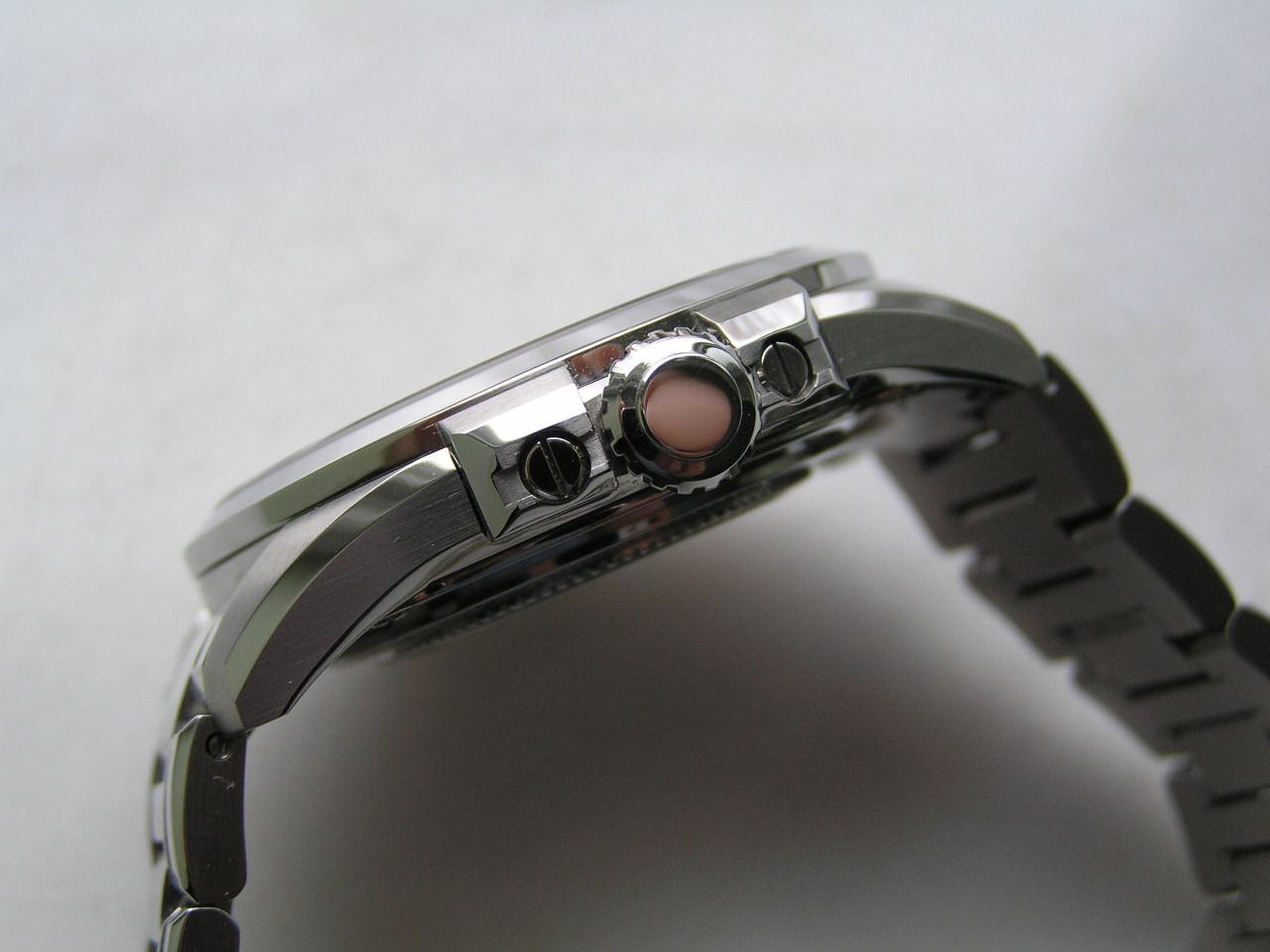
Surrounding the crown is a slightly chunky crown guard that is held in place by two rather large screws, the heads of which are clearly visible.  This design element seems a bit out of character on this watch, as while it has sporting pretensions, it leans more towards the dress side of things.

The case back is a display type and is held in place by four small screws, one at each corner.  The display back shows some nice detailing and shows off the beautifully decorated automatic movement.  Case thickness is 12.1mm and lug width is 22mm.  The overall case design and dial are somewhat reminiscent of an Omega Aqua Terra.

The Grand Classic automatic is factory rated at 10 bar of water resistance.

The dial on the Grand Classic has the kind of subtle detailing that befits a watch of this price category.  The dial is a gloss black, with the outer portion having a fine graining to it that runs from the chapter ring to just past the applied luminous markers.  The circular inner part of the dial is plain gloss black.  The silver hands have inset lume, while the seconds hand is a plain silver stick with a stylized tail.  Lume quality is very good and glows the cool Citizen blue.

The quickset date resides at the three position and is surrounded by an asymmetrical window frame that adds a bit of additional style to the dial.  The date wheel is white on black and compliments the dial perfectly.  Wheel alignment within the window is fine.

A slightly domed anti-reflective sapphire crystal covers the dial.  Under examination with an 8X loupe, the dial showed no dirt or imperfections.  Overall fit and finish on the Grand Classic is quite good.

Inside the Grand Classic beats a Citizen/Miyota Caliber 9010 24-jewel automatic movement.   One of Citizen’s newest automatic movements, this engine hacks and handwinds.  Timekeeping has been fairly tight, at -5/24 hours and with a good power reserve of 45.5 hours.  The movement sets, hacks and handwinds perfectly.  I particularly appreciate the level of finishing Citizen invested in this movement, with Geneva stripes and a very cool stylized rotor on display through the caseback.

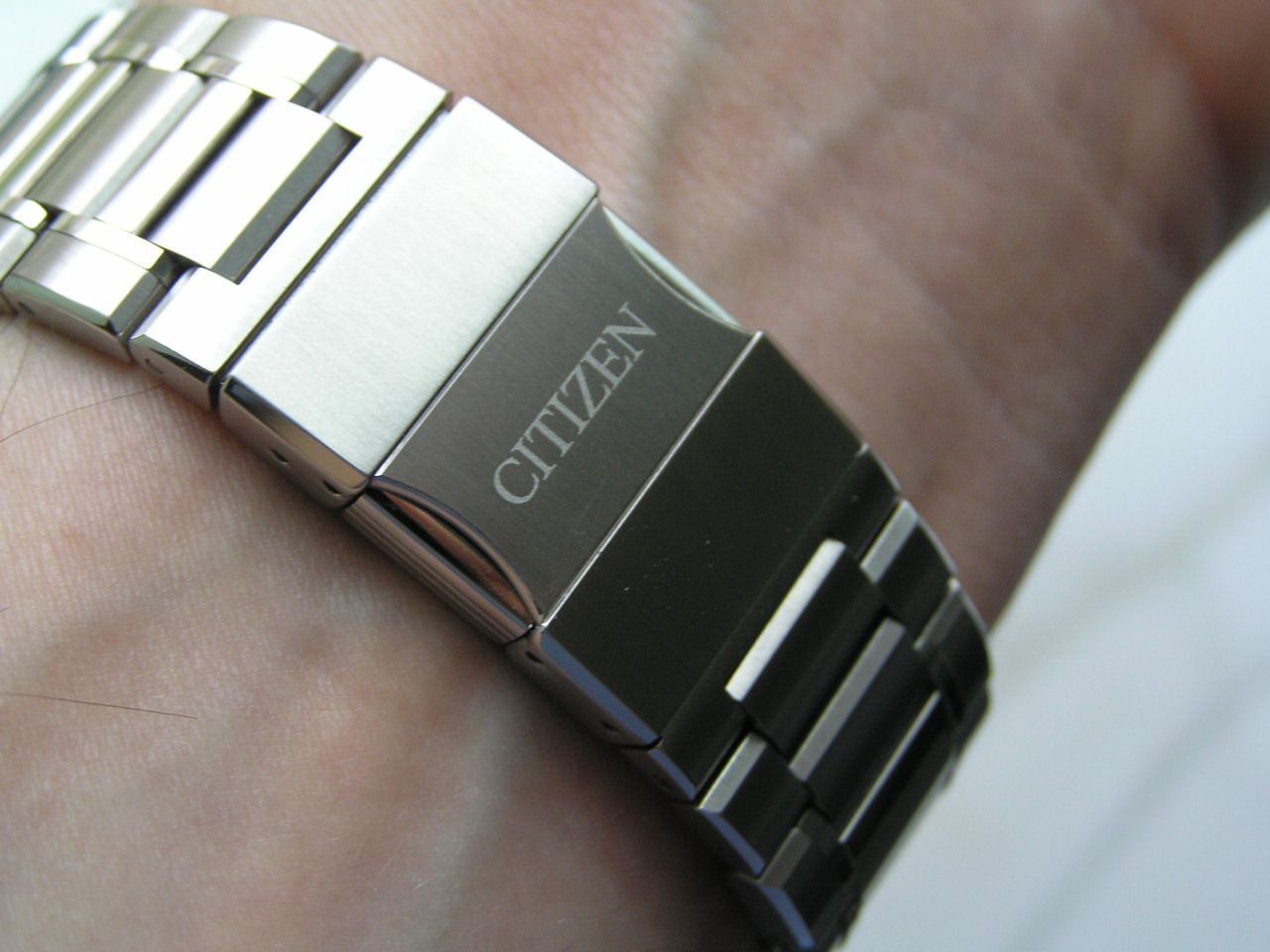
While the watch is made in Japan, the bracelet is made in China, as stated on the clasp.   Nonetheless, the bracelet is a quality piece with solid end links, multipiece solid links that are polished and brushed and a pushbutton signed clasp with a machined deployant.  If I had any complaints, the feel of the clasp seems a bit cheap.  Link adjustment is via screw pins and bracelet adjustment was a breeze. 

The bracelet measures 22mm at the lugs and tapers to 19.9mm at the clasp.  There are no microadjustments on the clasp, but a half-link is provided, so a decent bracelet fit should be able to be achieved.

Presentation is fairly typical Citizen, with appropriately sized inner and outer presentation boxes, et al.  The inner box is a dark blue padded leather-look box which is pretty nice.  One might expect something a bit more special due to the Signature Series standing at the top of the Citizen line, but this is a minor quibble.

The big question here is:  Is this watch worth the almost one-thousand dollar suggested retail price?  Well, it’s no Grand Seiko, but Grand Seikos go for three to four times the MSRP of this Citizen.  If you’re looking for a high-end Japanese automatic that looks good and will undoubtedly be a reliable and durable timepiece, then yes, it’s worth the price of admission.

Pros:  quality at the high end of Citizen’s line, nicely decorated automatic movement, clean dial layout, cool blue lume

Cons:  dial a bit hard to read at times, clasp a bit cheap, crown should be signed

Verdict:  a worthy addition to the Citizen lineup, the Grand Classic automatic is a perfect piece if you want a high-end automatic Japanese watch without spending Grand Seiko money

Thanks for reading and enjoy the pictures.

Excelsior!

-Marc