Wednesday, April 18, 2012

Review of Eterna KonTiki GMT/World Timer


Model # 1593 41 40 0215

Brand/Model:  Eterna KonTiki GMT/World Timer
Movement:  Swiss automatic
Material:  stainless steel case and bracelet
Complications:  date display, independently adjustable GMT hand
Price:  MSRP:  $4,395; street price around $1,700 USD


Plenty of photos follow the review.  Click on the pictures to enlarge.


Eterna is probably best known for its iconic KonTiki line of watches, named as such to celebrate Norwegian explorer Thor Heyerdahl’s famous 1947 Pacific expedition on balsa wood rafts.  Eterna has been making the KonTiki line for years, the best known model being the KonTiki 1958.  The subject of this review is Eterna’s KonTiki GMT/World Timer, which combines many desirable elements into one watch that bears the KonTiki name and I believe, a bit of the heritage as well.

Late in 2011, Eterna was sold to a Chinese company, so the remaining stocks of Eterna watches are to be considered the last of the ‘true’ Eternas, that is, Swiss Made timepieces by a company that has been in the watchmaking business since 1856.

Although I really have no practical use for a World Time or GMT watch, for some reason, I enjoy watches that feature a third timezone complication.  When this Eterna KonTiki GMT was introduced several years ago, it caught my eye and I have been fortunate enough to procure one for my collection.

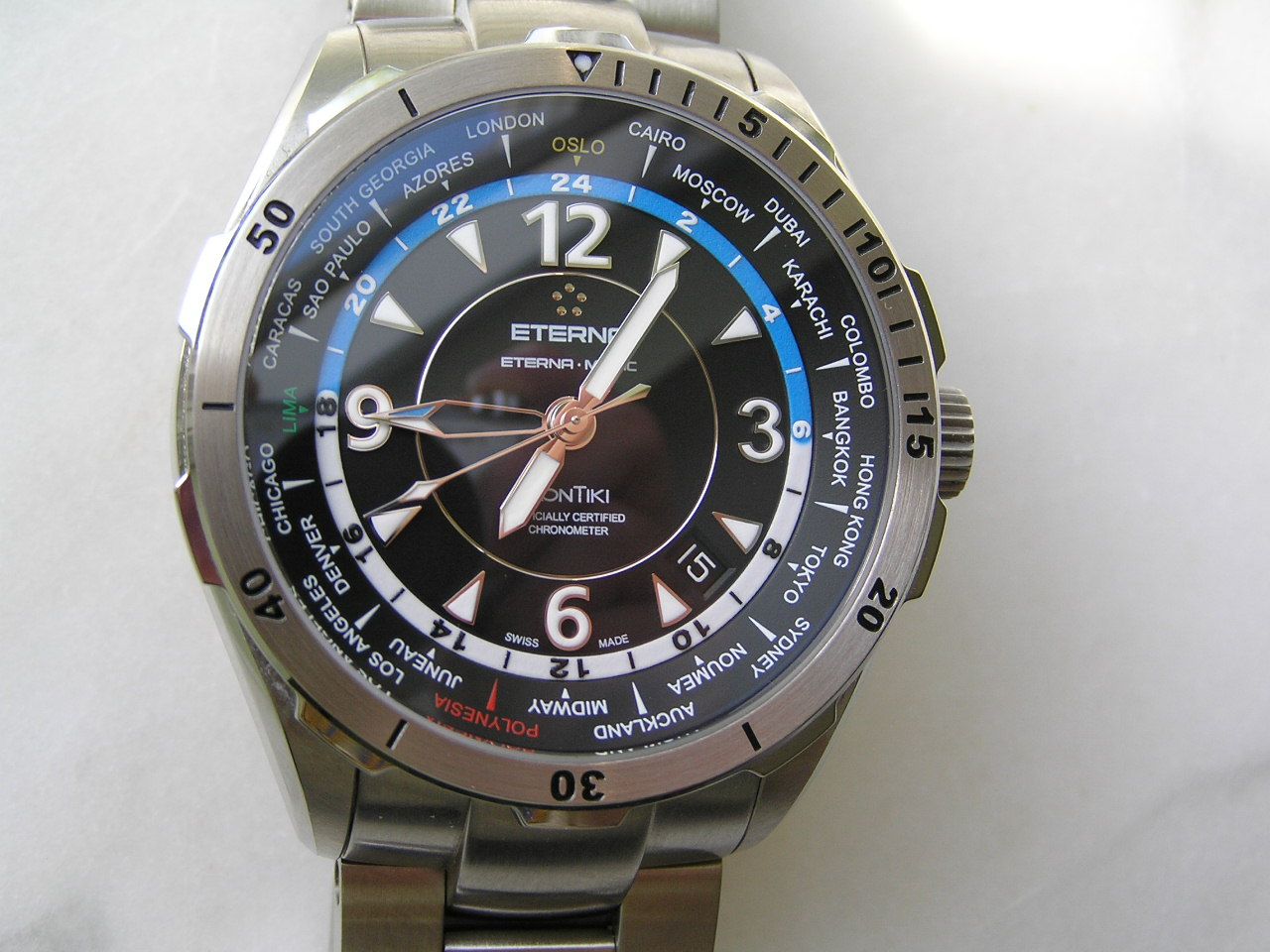
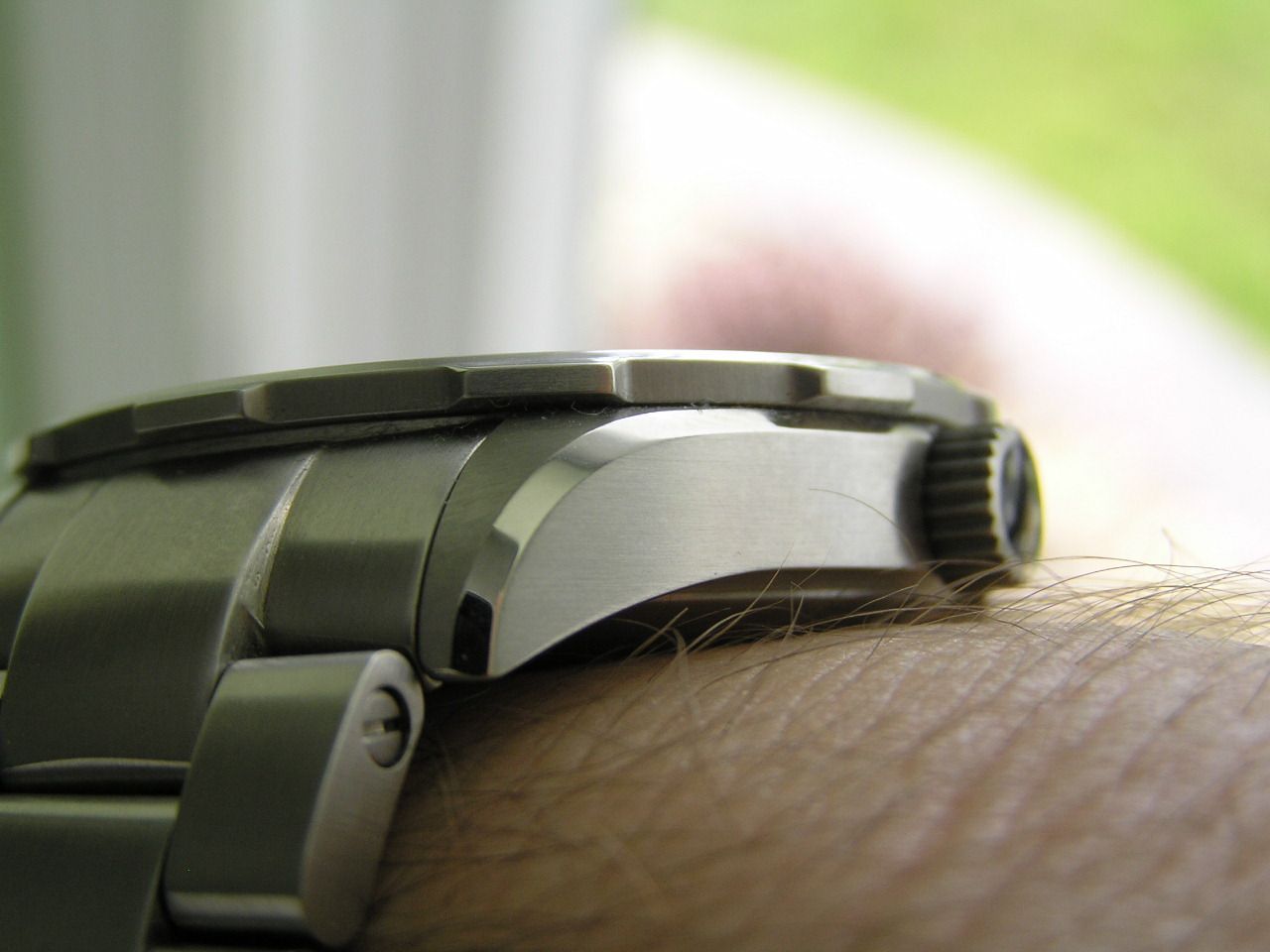
Robustly constructed of solid stainless steel with superb fit and finish, the Eterna KonTiki GMT starts with a brushed and polished case measuring 41.5mm without the signed, screwdown crown; 44.6mm crown inclusive.  The crown is appropriately sized, not too big but not too small and is signed with a black insert showing the five dot Eterna logo. 

Case thickness is 13.6mm, lug width is 22mm.  Although this watch measures almost 42mm in size, it does not wear that big, due to the world cities inner bezel, the outer timing bezel and the shortness of the hands all combining to make the dial smaller.

The caseback is brushed and screws down and is embossed with the super cool KonTiki logo, depicting Heyerdahl’s raft at sea, encircled by a thin polished ring.  It looks very nice.

The watch is factory rated for 200 meters of water resistance, which is fitting for a watch named after a rafting expedition.

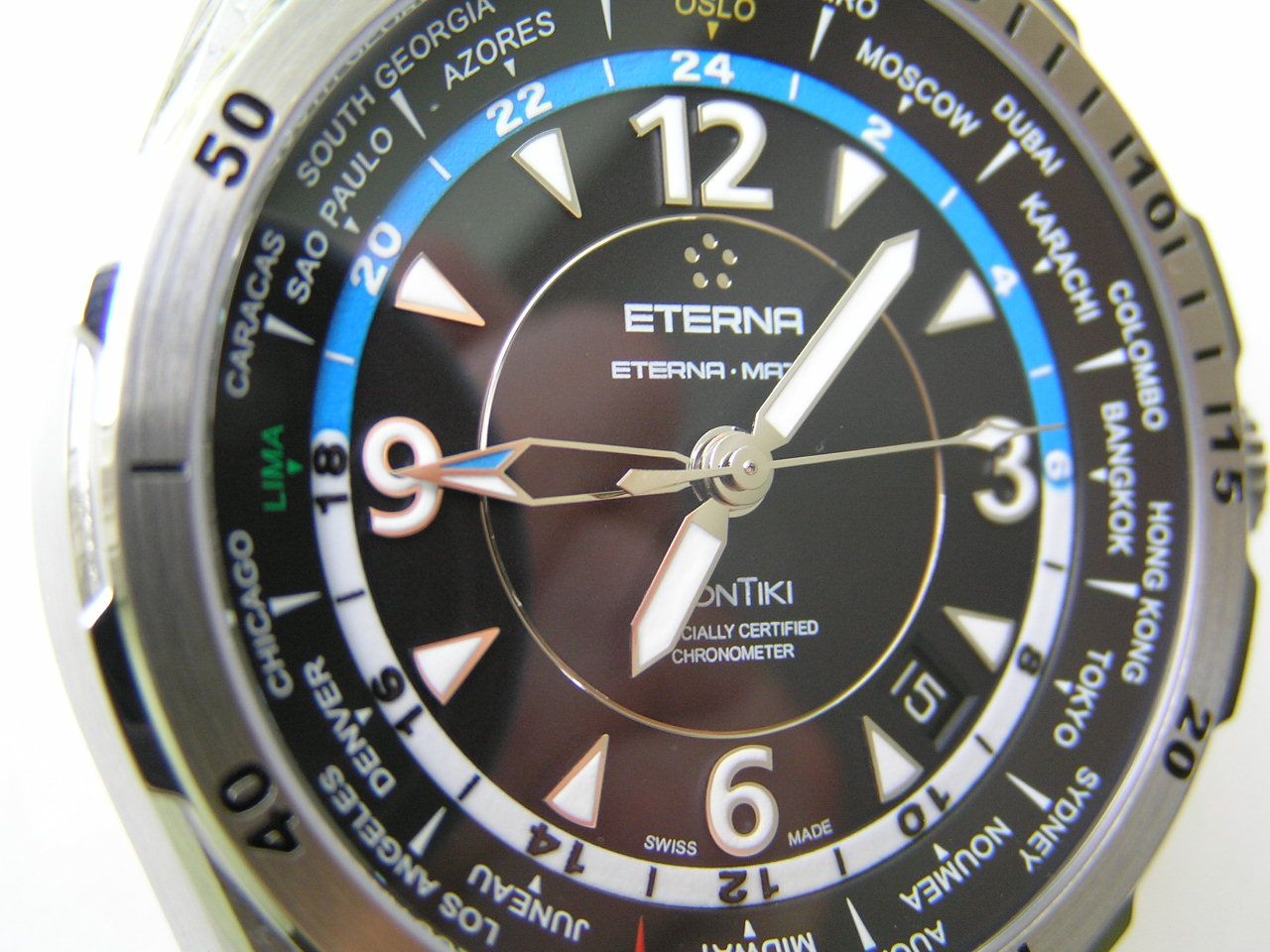
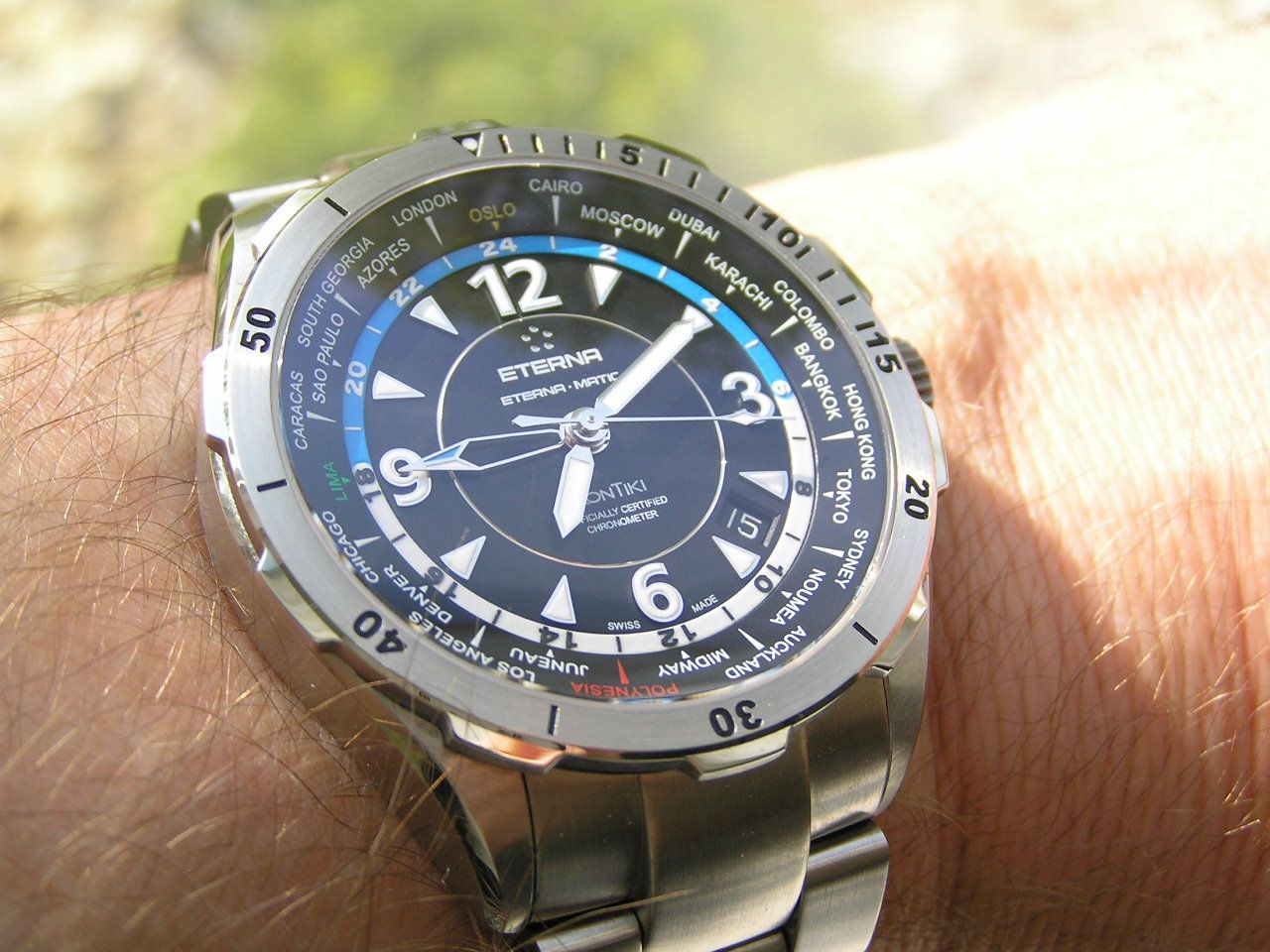
The dial of the KonTiki GMT is black, with a thin silver circle running along the inside of the applied luminous triangular or dagger-style markers.  Applied luminous arabics sit at each quarter hour, with the daggers filling the space between the quarter hours at each five minute mark.  There are no minute markers on the dial, which I find slightly disconcerting, for no other reason than it makes it hard to set the time exactly; you have to wait until it’s five or ten after, etc.

The hands are silver with inset lume and are rather short to me.  They don’t even reach to the outer edge of the 24-hour GMT chapter ring, but this is intentional, I’m sure, to make it easier to read the time in other locations and to no overpower the GMT hand.

The GMT hand is a skeleton style with a two-color pointed tip, half blue and half white, with the white part being a brighter luminous than the blue part.  A rather curious and odd feature if you ask me, but it matches the 24-hour chapter ring that is blue from 18 hours (6 p.m.) through 6 a.m.  The rest of the 24-hour chapter ring is white.  I think this is done to resemble a day/night sort of delineation. 

The 24-hour chapter ring is also luminous, with the upper half (the blue part) being not as bright as the lower half.  Overall lume quality on the KonTiki GMT is average, although the lume is a cool blue color.

The watch seconds hand is a thin silver stick with a lume tip a few millimeters down from the end.

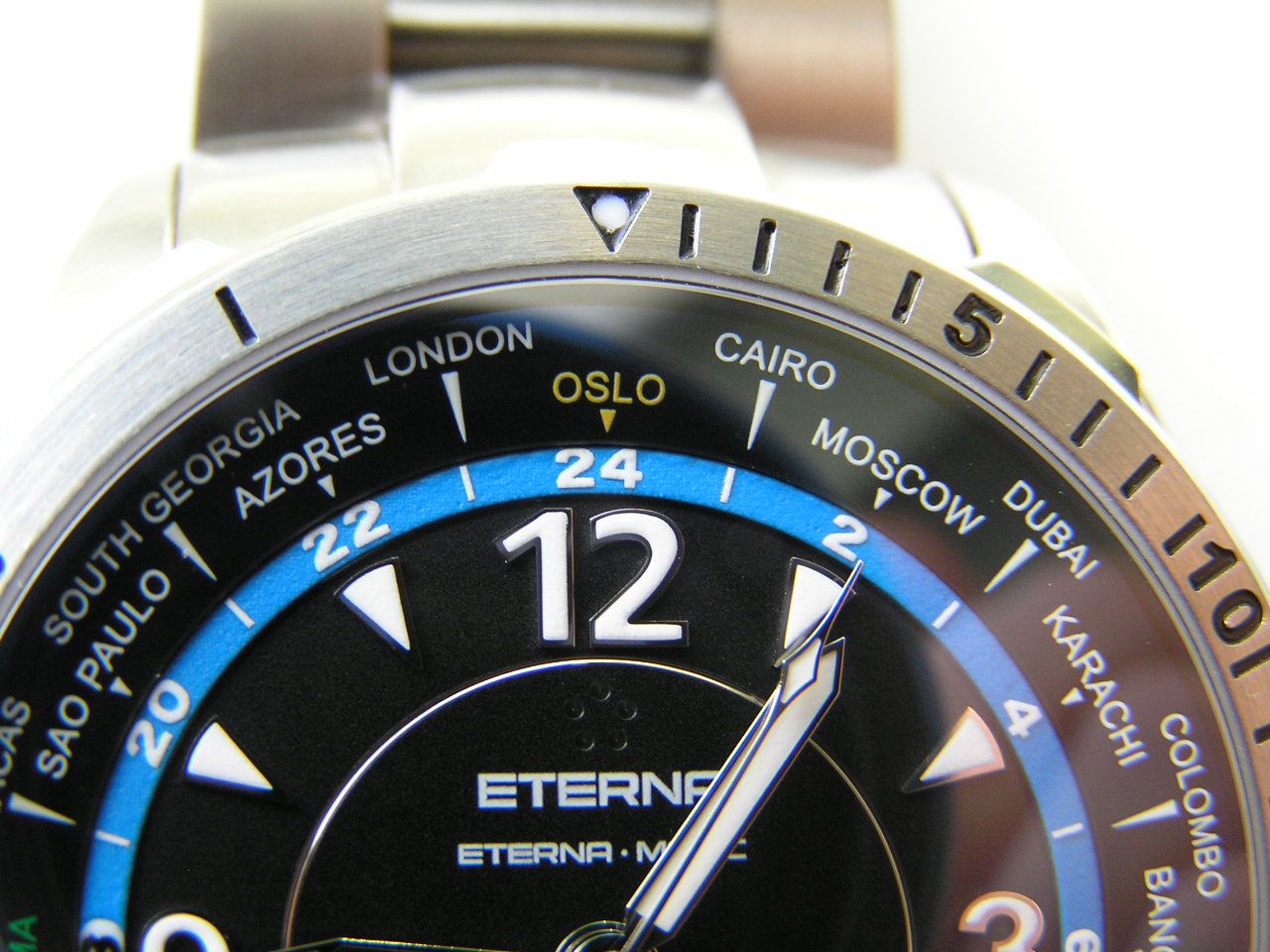
The remainder of the dial on the KonTiki GMT is composed of the world cities bezel, which rotates around the outer edge of the dial.   There are 24 cities/locations listed, with Oslo in yellow, Polynesia in red and Lima in green, highlighting the cities and locations of Heyerdahl’s expedition.  I think the colors add a bit of pizzazz to the dial without looking garish.

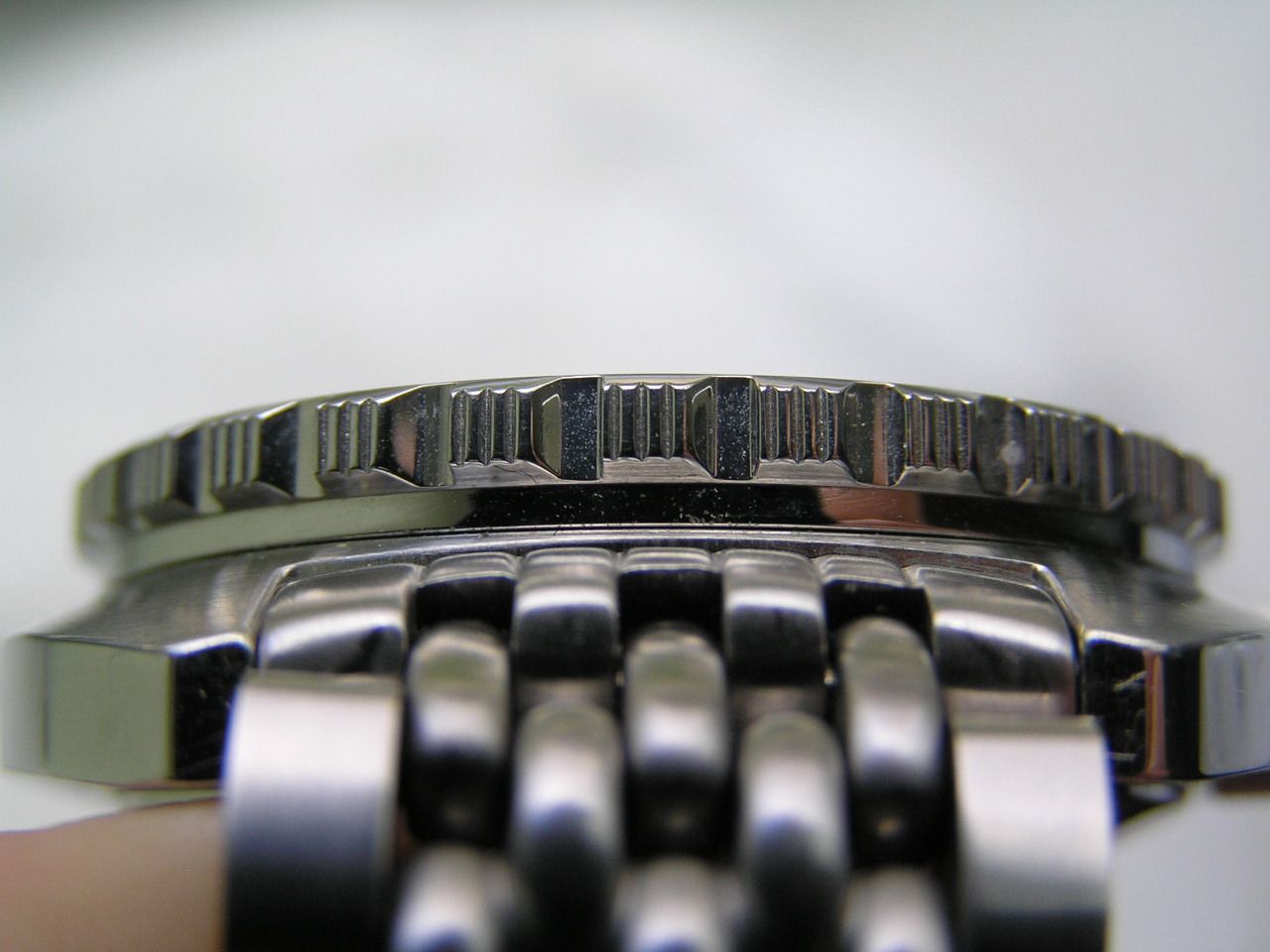
The outer timing bezel is unidirectional and turns stiffly without any clicks.  It can be used for standard timing duties, with the first 15 minutes marked by black hash marks and a small lume dot at the 12. 

The timing bezel also is used to rotate the inner cities bezel.  Whenever the timing bezel is rotated, the cities bezel moves along with it.  This design is a bit cumbersome, but practical, because I always appreciate a timing bezel on a watch (and this is a feature that is not found on too many GMT watches) and it eliminated the need for a second crown to rotate the cities bezel. 

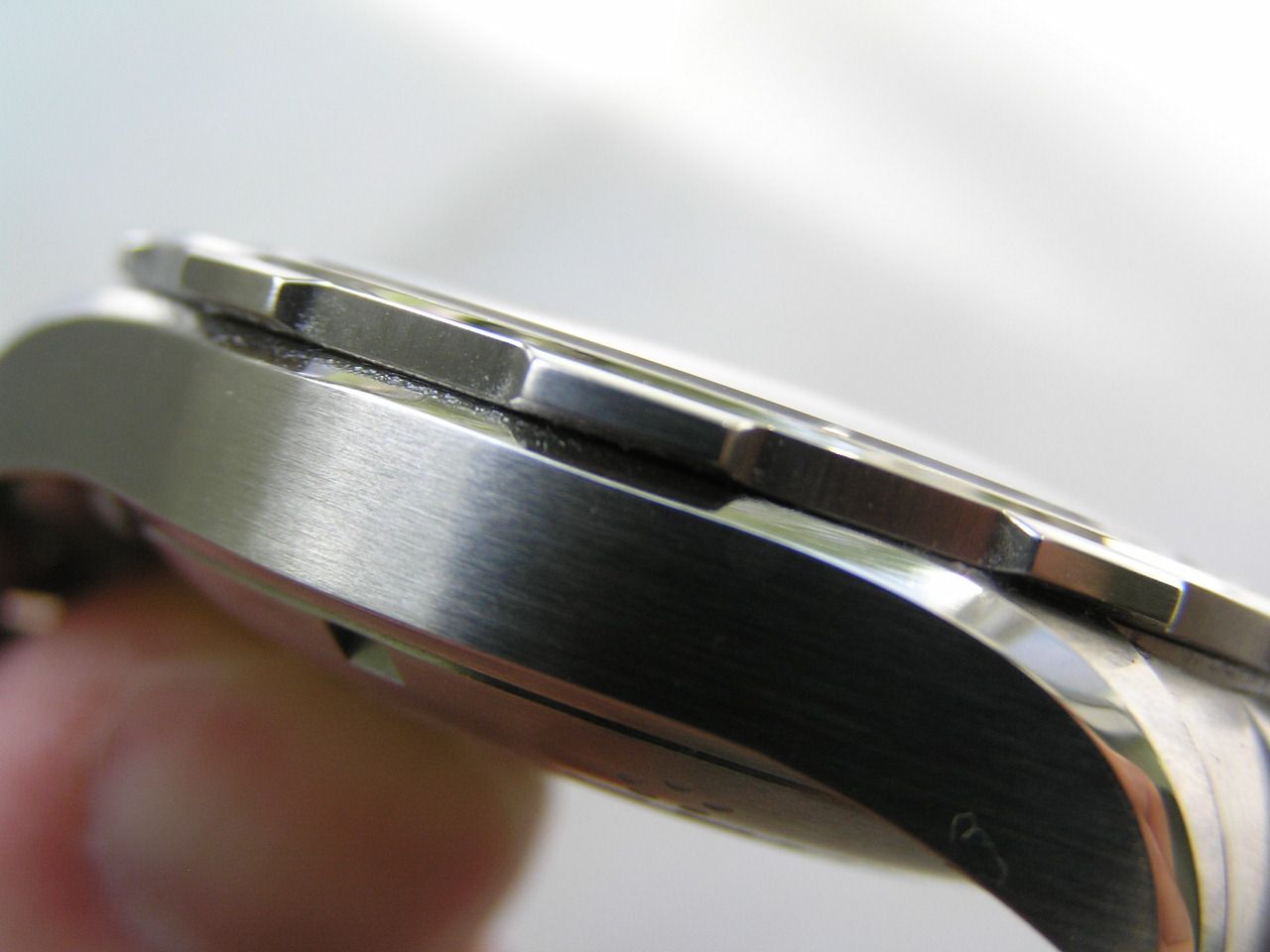
Eterna must also use some sort of slick gasket system between the bezel/crystal and case to allow for the outer bezel to rotate the inner bezel and to maintain 200 meters of water resistance.

The dial also has a quickset date window at 4:30 with a proper white on black date wheel that blends well with the rest of the dial.  The KonTiki GMT features a slightly domed sapphire crystal that fits perfectly flush with the edge of the bezel. 

Overall the dial is a bit busy, but is segmented enough to allow for standard timekeeping, GMT/24-hour indication and world timekeeping to be accomplished fairly easily.

The KonTiki GMT features an automatic Swiss Made ETA COSC-grade movement, which is nicely decorated and has an external dust cover/anti magnetic shield that sits between the caseback and movement.  The GMT hand is independently adjustable by rotating the crown clockwise in its first click position.  The GMT hand clicks into position in one-hour increments.  Running well within COSC standards, my KonTiki GMT has performed at +2/24 hours and turns in a strong 49-3/4 hour power reserve.

If you’re wondering why I know so much about what the movement looks like in this watch even though it does not have a display back, I will tell you.  When I received this watch (purchased brand new on the grey market) I set and wound the watch for initial testing in my workshop.  Shortly after I set it, I looked at it and realized the watch was not running!  I picked it up and heard an awful crunching sound.  I gently jostled the watch and it began to run again, so I set it down and let it run out its power reserve.

At this point, I had surmised the rotor has loosened up and was flopping around inside the caseback.  I don’t crack the back on brand new watches, but not wanting to return it either, I brought the watch to my trusted watchmaker.  He opened up the back, removed the movement shield and promptly discovered that one of the screws and clamps on the movement holder securing the movement to the case had come undone.  He fished out the errant screw and clamp, resecured them and gave the other screws a once over.  Everything has been fine since then.

So this is the only slight I will give Eterna regarding the quality and workmanship on this particular example of the KonTiki GMT.  The watch otherwise has been fine, the fit and finish is very good, so I chalk up this one loose movement screw and clamp as ‘just one of those things’ and have moved on.

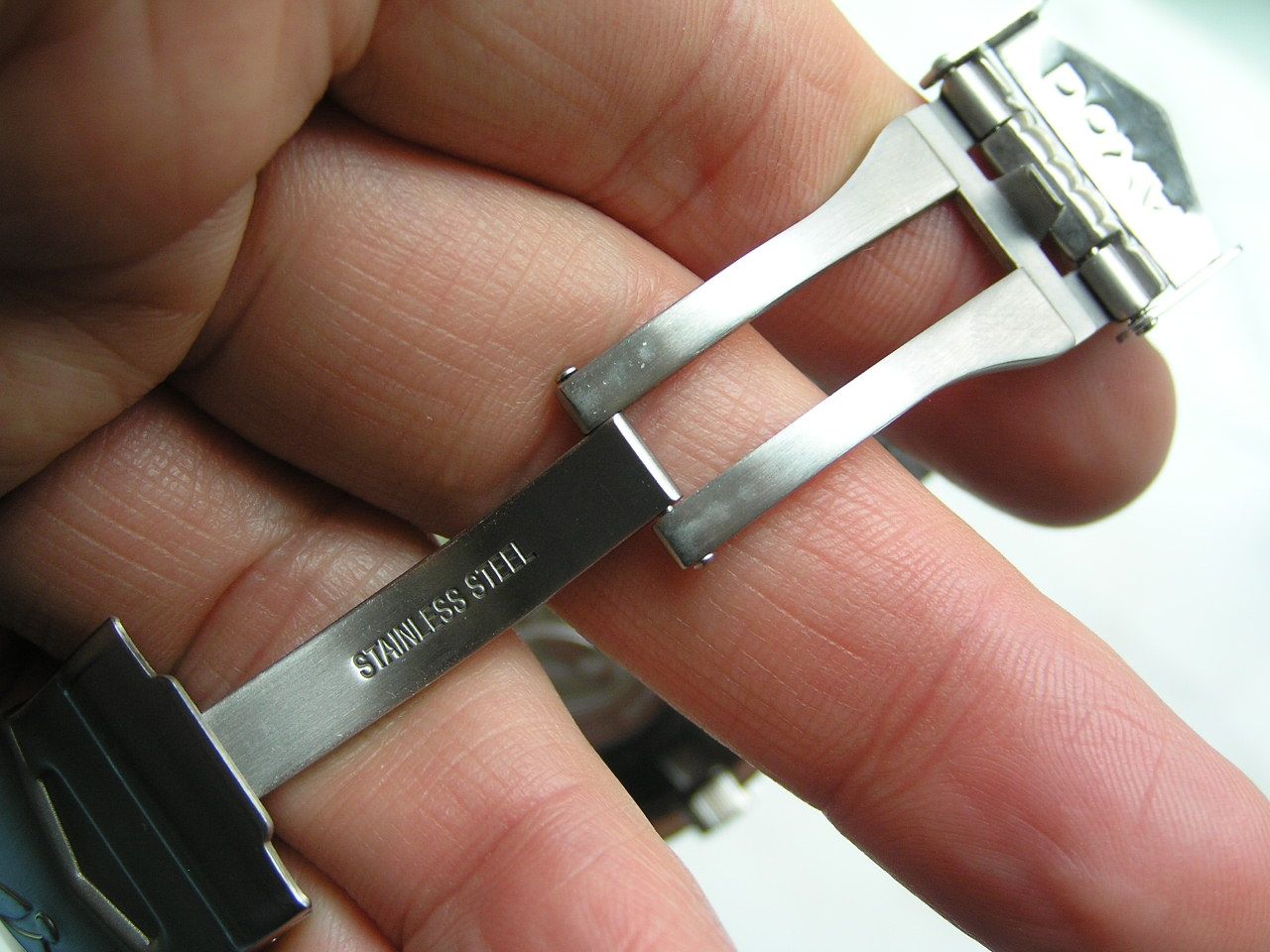
The bracelet is superb on the Kontiki GMT, with solid, thick links (3.6mm), solid end links and a very attractive signed pushbutton clasp with machined deployant and diver extension.  The clasp is the exact same design (and presumably the same maker) as the clasp on the Ulysse Nardin Maxi Marine Diver, a watch that retails for twice what the KonTiki GMT does.

The bracelet is fully brushed and measures 22mm at the watch head and tapers to 20mm at the clasp.  Adjustment is by thick screw pins, the kind that require a screwdriver to be held on each end in order to tighten or loosen.  A bit awkward, but quality nonetheless.  There are no microadjustments on the clasp, but half links are provided on the bracelet on both sides, so a pretty good fit can be expected.

Presentation with the KonTiki GMT is top-notch.  A two piece cardboard outer box reveals a large, beautifully lacquered wooden box with the KonTiki logo medallion on top.  The box opens to reveal the watch, extra signed rubber strap and a plastic accessory compass, plus the instruction manuals and warranty paperwork.  Extremely classy and befitting a storied watch such as the KonTiki.

Overall, the Eterna KonTiki GMT/World Timer is a unique, functional and solid watch that gives the user a quality timepiece with a bit of history behind it.  It’s an all-around good looking solid performer at a very competitive price.

Pros:  superb all-around construction, COSC automatic movement, great bracelet and clasp, GMT/World Time functionality

Cons:  lume could be stronger, hour and minute hands a bit short in relation to the dial, no minute markers on the dial, QC glitch with loose movement holder screw and clamp

Verdict:  an outstanding value in a Swiss-Made GMT/World Timer with great features, great quality and a storied name by a storied Swiss house.  Snatch one up before they are forever sold out!

Thanks for reading and enjoy the pictures.

Excelsior!

-Marc


Tuesday, March 27, 2012

Review of Doxa SUB 1200T Professional Automatic Diver

Model # SUB 1200T Professional

Brand/Model:  Doxa SUB 1200T Professional
Movement:  Swiss automatic
Material:  stainless steel case and bracelet
Complications:  date display
Price:  MSRP:  $1,890 USD (special factory-direct Doxa pricing)


Plenty of photos follow the review.  Click on the pictures to enlarge.


When it comes to dive watches, few brands have the recognition that Doxa has.  It started in 1967 with their iconic SUB dive watch, followed two years later by the SUB 300T Conquistador, which was the first dive watch sold to the public equipped with a helium release valve.

In 2010, Doxa released the SUB 1200T Professional to pay homage to the original 1967 and 1969 models as part of their vintage SUB series.  Nothing says iconic dive watch like an orange-dialed Doxa SUB and that’s why I had to have one.  Limited to just 1200 pieces, the SUB 1200T Professional is also joined in the Doxa lineup with the Sharkhunter (black dial/orange minute hand), Searambler (silver dial, orange minute hand) and the NUMA (blue dial, white hands), all 1200 meter models that share the same bezel, case and bracelet plus Swiss automatic movement. 

Of course, many non-WIS people are aware of Doxa because of author Clive Cussler and his fictional hero Dirk Pitt® donning an orange Doxa SUB in the many books that chronicle his adventures.

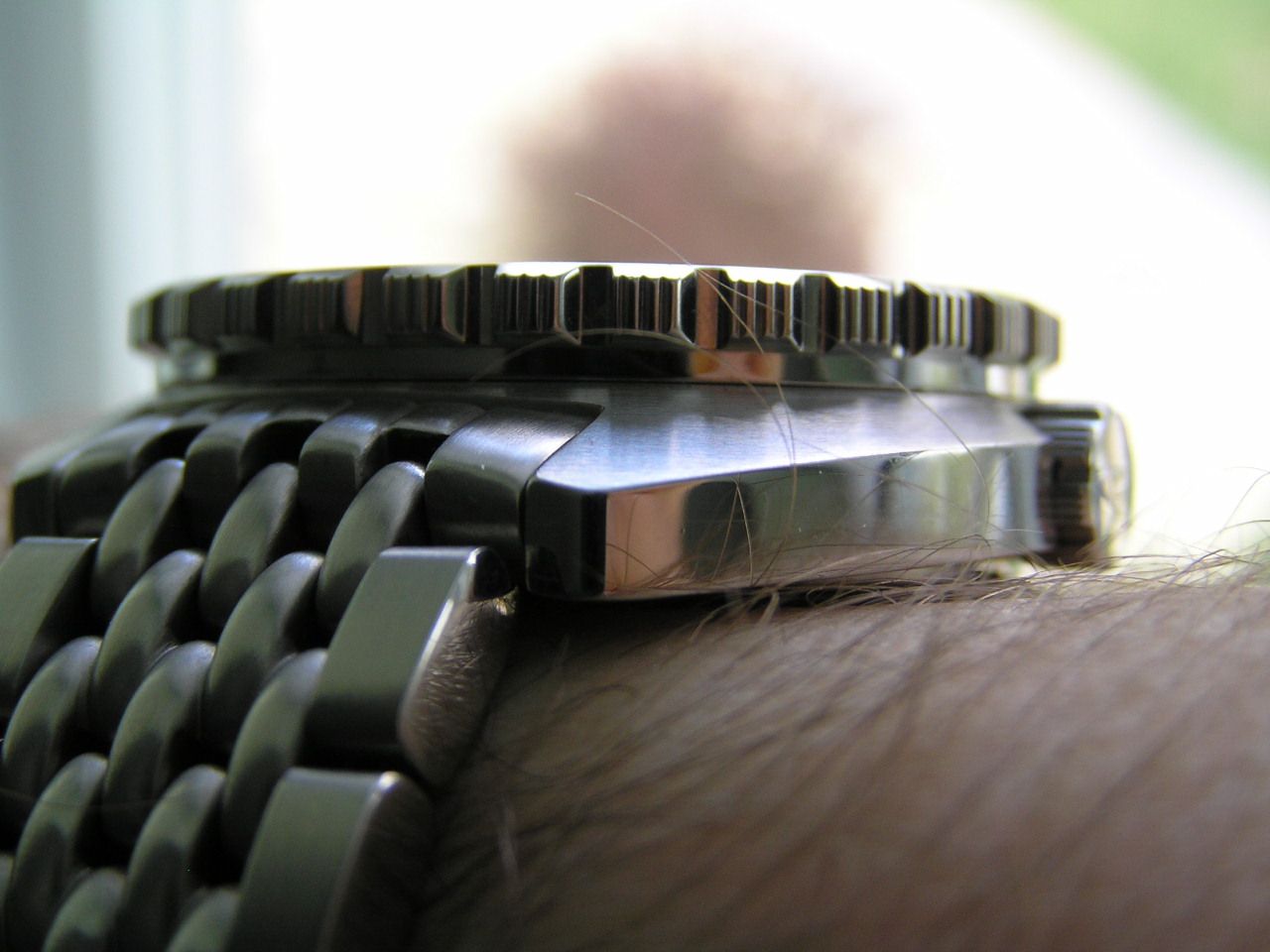
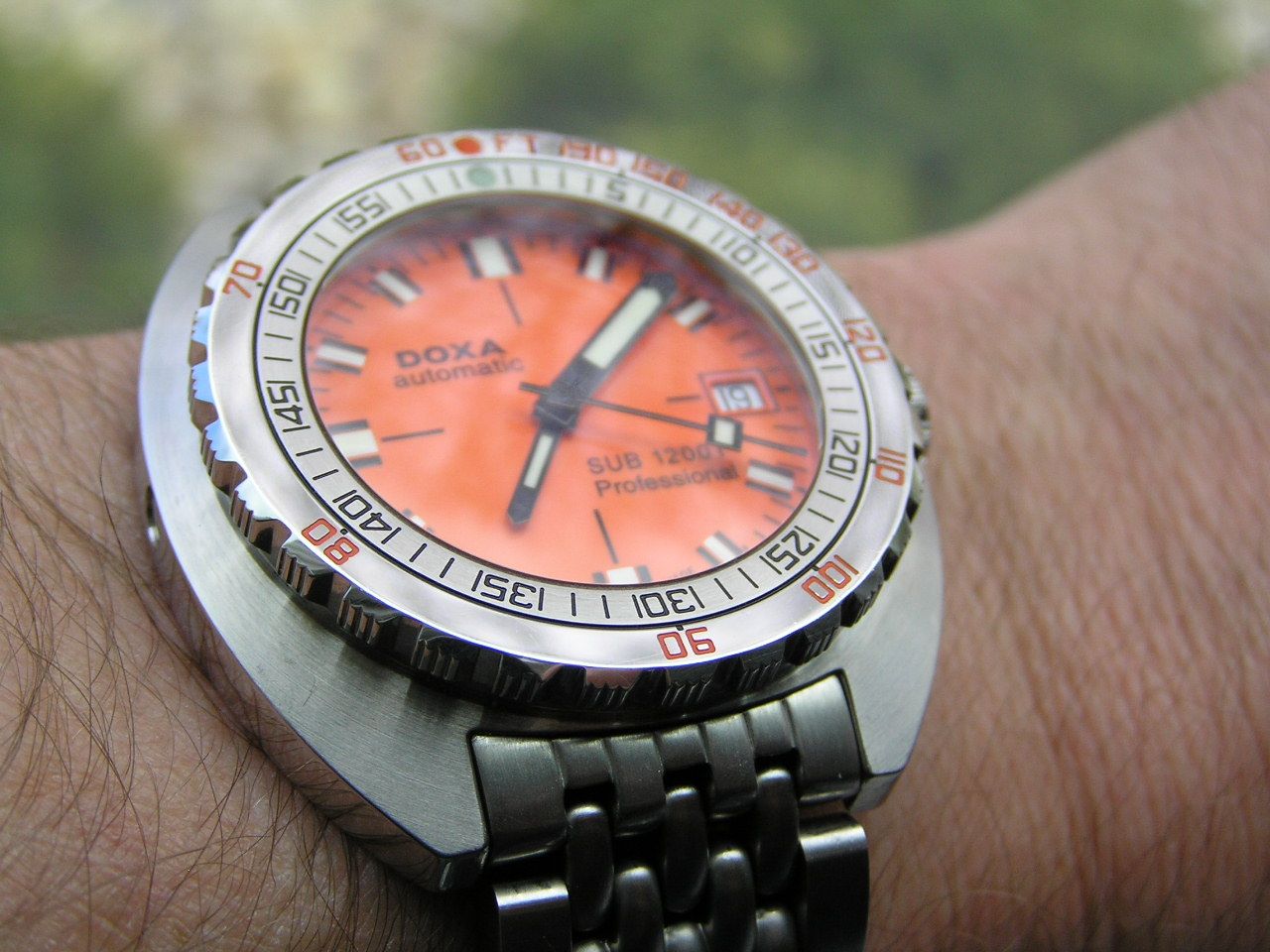
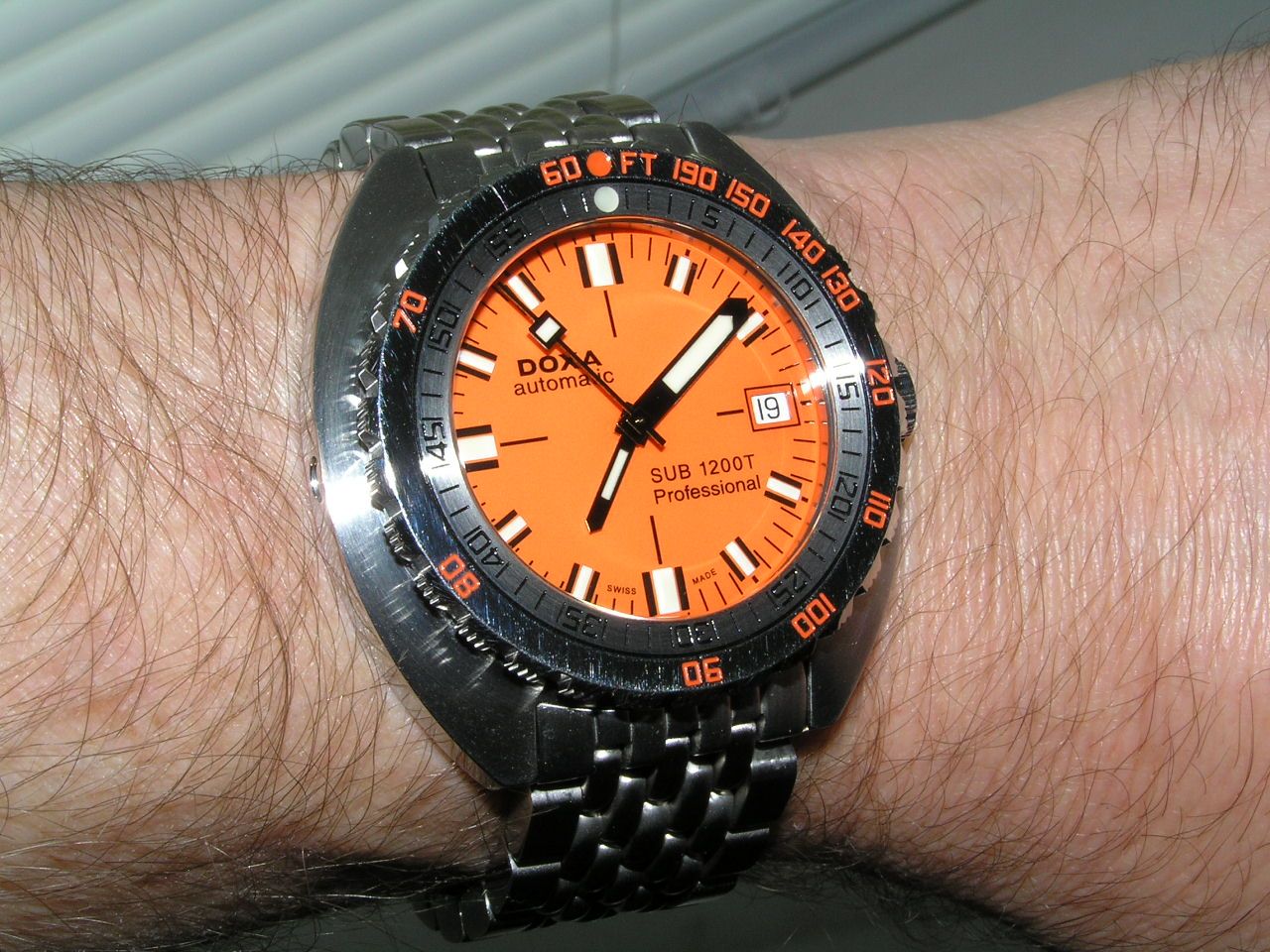
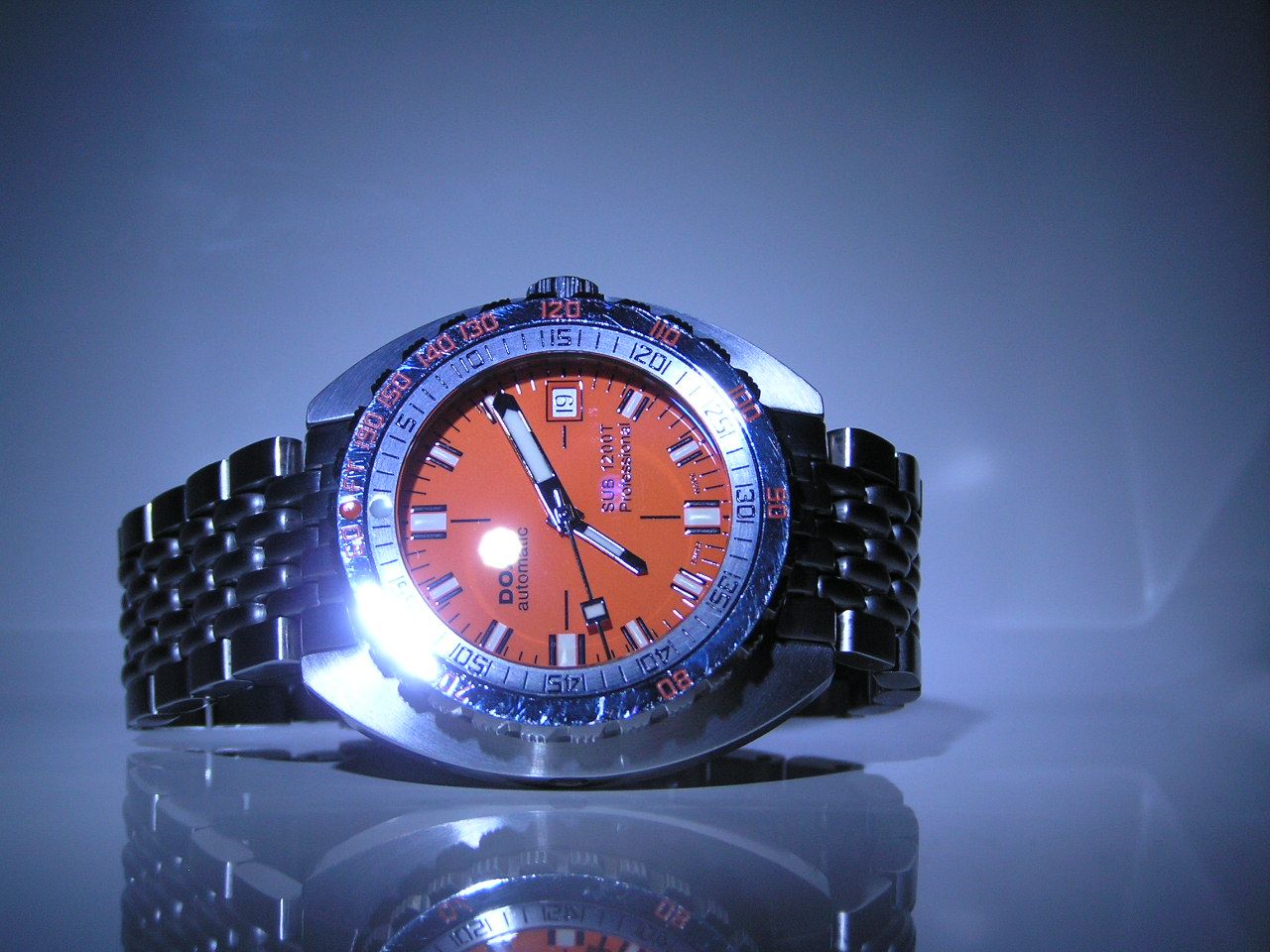
Doxa refers to the SUB 1200T’s 42mm case size and a ‘more traditional sized’ Doxa sub.  Works for me, as I find the size to be just about perfect for a dive watch.  The SUB 1200T starts with a polished and brushed stainless steel case in the classic cushion style, which is a great look.   The sides are polished, the case top is brushed.  The case measures 42.3mm without the knurled and signed screw down crown; 44.1mm with the crown.  Thickness is 14.3mm, lug width is 20mm.  It sure is nice to have a dive watch with more normal proportions that still is rated for an extremely deep depth as opposed to the super large, clown-like dimensions of some dive watches on the market today.

The caseback is polished and screws down and is stamped with the Doxa fish logo and has miscellaneous information, such as the water resistance rating, serial number, model name, etc.  The left side of the case at the 9 position features the automatic helium release valve (HRV), which is very unobtrusive and fits flush with the case side.

The SUB 1200T is factory rated for 1200 meters (3937 feet) of water resistance.

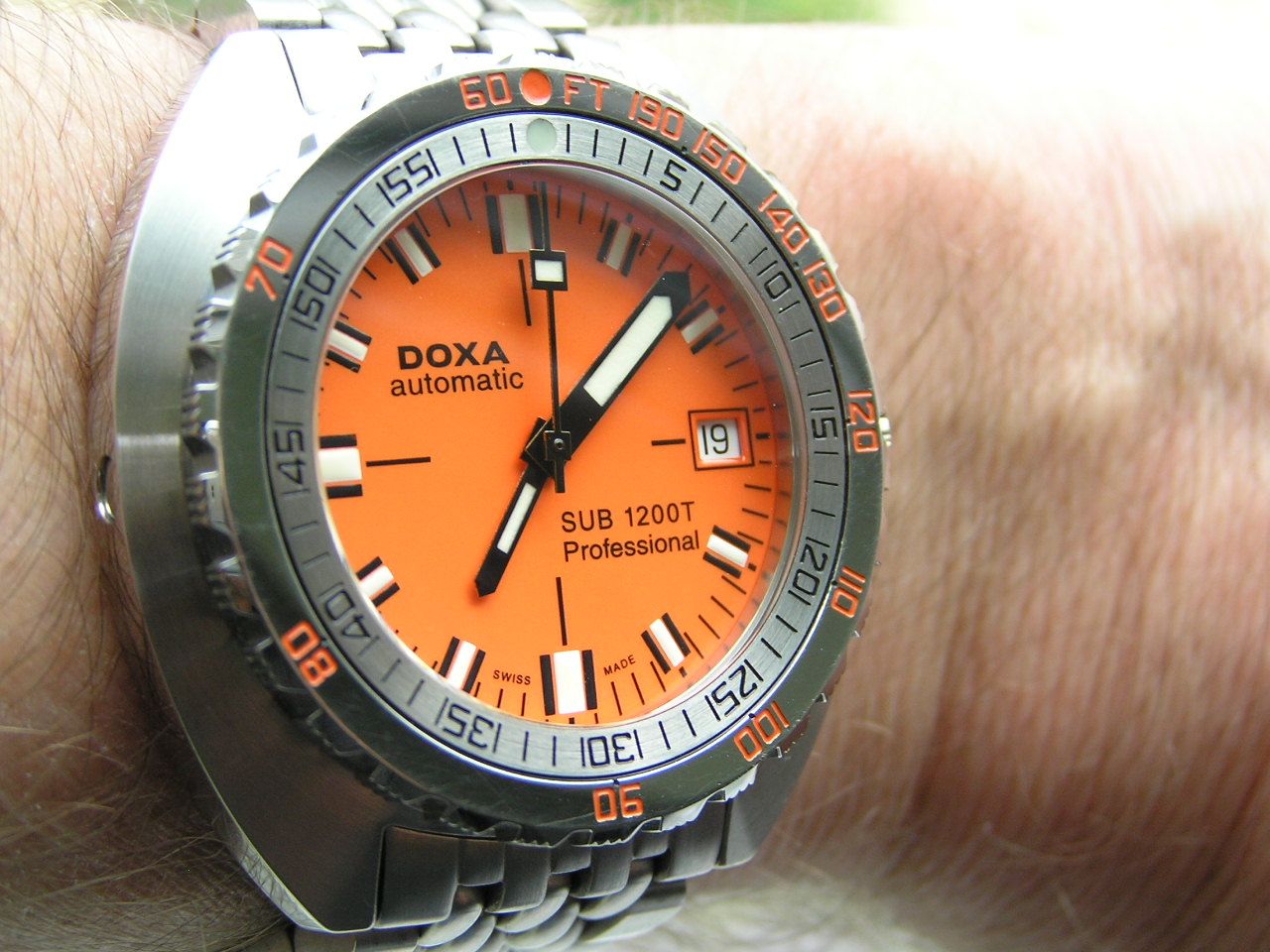
One of the most identifiable features of any Doxa dive watch is its patented no-decompression dive table bezel, which is engraved with the United States Navy non-decompression table on the outer part of the bezel, with standard 60-minute markings on the inner part of the bezel.  The non-decompression markings are in orange, the timing markings are in black.  A round inset lume pip is at the 60 mark on the inner timing ring.

The bezel itself is a 120-click unidirectional type with sharp, deep knurls that make it easy to grip and turn.  The bezel clicks authoritatively through its rotation with no backlash.  The bezel also stands proud of the case top which gives the watch a unique and strong appearance. 

The screwdown crown mimics the knurled edge of the bezel, which makes the crown easy to use and to screw in and out for time setting, along with coordinating with the bezel for an integrated look and feel.  The crown screws down about 2.5 turns to lock.

The 27mm wide dial is vivid orange (after all, this is THE original orange-dialed diver) and imparts a can’t-miss look to this watch.  It stands out, but it is not garish in any way.  It’s more subtle than a Seiko orange monster and exudes an all-business attitude when sitting on your wrist.

Luminous markers at the five minute marks are bordered by black bars, with small black hash marks indicating the minutes between the larger five-minute markers.    Thin black lines extend inward onto the dial from the markers at 12, 3, 6 and 9, somewhat sectioning off the dial into quarter hour increments.

The hands are black with inset lume and the hour hand is considerably smaller than the minute hand, a nod to true diving capability, as minutes spent underwater are the vital component of timing.  Doxa refers to the small hour hand as a ‘dwarf’ hour hand.  All the lume is Superluminova and needless to say, it’s outstanding, as it should be.  The second hand is black with a lume box-end tip.

A quickset date is located at the three position, with a black on white date wheel.  The date window is large enough to be read easily and wheel alignment within the window is good.

Overall, the dial is very legible and that’s the point of a dive watch, you need to see the time easily when you’re underwater.  The wording ‘DOXA’ and ‘automatic’ are printed in the upper left quadrant on the dial, with ‘SUB 1200T’ and ‘Professional’ printed in the lower right quadrant.

The dial is topped with a slightly domed 3mm thick sapphire crystal that fits flush with the bezel at its edge.  Anti-reflective coating is applied to the crystal to reduce glare.

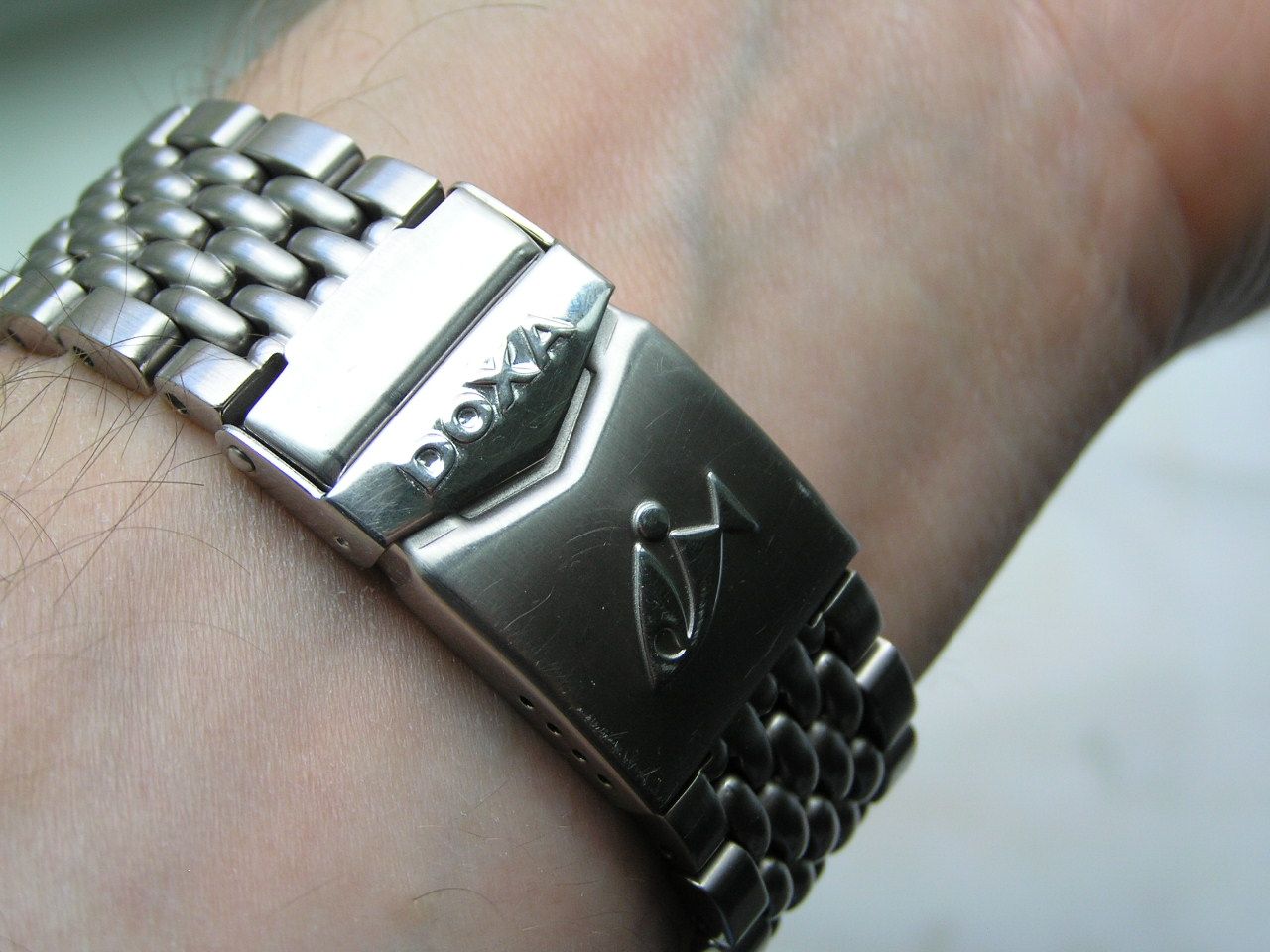
Keeping to its 1967 roots, the SUB 1200T is equipped with a solid link stainless steel bracelet with solid end links and a machined deployant.  The clasp is signed and stamped with the Doxa fish logo and features a double locking safety tab.  A rather cheapish stamped steel diver extension is also part of the clasp.  This dive extension should be a machined part, not stamped.  There are four micro-adjustment holes on the clasp.

Doxa says this bracelet is of a sturdier design than previous versions and overall, it feels good, but they kind of cheated with the ‘beads of rice’ design.  A true vintage beads of rice bracelet has the ‘rice’ as separate link pieces in the bracelet, not made into one solid link as the bracelet on the SUB 1200T.  I can see advantages to the solid design, it’s not rattle-prone and would be more secure, so I can live with it, but don’t expect a true beads of rice bracelet here.  The outer links are polished on the edges, with the top surface of the bracelet being brushed.  The bracelet measures 20mm along its entire length.  Adjustment is by screws and Doxa supplies a screwdriver to make link removal and sizing easy.

One thing that really impressed me about the SUB 1200T is its overall heft.  But it’s a heft of a different sort.  Many dive watches feel heavy, and yes, the SUB 1200T feels heavy, but it also feels solid, tank-like.  It’s a reassuring feeling having it on your wrist.  Doxa states the weight of this watch at 162 grams (about 5.7 ounces).  Nice!

Inside the SUB 1200T is the ubiquitous ETA 2824-2 25-jewel Swiss Made automatic movement that hacks and manually winds.  During my testing, it ran at +14 seconds/24 hours and turned in an expected power reserve of 41-3/4 hours.  Doxa states the movement is decorated by them, but since the caseback is not a display type and I don’t want to compromise the water resistance of my SUB 1200T by cracking the back open, I will take them at their word.  Simply put, it’s got a workhorse of a movement in it and should perform for many years without complaint.

Presentation is Doxa special with a heavy anodized aluminum scuba bottle case, which includes the watch, documentation and the aforementioned Bergeon screw driver. It’s a fun and ‘world famous’ presentation (at least according to Doxa).

The word ‘legend’ is probably overused these days, but when it comes to the Doxa SUB 1200T Professional, it’s a word that fits and is not in any way contrived or trite.  Solid, great looking and a serious dive tool watch, the SUB 1200T is a legend and is definitely worth a long look and consideration if you want one for work, play or just because it’s the coolest orange-dial watch there is.

Pros: iconic dive watch heritage and looks, unique hand set and bezel, dial the perfect shade of orange, solid build quality, great lume

Cons:  beads of rice bracelet could be executed better, dive extension should be machined

Verdict:  even if the most diving you do is washing your hands in the sink, this is one dive watch you should have in your collection.  A classic, bar none.


Thanks for reading and enjoy the pictures.

Excelsior!

-Marc


Sunday, March 11, 2012

Review of Sinn 203 Arktis Automatic Chronograph

Model # 203

Brand/Model:  Sinn 203 Arktis
Movement:  Swiss automatic
Material:  stainless steel case and bracelet (also available with leather strap)
Complications:  day/date display, chronograph timing in one second increments up to 12 hours
Price:  MSRP:  $2,730 USD on bracelet; $2,520 USD on leather strap


Plenty of photos follow the review.  Click on the pictures to enlarge.

  
Unique is certainly one way to describe the Sinn 203 Arktis automatic chronograph.  This watch possesses several unique features not available on any other brand timepiece to my knowledge.  Assembled in Germany with a Swiss engine, this Sinn combines Germanic attention to detail and an engineering prowess not normally associated with a mechanical timepiece.


Sinn prides itself on making watches for military and commercial applications or for use in extremes of temperature or humidity.  There are many different technologies that Sinn employs in the manufacture of their watches and most are not just marketing fluff.  How many watches do you know that are filled with the inert gas Argon and have a dehumidifying capsule built in?  It’s an almost James Bond approach to building a watch and that’s pretty cool.

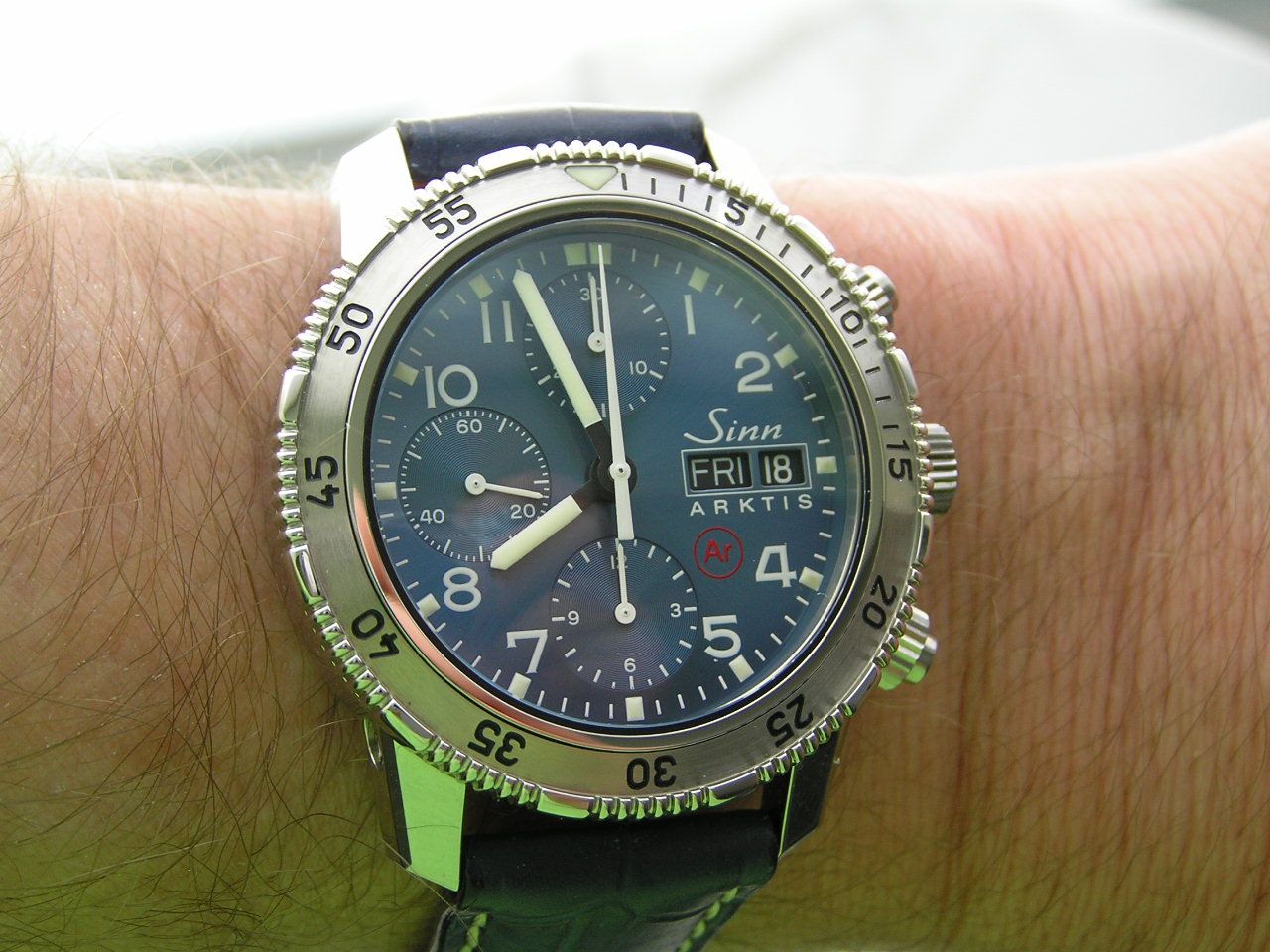
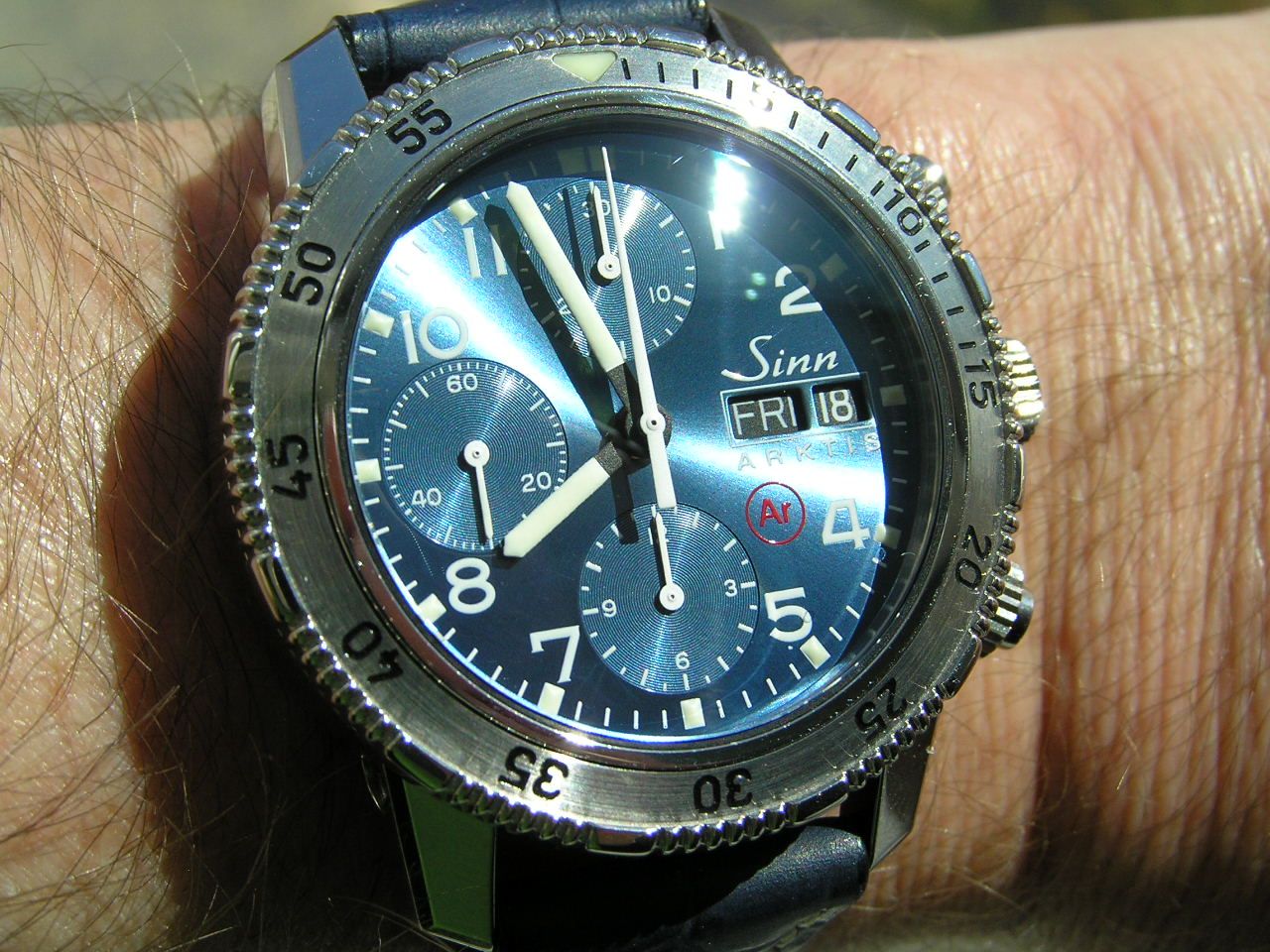
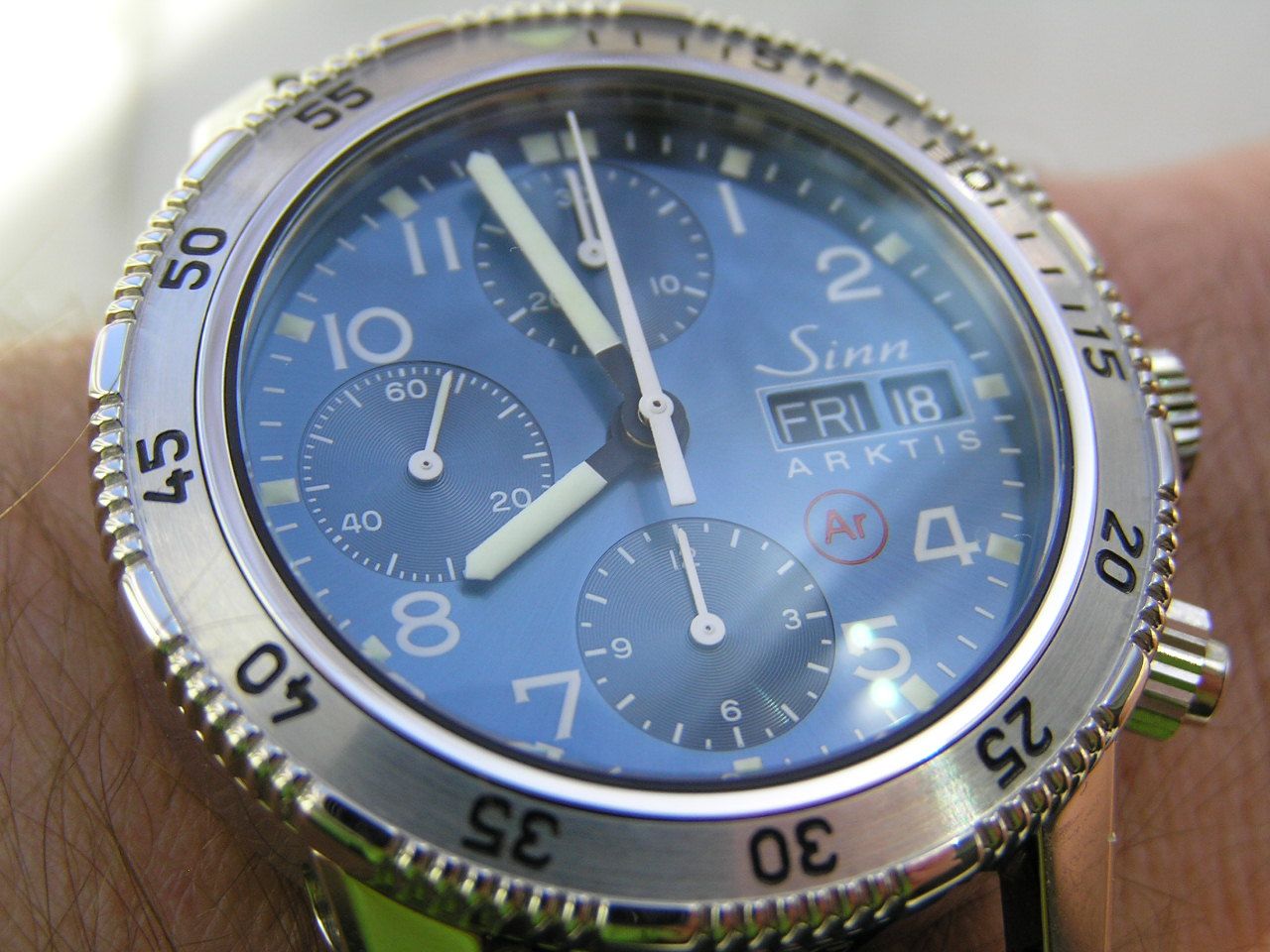
I was attracted to this Sinn 203 Arktis not so much for its technological achievements, but for its unique look, which certainly stands apart in a crowd.  The blue dial is absolutely stunning and shows off a shade of blue unlike that of any other blue-dialed watch I have seen.  The dial is electroplated and is UV resistant, so fading should not be a problem.

The 203 Arktis (‘Arktis’ translates to ‘Arctic’ in English) is named because this watch utilizes a special blend of lubricating oils that maintain their viscosity in extremely low temperature, allowing the watch to keep running long after a standard mechanical watch would have stopped due to its lubricating oils thickening up.  Sinn recommends using this watch is alpine or high-altitude settings.  Where I live, the elevation is about 600 feet above sea level, so I’m good.

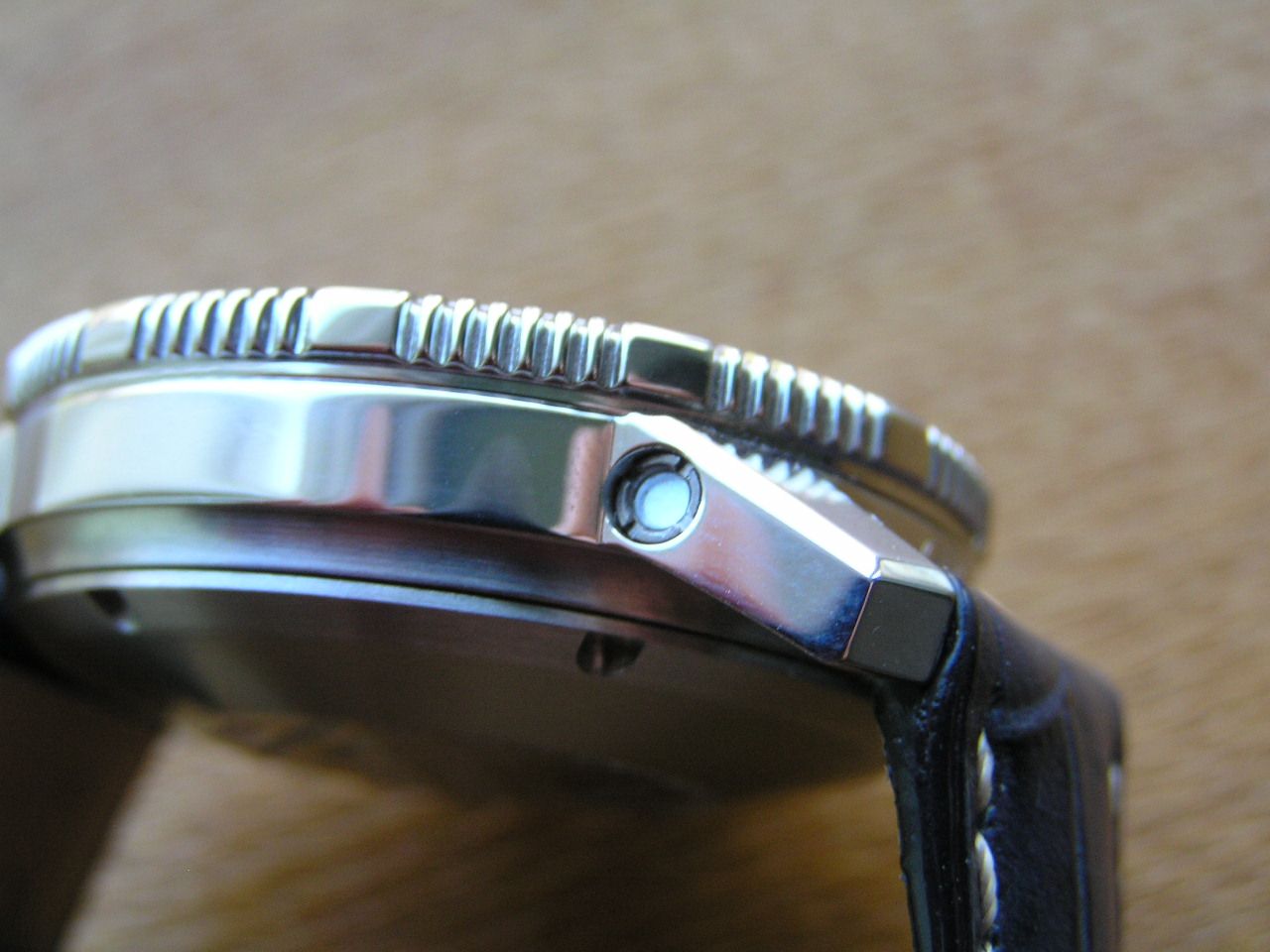
The Arktis is rated to operate down to -45 degrees Celsius (-49 degrees Fahrenheit) and up to a sweltering +80 degrees Celsius (176 degrees Fahrenheit).  It also is filled with inert Argon gas to help prevent build-up of excess humidity (no fogging of the crystal) and even has a copper sulfate capsule installed in the lower left lug that absorbs excess humidity and will turn blue once it’s reached its absorption limit. 

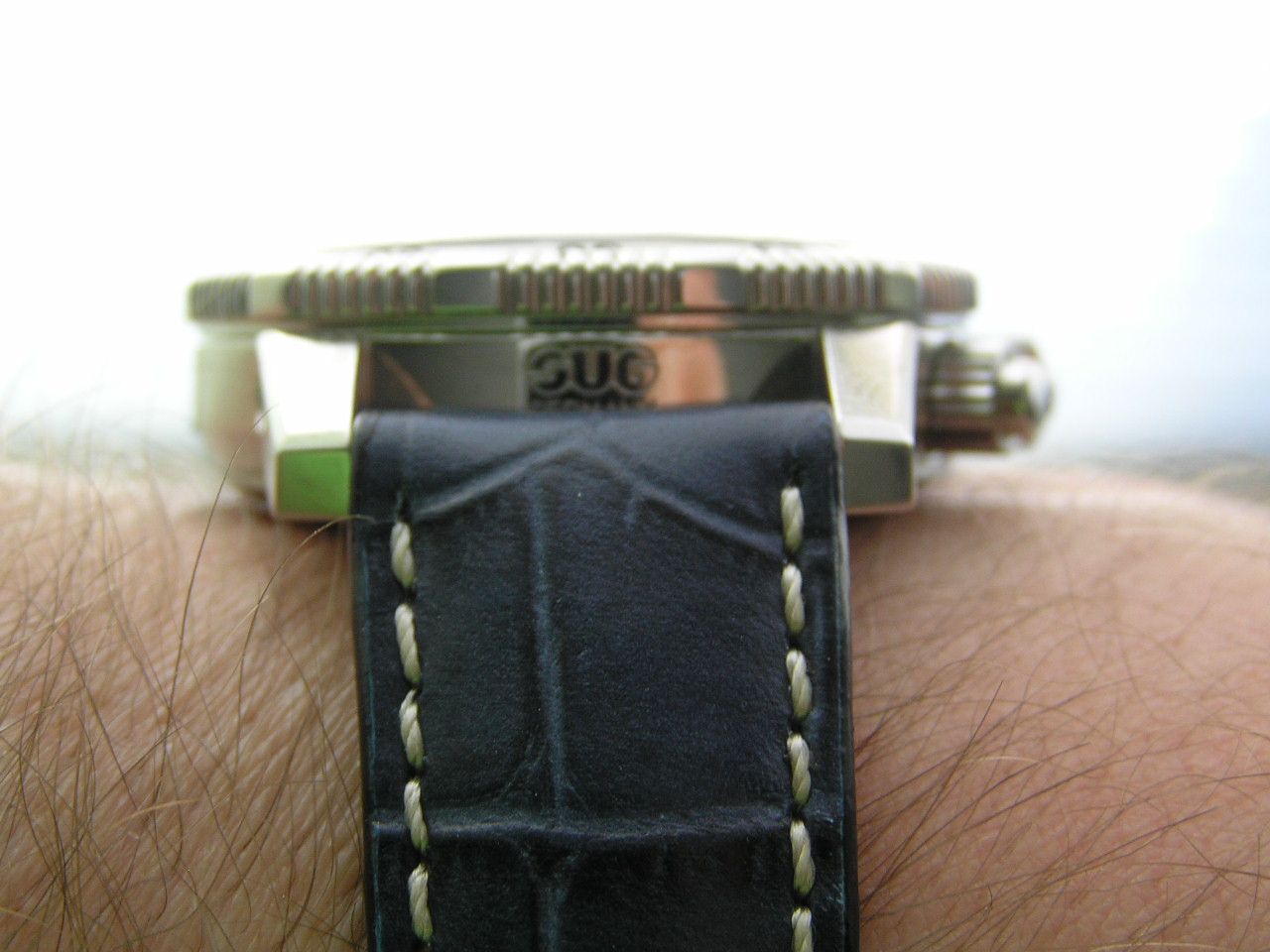
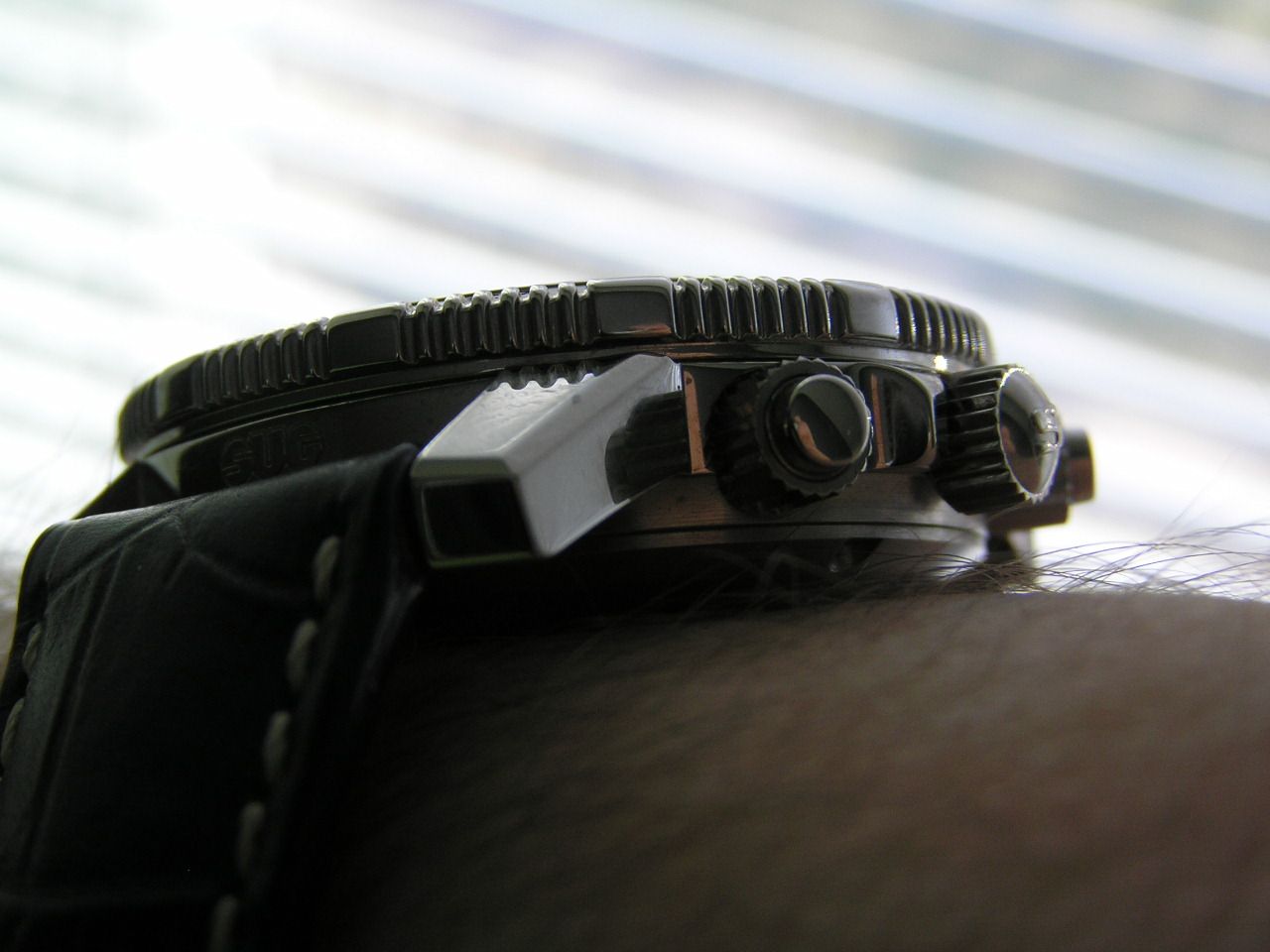
Combine these nifty features with a 300 meter water resistance rating, screw down crown and screw down chrono pushers and a high-quality stainless steel case manufactured by SUG of Germany and you have one mighty rugged and interesting watch.

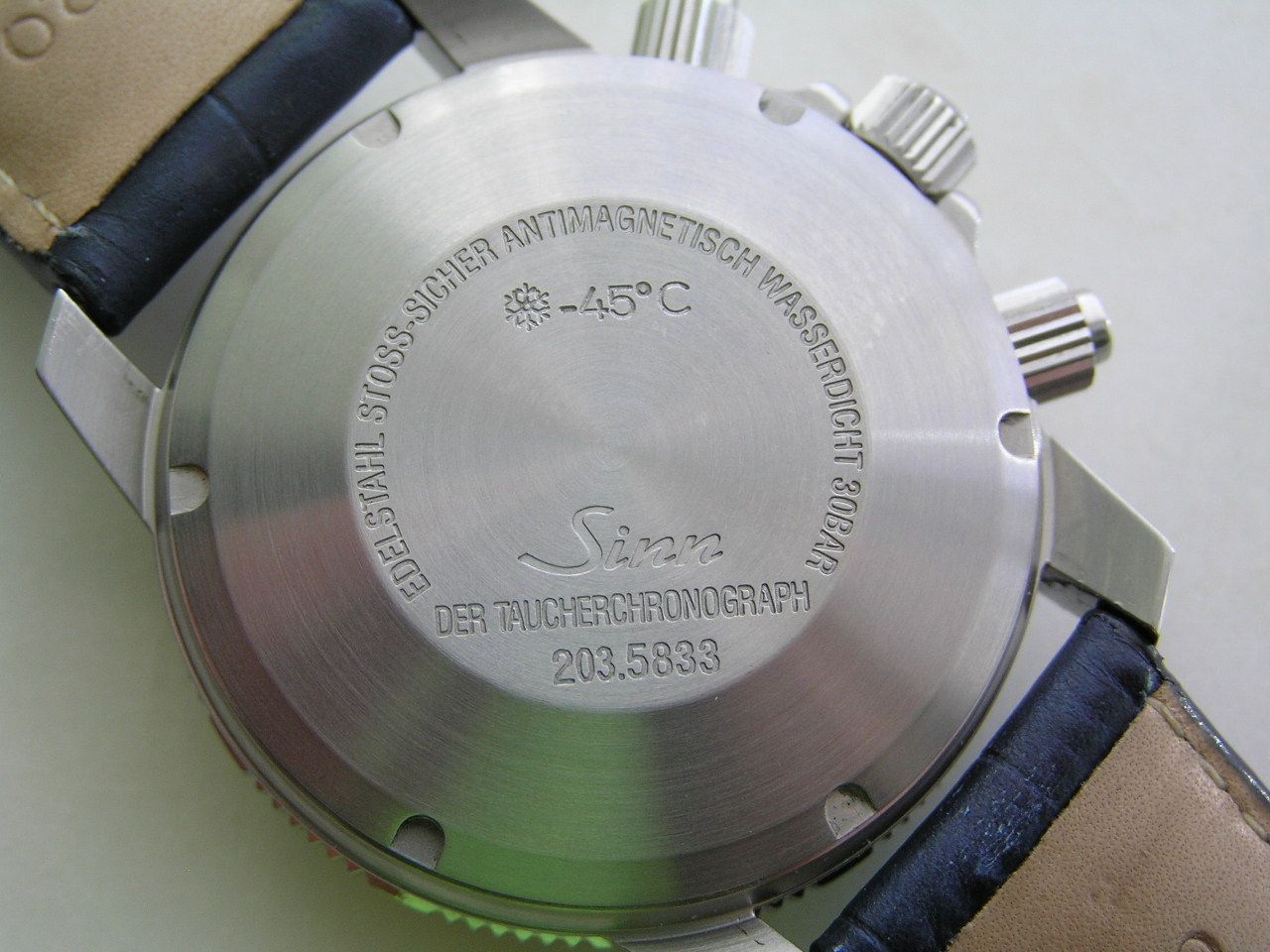
The Arktis starts with a fully polished stainless steel case made by SUG in Germany.  Diameter is 40.8mm without pushers or crown, 45.2mm including the signed screw down crown.  A nearly perfect size for most users.  Thickness is 16.2mm, lug spacing is 20mm.  The case back screws down and is brushed, with all wording in German (and emblazoned with a -45 C mark to remind you of its extreme temperature resistance).

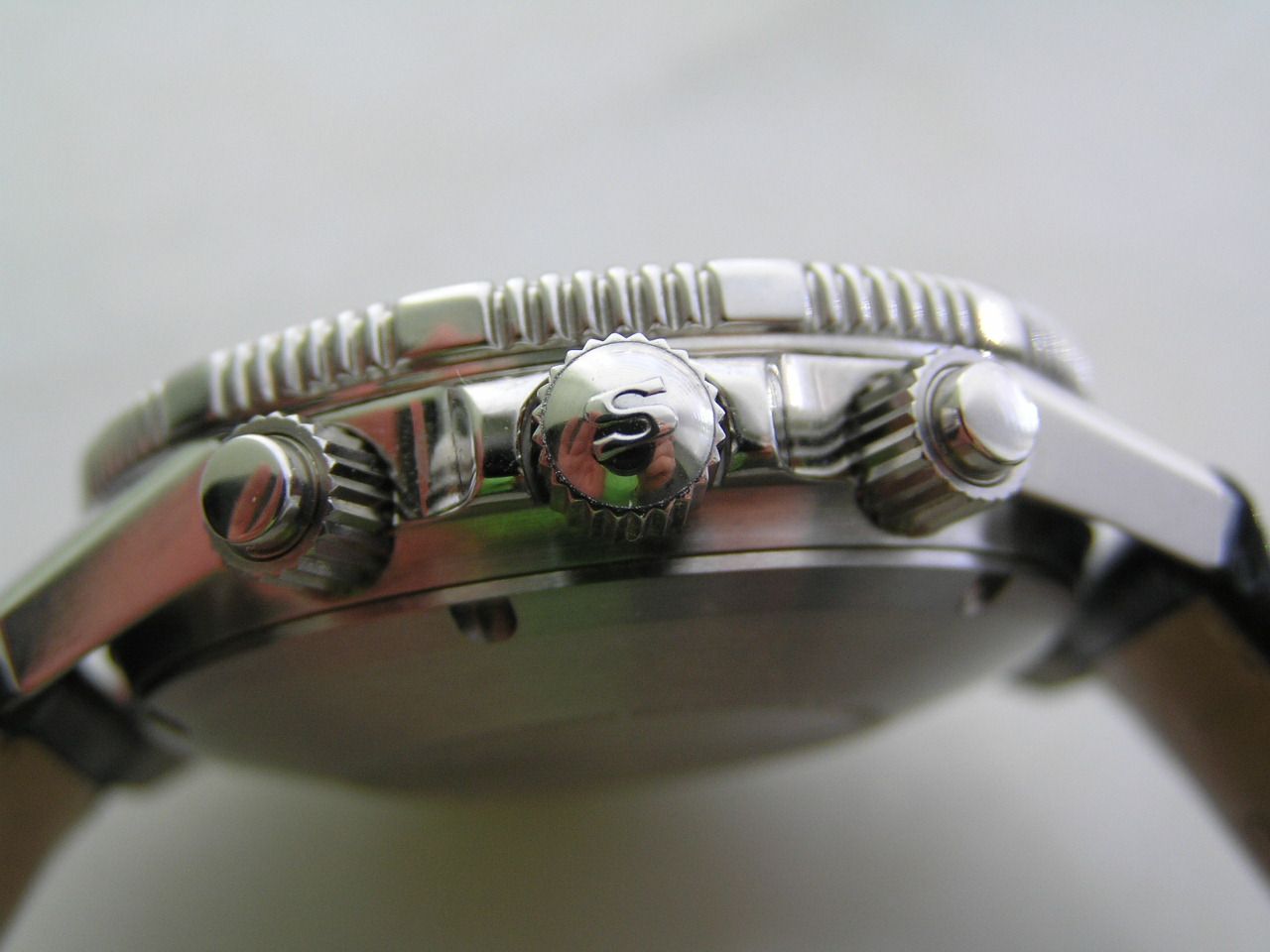
The bezel is a standard 60-click unidirectional type with an alternating smooth and knurled edge.  The numbers on the bezel are engraved and infilled with black paint, along with hash marks for the first 15 minutes.  A lume infilled triangle marker is at the 12 position.  The bezel clicks rather loudly with a sort of snap-action to it.  There is some backlash/play in the bezel but not enough to be annoying.

The dial is, as stated above, a beautiful shade of blue.  The name ‘Arktis’ certainly does this color proud, I would venture to call it ‘ice blue.’  I also like the hands on this watch.  The hour and minute hands are white (actually a very faint lume green, but they look almost white in most light conditions).  The center chronograph seconds hand and all subdial hands are pure white.  White arabics surround the dial, with lume squares running every five minutes around the perimeter of the dial (double squares at 12), with white minute markers between the arabics.

Minimal dial printing is another nice touch, with just the Sinn name, Arktis name and the symbol for Argon gas (‘AR’ in red) printed on the dial.

The subdial layout is standard Valjoux 7750, with the subdial at 12 being the 30-minute chrono totalizer, the subdial at 6 being the 12-hour chrono totalizer and the subdial at 9 being the watch seconds hand.  The large center seconds hand is the chronograph seconds hand.

A quickset day/date window is at the 3 position, with a divider between the day and date, with a subtle white rectangle surrounding both windows.  The day/date wheels are the proper white on black and look good, alignment within the windows is acceptable.  A domed sapphire crystal with double anti-reflective coating caps the dial.

The screw down crown screws in a satisfying four full turns, with the lockdowns on the chronograph pushers require over five turns to unlock.  When fully unlocked in the counter clockwise position (pusher lockdowns turn away from the case) the chronograph can be used.  Screw the lockdowns towards the case to lock the pushers. 

The crown on the Arktis also pulls out quite a bit from the case and you need a pretty good yank on it to get it to the time setting position.  Not a complaint, but just be careful when pulling the crown out to set the watch.

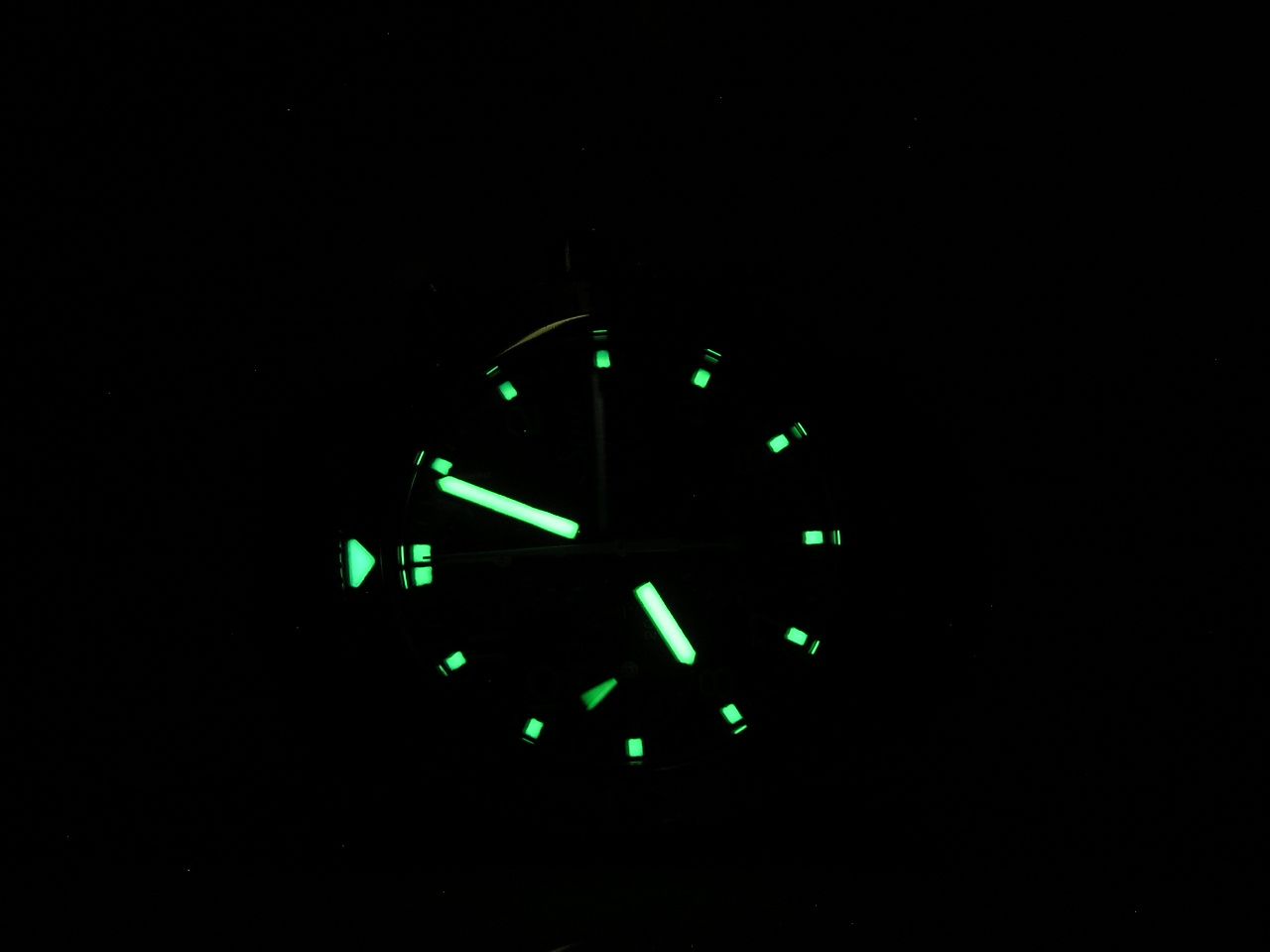
Lume quality is good, with the hour and minute hands, the subdial seconds hand and the square markers illuminated along with the triangle on the bezel.

The 203 Arktis uses the tried and true Swiss-made Valjoux 7750 25-jewel automatic chronograph movement running at 28,800 beats per hour.  During testing in my lab, it has run at +10 seconds over 24 hours with a superb 54 hour power reserve.  Start and stop action and reset on the chronograph is fine, as to be expected from such a venerable watch movement.

The Arktis is available on both a stainless steel bracelet or a blue calf leather croc. look strap with white contrast stitching.  The watch has been photographed on the leather strap; I have the bracelet, but it’s sitting in the watch box under wraps.

The strap measures 20mm at the lugs, tapering to about 18mm at the stainless steel buckle.  The strap is of high quality and is fairly well padded, but still flexible.  There are two keepers, one fixed and one floating.  The strap looks great with this watch, the blue color coordinating nicely with the dial.

The stainless steel bracelet is also a gem, with solid links, solid end links and a double locking clasp with machined deployant and machined dive extension.  The design of the bracelet is unique to Sinn and is somewhat of a trademark of theirs, you know it’s a Sinn if you see this bracelet.

The bracelet links are secured with screws, but with hex heads on both ends.  Sinn supplies the required Allen wrenches so bracelet adjustment is easy, but with screws on both ends, it can get a bit tricky to balance everything.  A steady hand and all is well.

The bracelet measures 20mm at the lugs and tapers to about 17.7mm at the clasp.  The clasp itself is signed and brushed, with the fold-over safety lock being polished.  There are no half-links on the bracelet, but there are three micro-adjustment holes on the clasp.

At some point I may install the bracelet on my Arktis, but for now, I’m happy with the strap.

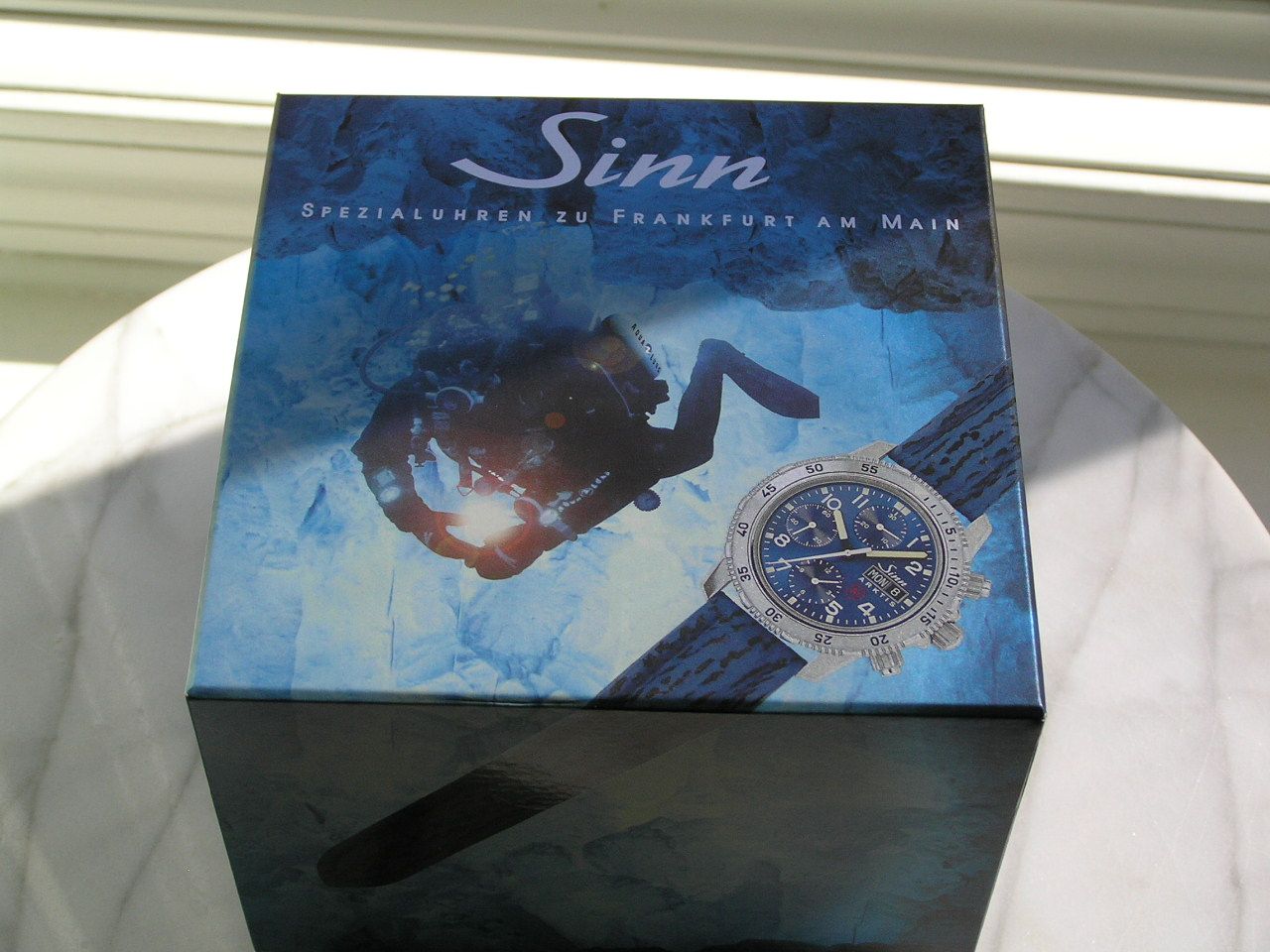
Presentation is very nice, with a full color two-piece outer cardboard box and a leatherette padded inner box with Sinn signed screwdriver/pin tool, the bracelet adjustment wrenches, a simple printed instruction sheet (in German) and a CD ROM with instructions in English.

In summary, the Sinn 203 Arktis is a tool watch of a different sort.  It’s truly engineered to perform in abstract conditions while also looking very sporty.   It’s not monstrously huge or garish is any way, and that’s what makes it so cool.  You can wear this watch with a suit at your next board meeting, with swim trunks on a surfboard or while scaling the Himalayas with your Sherpa.  The Arktis is a beauty and the blue dial can’t be beat.

Pros: superb blue dial, reliable Swiss innards, unique and functional engineering features, great overall look and size 

Cons:  servicing has to be done at Sinn due to Argon gas filled case, dehumidifying capsule and special oils, so cost can get a bit pricey, a brushed case would look better than the high polish

Verdict:  a tool watch for the ages, this is one watch that has functionality and good looks in droves and is also a piece that you won’t see the other guy wearing.  Sinn, congrats on an amazing watch!


Thanks for reading and enjoy the pictures.

Excelsior!

-Marc