Monday, October 17, 2011

Review of Omega Seamaster Planet Ocean 42mm

Model # 2201.50.00

Brand/Model:  Omega Seamaster Planet Ocean
Movement:  Swiss Co-Axial Automatic
Material:  stainless steel case and bracelet
Complications:  date display
Price:  MSRP:  $4150 USD
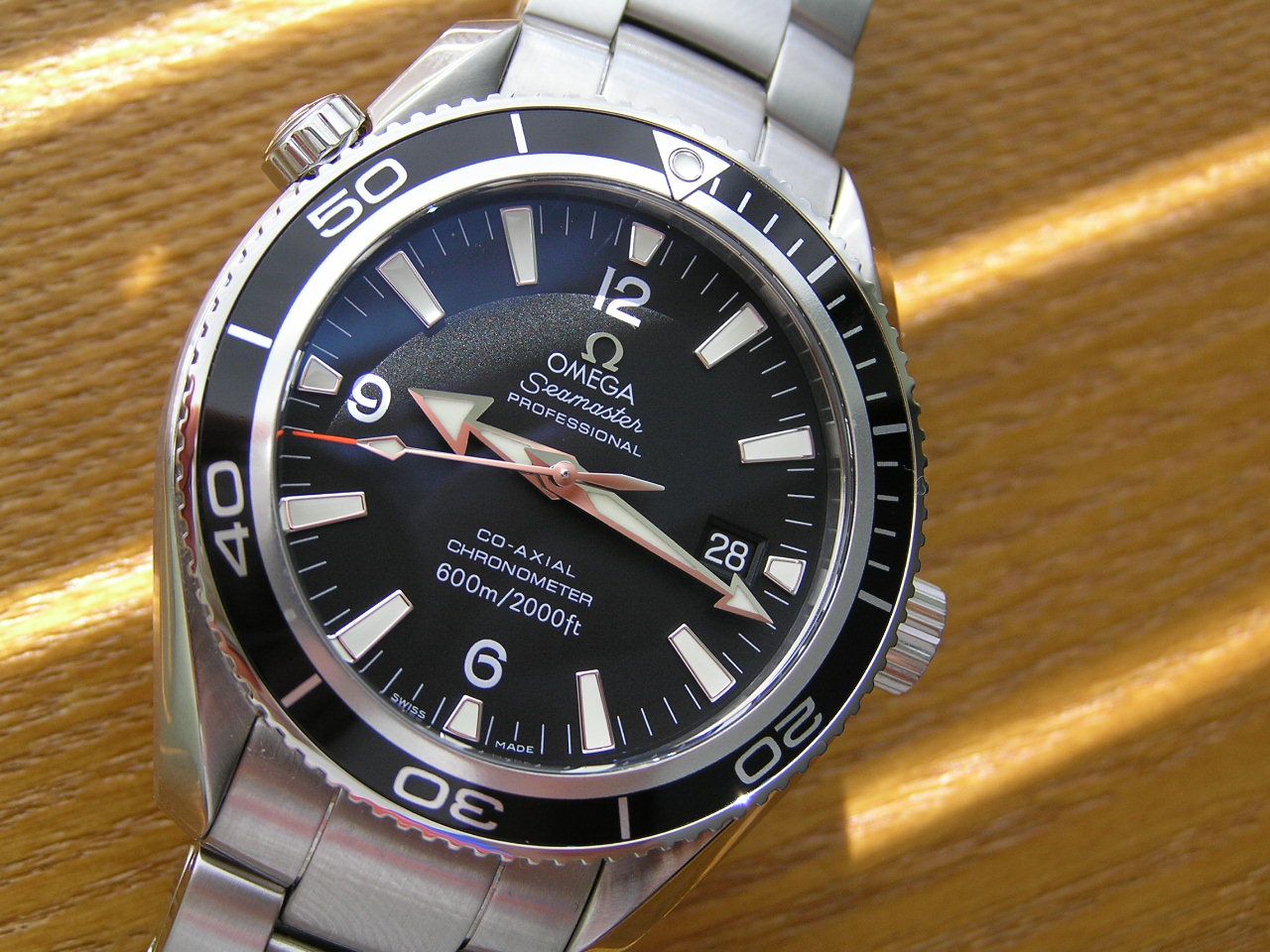

Plenty of photos follow the review.  Click on the pictures to enlarge.


What more can be said about an Omega watch?  Or about the iconic Seamaster models?  Well, a few years ago when Omega introduced the Planet Ocean line of Seamaster automatics, they caused a buzz, and rightly so.  Here was a watch available in either 45.5mm or 42mm sizes, standard or chronograph, in a variety of color combos (including an orange bezel, yep, they started the recent orange bezel craze) with stainless steel bracelets, rubber or leather straps with superb styling and immense good looks.  Sounds like 007 himself, Daniel Craig!

I have owned a ‘regular’ Seamaster Pro automatic for over eight years and consistently feel it’s one of the finest watches in my collection in terms of accuracy, quality, looks and value.  When I picked up this Planet Ocean several months ago, I was hoping to feel the same love for it, and overall, I do.  It’s simply a great watch.

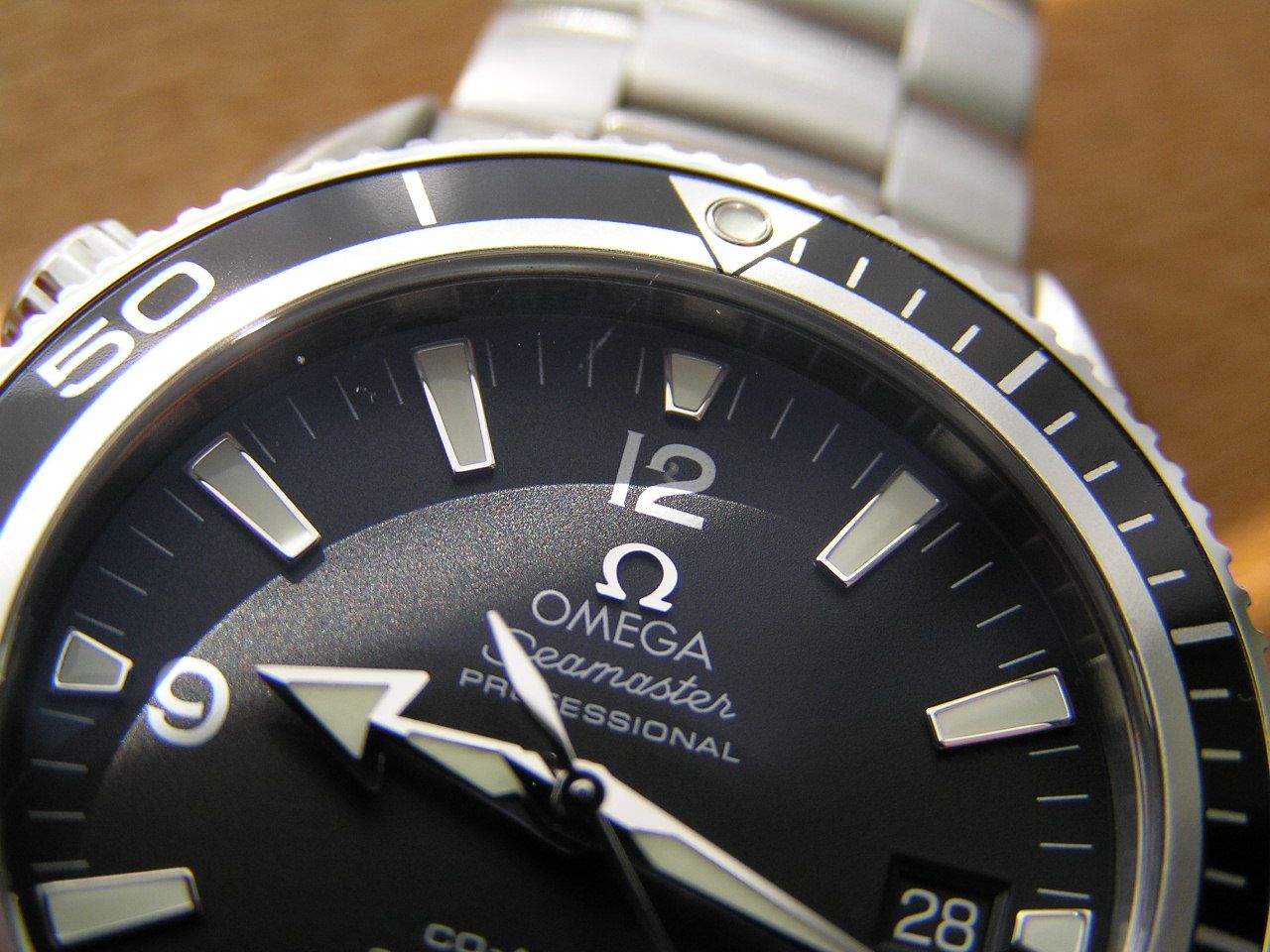
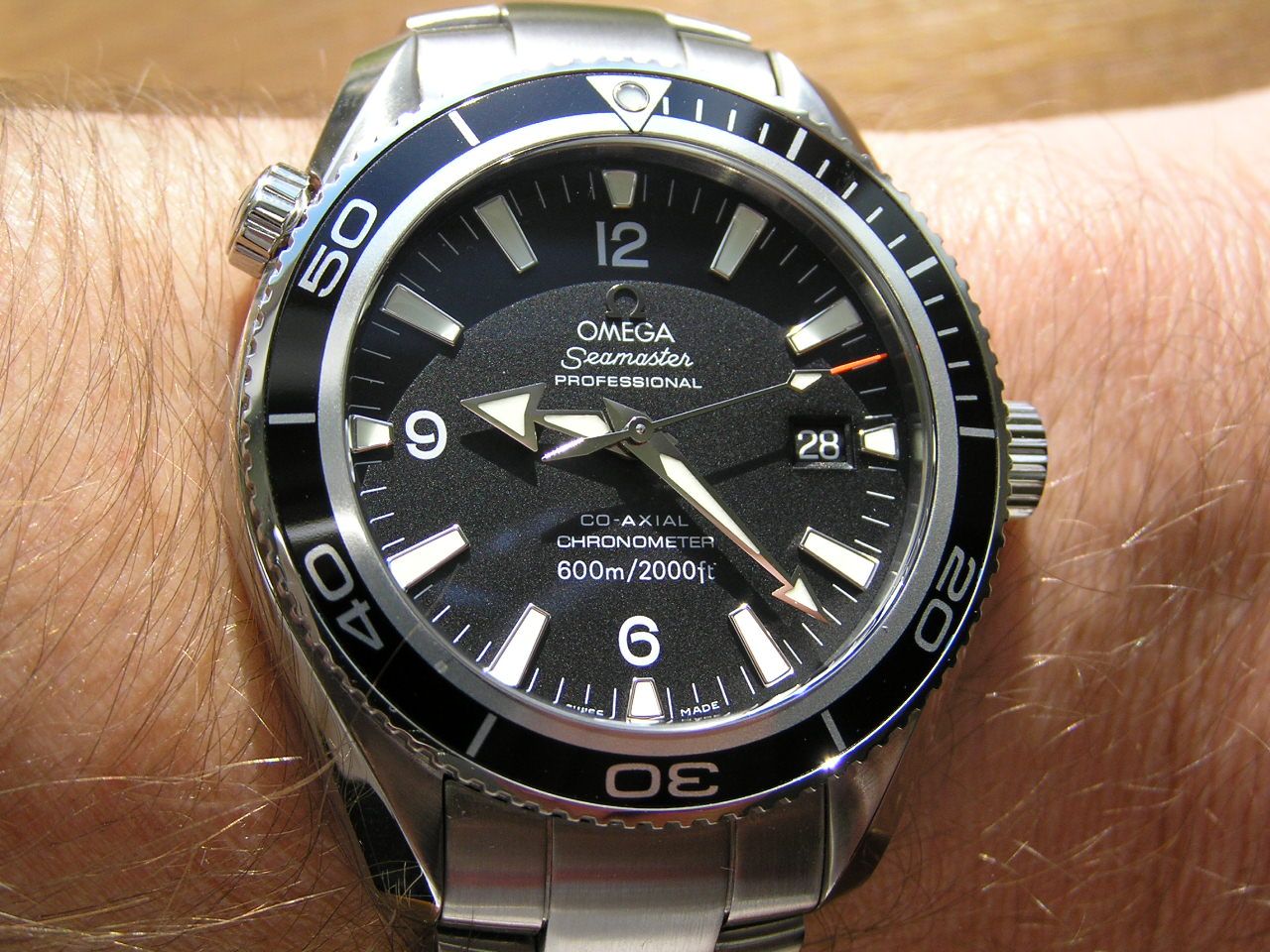
I choose the most conservative color combo and size for my Planet Ocean:  42mm, black dial, black bezel, stainless bracelet, white arabics.  This watch simply looks amazing in person with a high degree of anti-reflective coating on the domed sapphire crystal that gives the watch a real quality look and feel.  The broad arrow style hands (the defining look of the Planet Ocean – ‘PO’ for short) are stunners.  The orange/red tipped seconds hand adds just a bit of color to the presentation.  The unidirectional bezel, with its thinner insert, clicks 120 times for an hour's worth of timing with an inset lume pip at 12.  It all works in outright harmony.

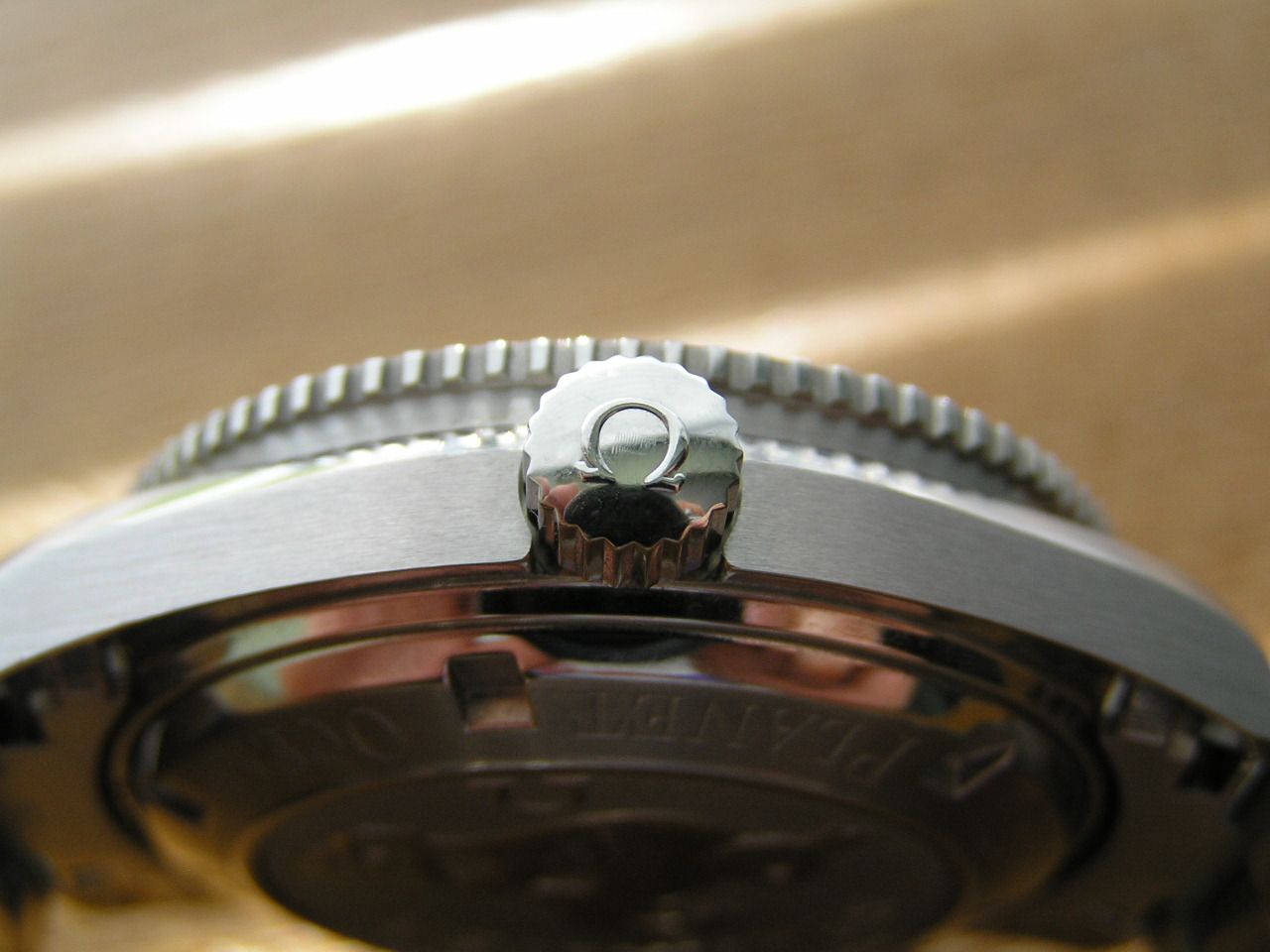
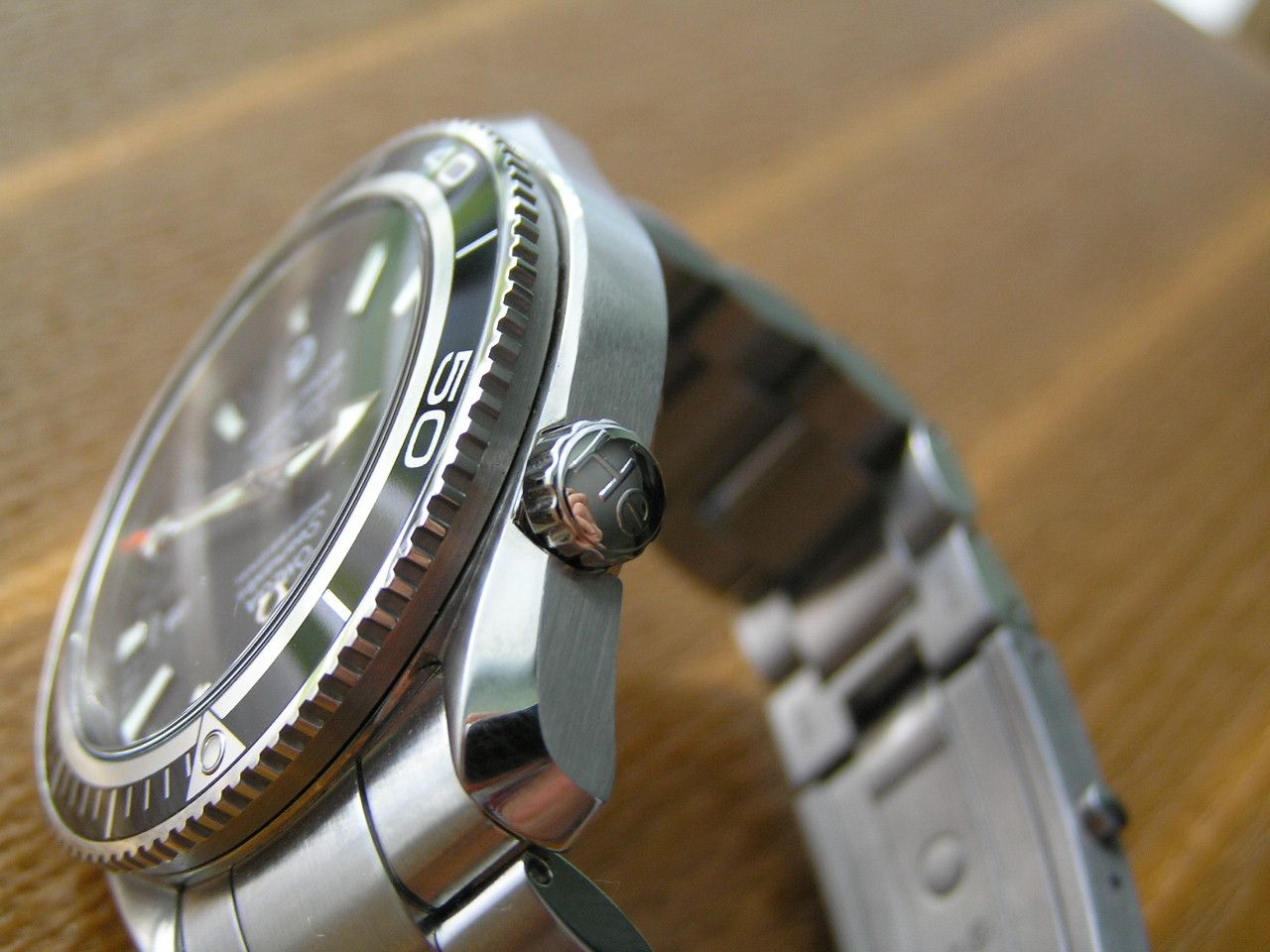
The PO begins with a 42mm stainless steel case (actually about 41.7mm without crown; 44.4mm crown inclusive) with beautifully executed brushed and polished finishing and Omega’s classy ‘turned in’ lugs.  As previously mentioned, a domed sapphire crystal caps the dial and exhibits no reflections whatsoever, due to the coating that is applied.  Lugs are 20mm, case thickness is 14.2mm.

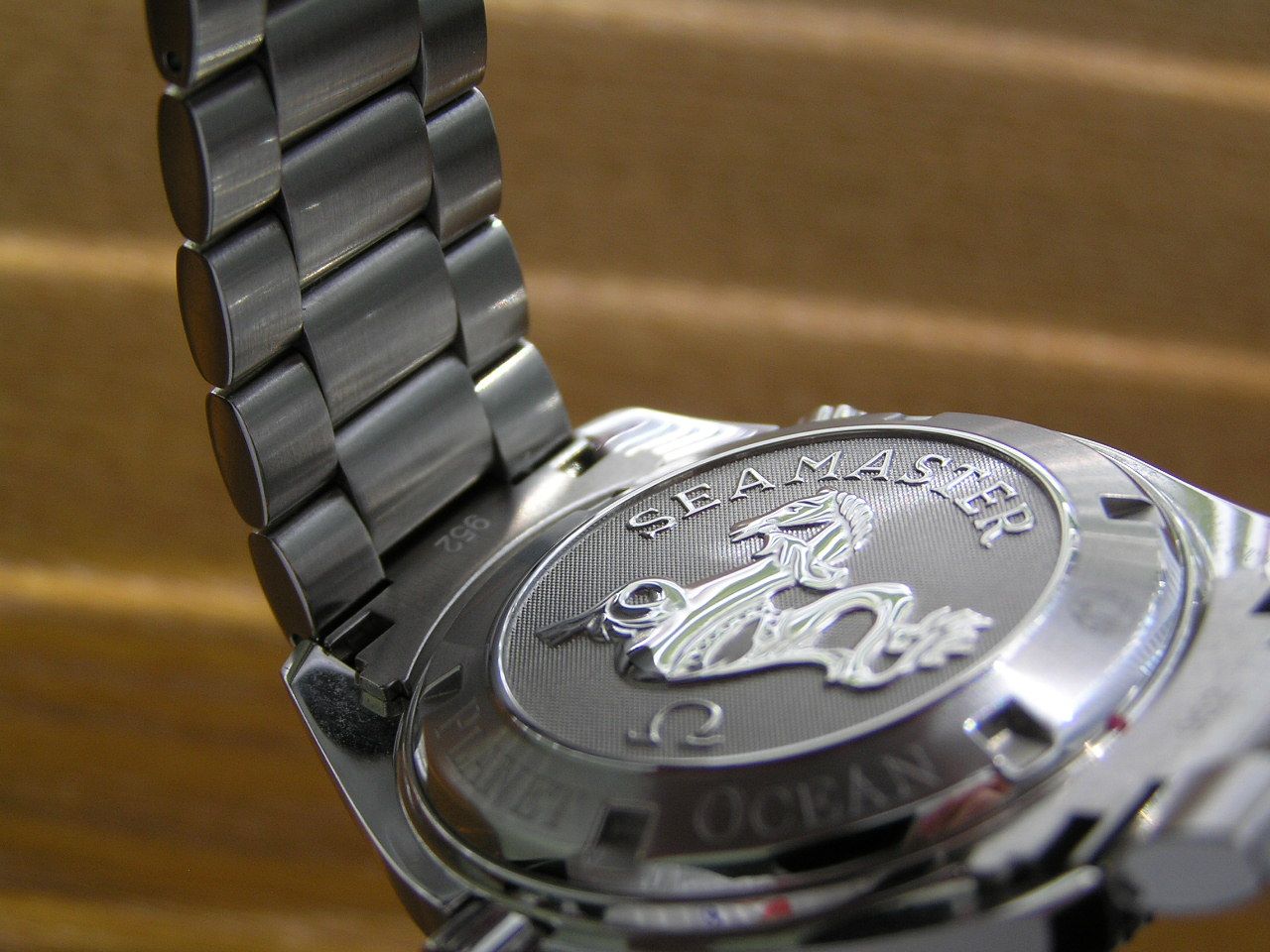
The caseback screws down and is an example of perfection with its clean and minimal design.  Minimal printing encircles the border with an artfully crafted and absolutely lovely heavily embossed Seamaster seahorse logo in the center, which is presented in deep relief and polished to perfection.  The logo looks like a proof coin from the U.S. mint, it is truly that spectacular.

The PO is also a no-nonsense diver, good for 600 meters of water resistance, with a screw down, signed manually activated helium escape valve (HEV) and a screw down, signed main crown.

Inside the PO ticks Omega's Caliber 2500 co-axial escapement movement, with a rated power reserve of 48 hours, which was met in my testing lab.  This movement is also chronometer certified, and perhaps my only disappointment with my PO is that it barely achieves chronometer performance, running about -5 seconds per day (this from a brand new watch not previously owned or worn).  Yes, that is still good performance, but considering my Seamaster Pro still runs at +1 per day after eight years, I expected better.  I’m sure a tweak to the regulation would cure its ‘just’ chronometer performance, but for now, it stays as is.

The Caliber 2500 is an ETA 2892-2 base movement with 27 jewels.  Omega tweaks this base movement, adds the co-axial escapement and tops it all off with a rhodium plated finish, among other decorations.

The dial on the PO is a pleasing matte black with applied luminous markers and screened arabics at 12, 6 and 9.  A quickset date window (with white on black calendar wheel) is at the 3 position.  The broad arrow hands are executed to perfection with inset lume, with the orange/red tipped second hand sporting a small arrow of lume near its tip.  Lume, as with any watch in the Seamaster lineup, is bright and long lasting, consistently among the best in the business.

The bracelet on the PO is rather plain in my eyes, fully brushed with a three link design of simplicity.  The classic Omega pushbutton brushed clasp is signed ‘Seamaster’ and ‘Planet Ocean’ and works great, with a machined deployant and machined diver extension.  Bracelet sizing was much easier than on my Seamaster Pro, the link pins and collars were removed without a fuss.  Since there are no micro-adjustment holes on the clasp, Omega includes half-links to achieve a better bracelet fit.  Luckily, the fit on my PO is pretty good.  The bracelet measures 20mm at the lugs and tapers to about 17.9mm at the clasp.

At 42mm, the PO wears just about perfect and looks fantastic.  For my smaller wrist, the 45.5mm size would be just too big.  People really love the look of this watch!

Presentation is standard Omega, read:  good.  The red leather(ette) box, padded interior, plastic features cards, etc. are all appropriate to this watch and its price point.

While the Seamaster Pro is an undeniable classic, I feel the Planet Ocean has already achieved (or will do so soon) iconic status among the WIS amongst us.  Damn good looks, strong performance and excellent quality make this watch a winner.
 

Pros:  stunning looks, amazing caseback embossment, unique co-axial movement, chronometer rating, great build quality

Cons:  bracelet a bit plain, should have some sort of micro-adjustment capability on the bracelet

Verdict:  buy it for looks, buy it for quality, buy it because it’s an Omega, but just buy it, because it's simply a great watch.  Well done!


Thanks for reading and enjoy the pics!

Excelsior,

-Marc


Friday, October 14, 2011

Review of Magrette Moana Pacific Regattare PVD Automatic

Model # Moana Pacific PVD

Brand/Model:  Magrette Moana Pacific Regattare PVD Automatic
Movement:  Japanese automatic
Material:  PVD stainless steel case, leather strap
Complications:  none
Price:  MSRP:  $500 USD; street price around $350 USD


Plenty of photos follow the review.  Click on the pictures to enlarge. 

When I started seeing the Magrette watch brand pop up on several watch forums the last few months, I became mildly intrigued.  Here is a small, boutique brand out of all places, Auckland, New Zealand (City of Sails, as is proudly proclaimed on the caseback), producing limited edition, limited run watches of acceptable quality and somewhat unique designs.  The company has been around since 2006 and was founded by a chap named Dion McAsey, who actually signs the warranty cards that are enclosed with the watches one purchases.

McAsey’s philosophy is to “bring the personal touch into all our timepieces we create.  We only produce restricted batches at a time so we can focus on creating a quality product for our customers.”  His design principle is ‘Stay minimal, be bold.’  I think that sums up the subject of this review, the Magrette Moana Pacific Regattare PVD automatic (that’s a mouthful for a minimal design watch!)

I’ll be the first to admit that I’m not usually a boutique watch kind of guy.  There are just so many boutique brands around these days and most of them don’t seem to be doing anything original.  The same could be said in part for Magrette, as the Moana Pacific is another in a seemingly endless stream of Panerai-inspired watch designs from an endless stream of companies.  But the Moana Pacific is a bit better than some, although at this price point, it better be.

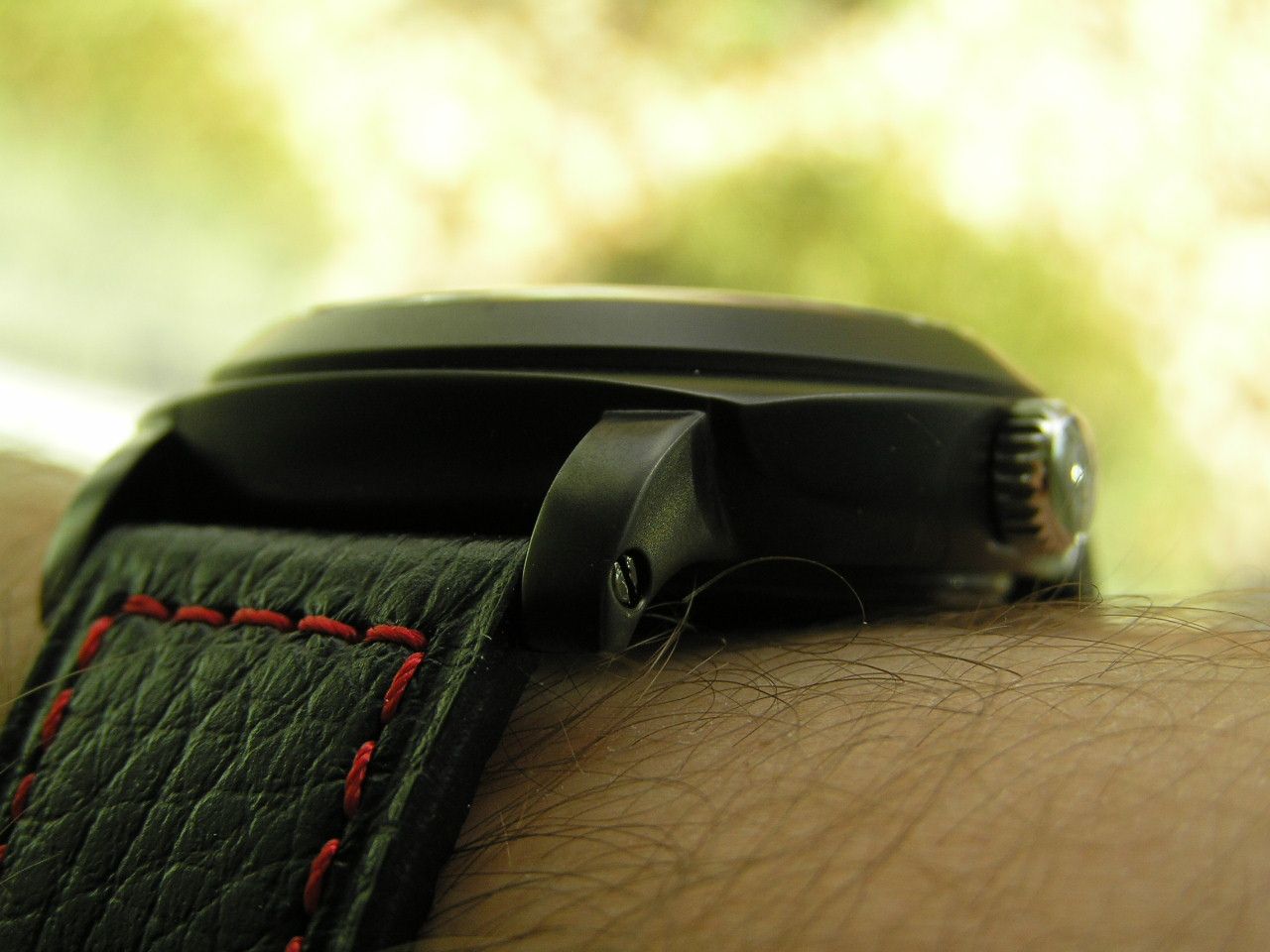
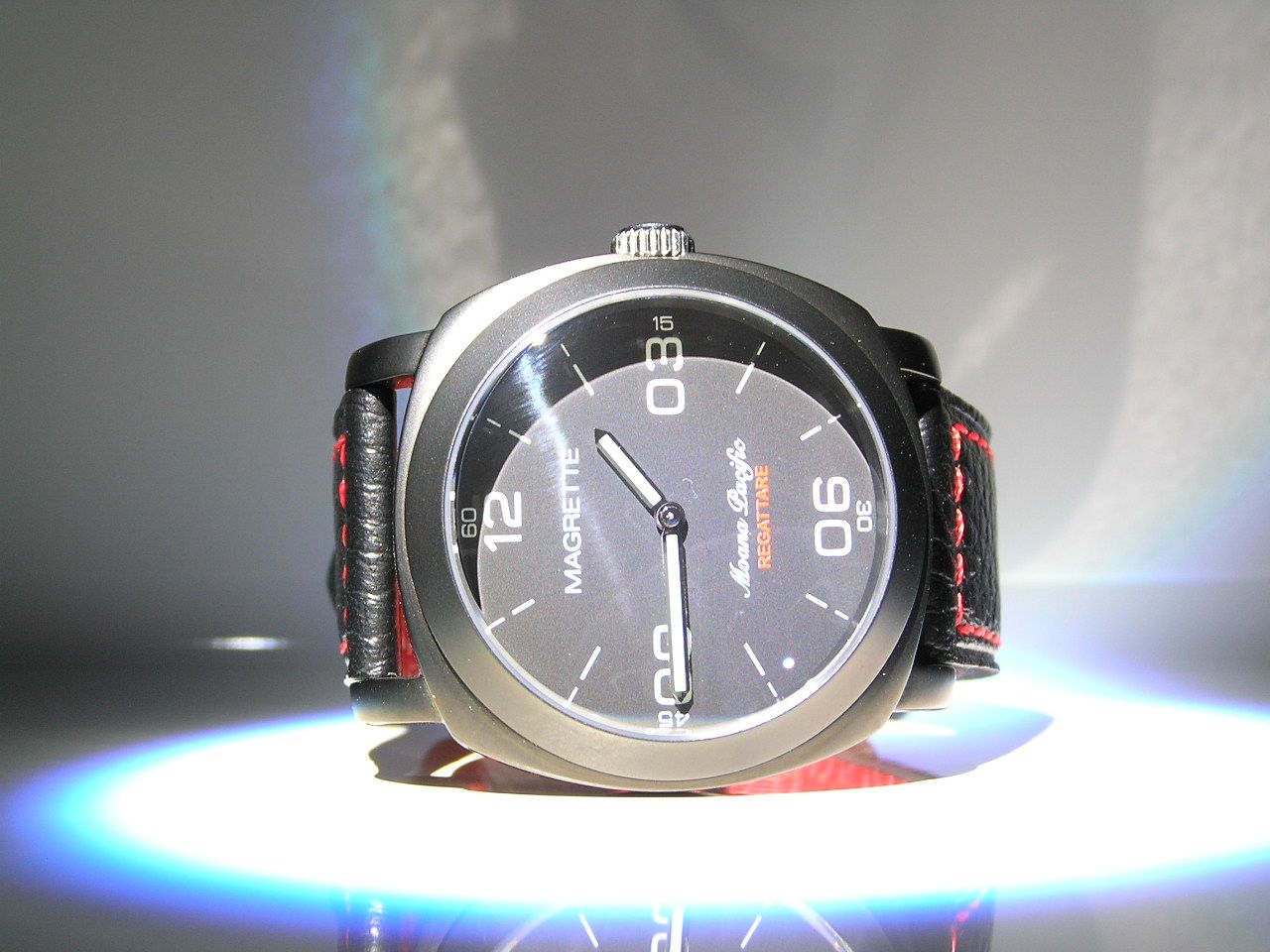
The Moana Pacific was a limited 500 piece run which is sold out.  The watch starts with a 316L stainless steel case with black PVD coating.  The application of the PVD is first-rate and is evenly applied to all case surfaces and is smooth to the touch.  The case measures 43.5mm without the screwdown crown, 46.3mm including the crown.  Lugs are 24mm, thickness is robust at 15.9mm, due in part to the highly domed (at least in my opinion) sapphire crystal.

The caseback is black PVD and screws down, with a display window exposing not the watch movement as is typical, but a piece of ancient New Zealand Kauri wood along with the serialized limited edition watch number.  The wood has a cork-like appearance and is certainly something you won’t see on any other watch.

The Moana Pacific, despite its nautical leanings and naming, sports a very modest 5 atm water resistance rating.

One odd design element is the stainless steel crown, albeit signed and screwdown, that is finished in natural silvertone stainless, not black PVD like the rest of the case.  This tends to standout (not in a good way) and the only reason I can think this was done is because the crown sees the most wear, so to avoid the wearing of the PVD finish, the crown was left in plain stainless steel. 

Ditto for the strap’s buckle, again, plain stainless and not black PVD.  Again, my thinking is that the buckle would see wear and be subject to the ubiquitous ‘desk diving’ scuffs and scrapes, leading to deterioration of the PVD finish, so it, like the crown, was left in plain stainless steel.

Powering the Moana Pacific is the workhorse we all know and mostly love, the Miyota 8200 series Japanese automatic.  This movement keeps good time and can be manually wound, but not hacked.  If you’re one of the people that is bothered by the occasional Miyota seconds hand jitter, not to worry on this watch, as there is no seconds hand present.  No date either.  It’s the McAsey ‘minimal’ design in action.  I actually found the lack of a second hand, especially on an automatic, to be rather disconcerting. 

At this price point, I’d like to see the new higher-grade Miyota automatic that hacks or a Swiss ETA 2824-2 inside the Moana Pacific.

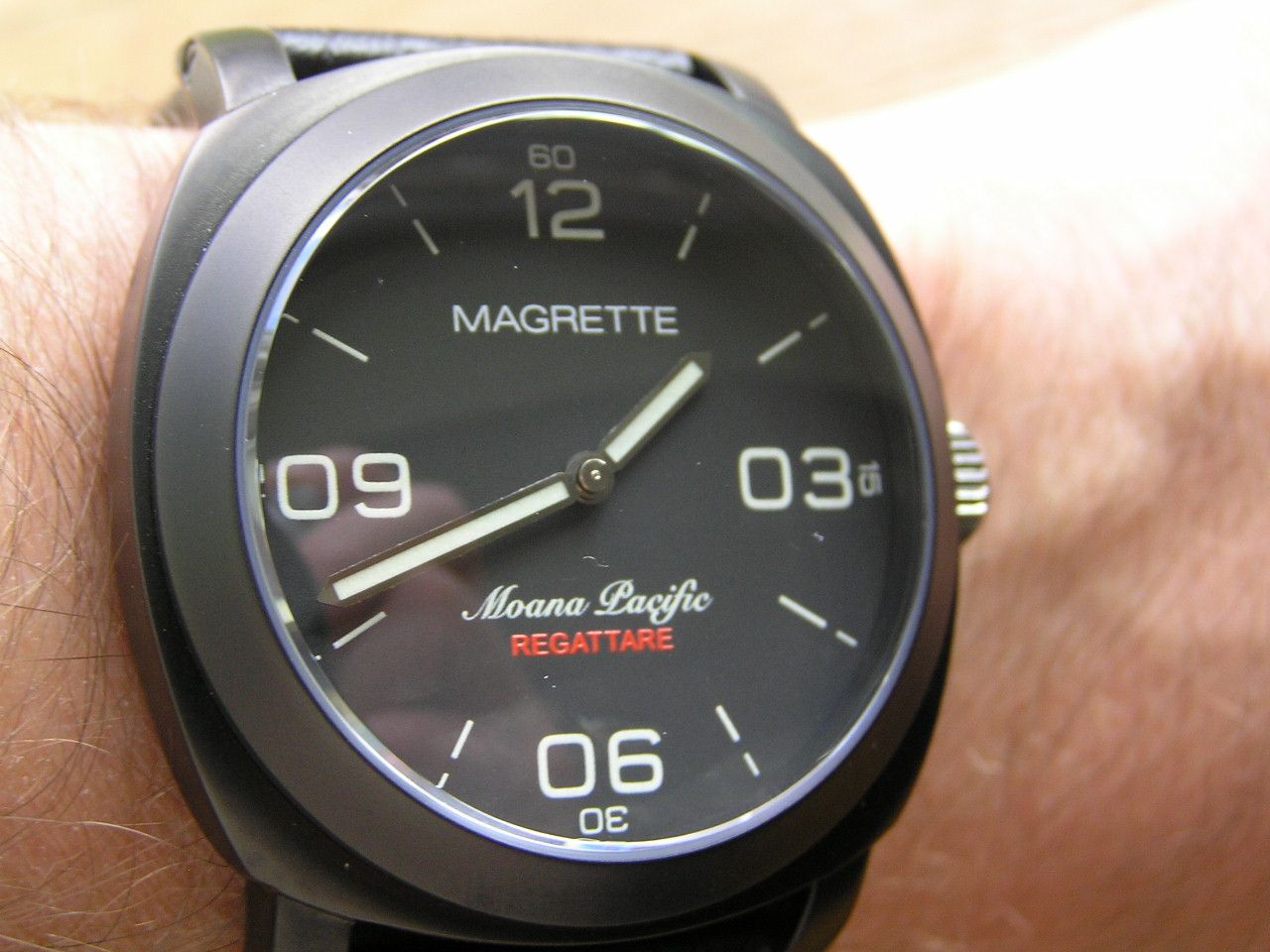
The dial is nicely done in a perfect matte black, with large arabics at the quarter hours, flanked by ‘60’, ‘15’, ‘30’ and ‘45’ arabics at each quarter hour, too.  Magrette added zeros to the arabics at 3, 6 and 9 for a somewhat different look. 

There are also luminous markers at the five minute marks on the dial, along with luminous hour and minute hands in silver with lume infill.  The lume on the hands is average, the lume on the markers and arabics (and the ‘Moana Pacific’ script on the dial) is not very bright or long lasting.  They should do all the markings on the dial and the hands with superluminova and be done with it.

The crystal is sapphire, but is thick and pretty well domed, leading to lots of reflections.  Since there is no anti-reflective coating, the glare can get pretty annoying (and make the watch hard to photograph).

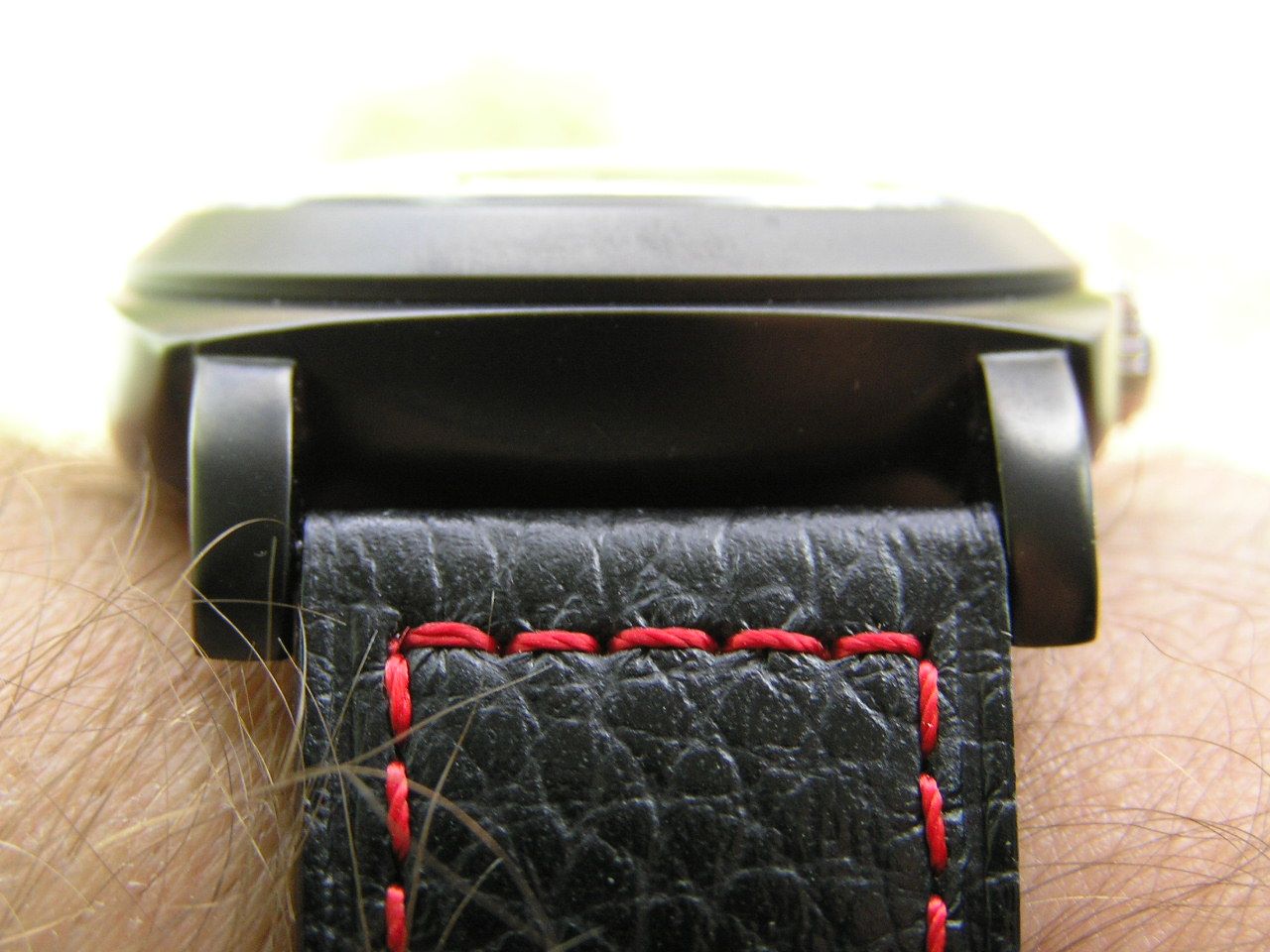
The strap is a thick, semi-padded leather style with a red lining and red contrast stitching.  One large floating keeper holds the free end of the strap in place.  The signed buckle, as mentioned before, is silvertone stainless steel. 

The strap is fairly soft and flexible and seems to compliment the watch well.  The strap is 24mm at the lugs and tapers to about 21.3mm at the buckle.  The strap is held in place with screw pins at the lugs (the kind you need a screwdriver in each hand to remove).  A nice touch, but I’d rather see them use regular spring bars and invest more in the movement.

Packaging is rather unique, with the watch placed in a cloth roll-up holder, much like a tool holder that you might find in a vintage car.  The roll-up is inside an unfinished wooden box with a sliding top, emblazoned with the Magrette logo.

By reading this review, you may think I didn’t like too much about this watch.  No, I admire it for trying to break out of the box with certain design elements, but in the end, there wasn’t enough here to hold my interest, especially at the $350 USD price point these go for on the secondary market.

Pros:  reliable Miyota automatic movement, decent fit and finish, good looking dial, unique packaging, sapphire crystal

Cons:  lack of a seconds hand bothersome to some, crystal too thick/domed - needs anti-reflective coating to reduce glare, crown and buckle not PVD coated

Verdict:  another watch in a long line of Panerai-inspired designs from a myriad of manufacturers, this one stands out with high quality and a more individualized, unique approach, but tends to get pricey with just a Japanese automatic inside.  If you must have one, you’ll do fine, but there are better values out there.


Thanks for reading and enjoy the pictures.

Excelsior!

-Marc

UPDATE!

I sold the Moana Pacific after only a month or so in my possession.  The lack of a seconds hand bothered me and in the end, there wasn’t enough going on with this watch to keep my interest.

MCV, 10-14-11


Wednesday, September 21, 2011

Review of Zenith El Primero HW Chronograph

Model # 02-500-420-04-M501

Brand/Model:  Zenith El Primero HW Chronograph
Movement:  Swiss in-house hand wind chronograph
Material:  stainless steel case and bracelet
Complications:  date display, chronograph timing in one-fifth second increments up to 12-hours
Price:  MSRP:  $4,600 USD; street price NOS around $2,800 USD


Plenty of photos follow the review.  Click on the pictures to enlarge. 

Zenith.  The name evokes images of the pinnacle, the top, the best.  Zenith is a storied Swiss watch company that produces all of its movements in-house.  I wanted a Zenith for no other reason than that it’s an iconic brand amongst the Swiss watch cognoscenti and deserves a spot in my collection.  I must admit that I find most of the current Zenith models to be rather garish and overly styled and I’m not much on the ‘open-heart’ design that seems so prevalent in their newest models.  I longed for a more classic Zenith model and once I began investigating what was available in my price range, the choice was easy:  The El Primero Hand Wind Chronograph, which has been discontinued.  This model was part of the ‘Class’ Series produced for more than several years.

Along with the name Zenith, the El Primero movement is as storied as the Zenith name itself.  Produced over decades in many variations, this movement is perhaps the most iconic Swiss chronograph movement there is.  Running as a column wheel design at the high-beat frequency of 36,000 vph, this movement exhibits superior time keeping capability and a smooth second hand sweep.  Since a high-beat movement takes more energy to run, Zenith also engineered a higher power reserve for these models.  As an example, the hand wind Caliber 420Z movement in my El Primero will run nearly 57 hours on a full wind.  Impressive.

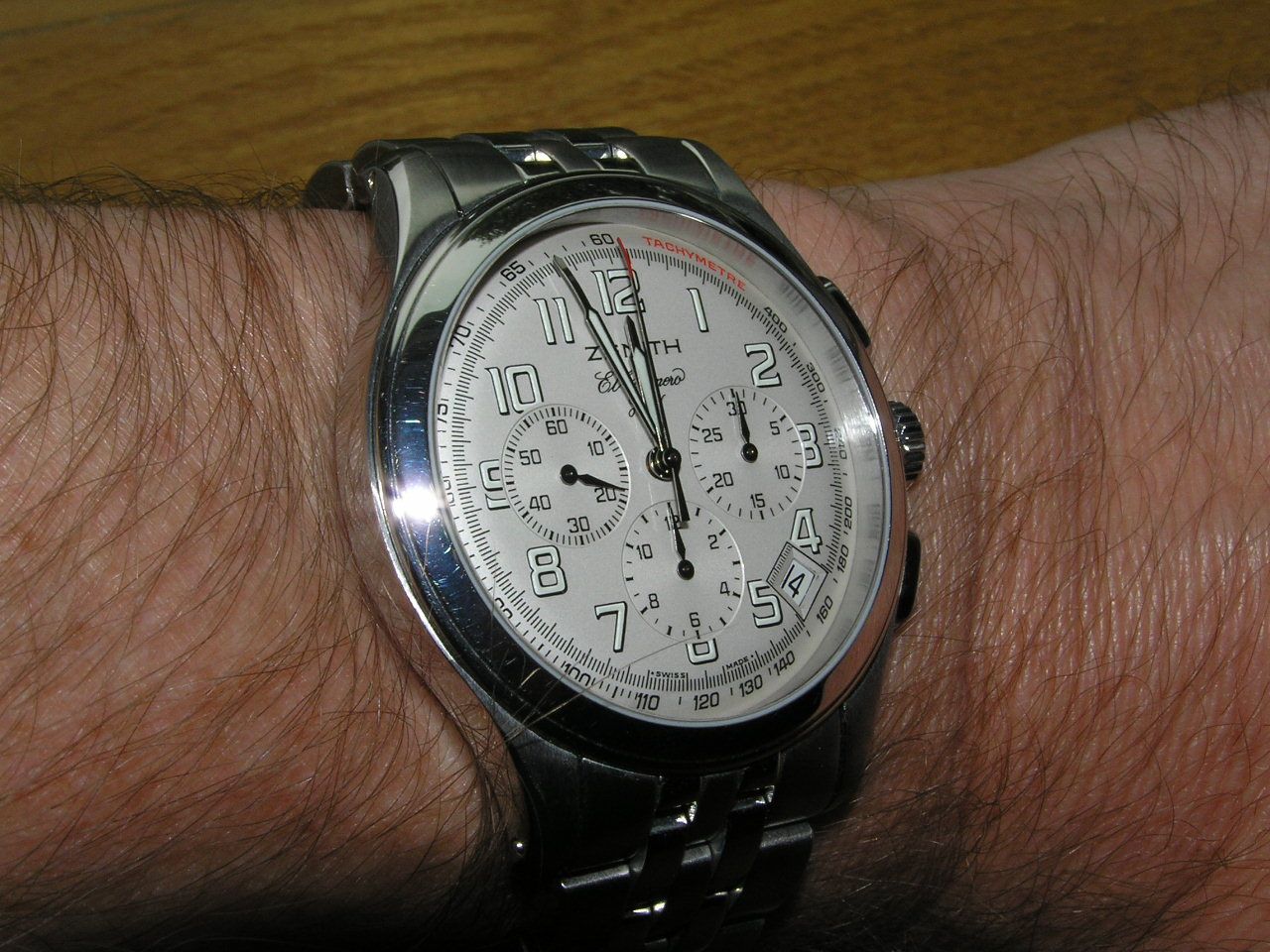
The proportions of the El Primero HW (‘HW’ for short from here on out) are nearly perfect.  Smaller than the current crop of oversized 42mm+ watches, the fully polished stainless steel HW case measures 39.8mm without the signed crown, about 42.7mm with crown.  The watch is surprisingly thin (as a hand wind there is no rotor to take up space) at 11.5mm, with 20mm lug spacing.  Classic and appropriately sized for the gentlemen amongst us.  The pushers are great rectangular shaped with rounded corners (ovalish).

The sapphire crystal is slightly domed and has anti-reflective coating on it.  The caseback is snap on (to me a disappointment at this pricepoint) with a display back to show off the snazzy Caliber 420Z movement.  The watch is factory rated at 100 meters of water resistance.

The Caliber 420Z is a 25-jewel hand winder chronograph.  Winding action is smooth and positive, the watch runs perfectly and since it does not hack, I haven’t timed it to the second, but it runs as to be expected from such a tried and true movement.  As stated previously, power reserve is lengthy at 56 hours, 50 minutes timed on my testing bench.  Chronograph functions start, stop and reset to zero properly and the sound the chrono makes when started or stopped has that classic hand-wind click or crunch to it.

The 420Z movement is suitably decorated with a few blued screws here and there but not highly decorated with Geneva stripes or perlage.  Nonetheless, it’s a joy to look at through the display back.  As a matter of curiosity, Zenith charges about $630 USD for a complete movement service on this watch.  The ‘Z’ suffix represents the latest iteration of this movement; apparently about ten years ago, Zenith replaced their original machine equipment that was being used to produce the parts for this movement and the resulting ‘Z’ suffix represents movements made with the new equipment.

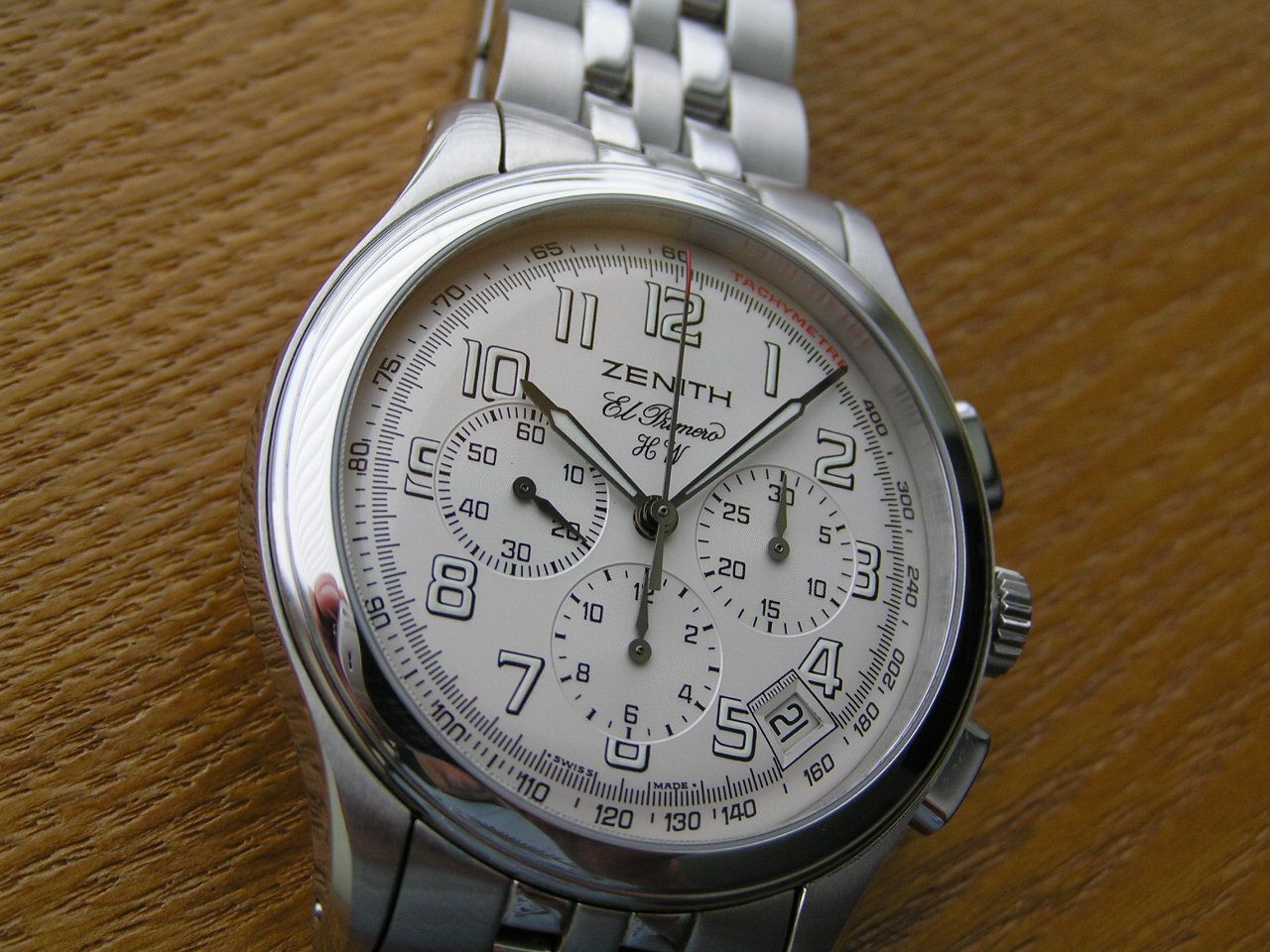
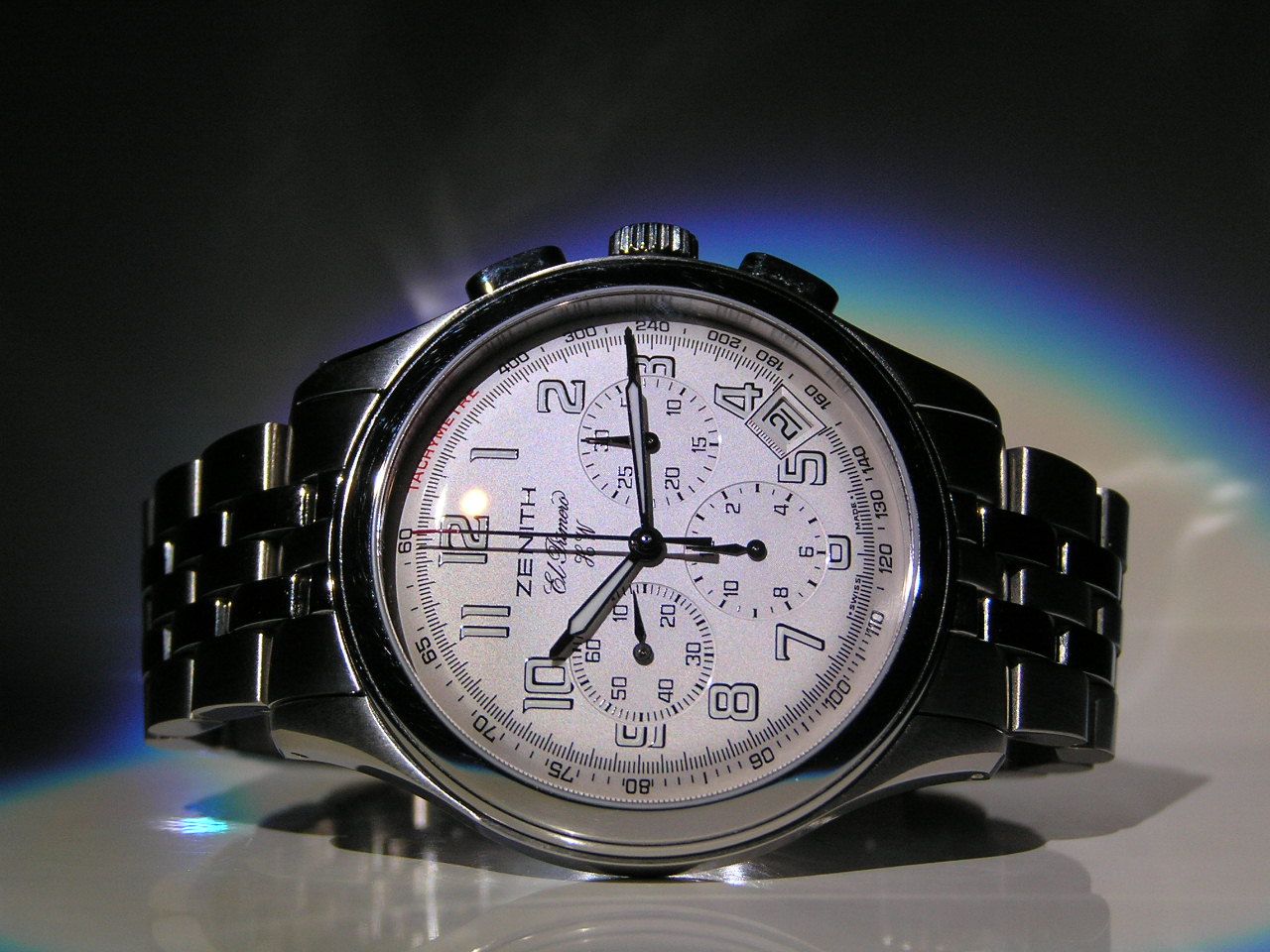
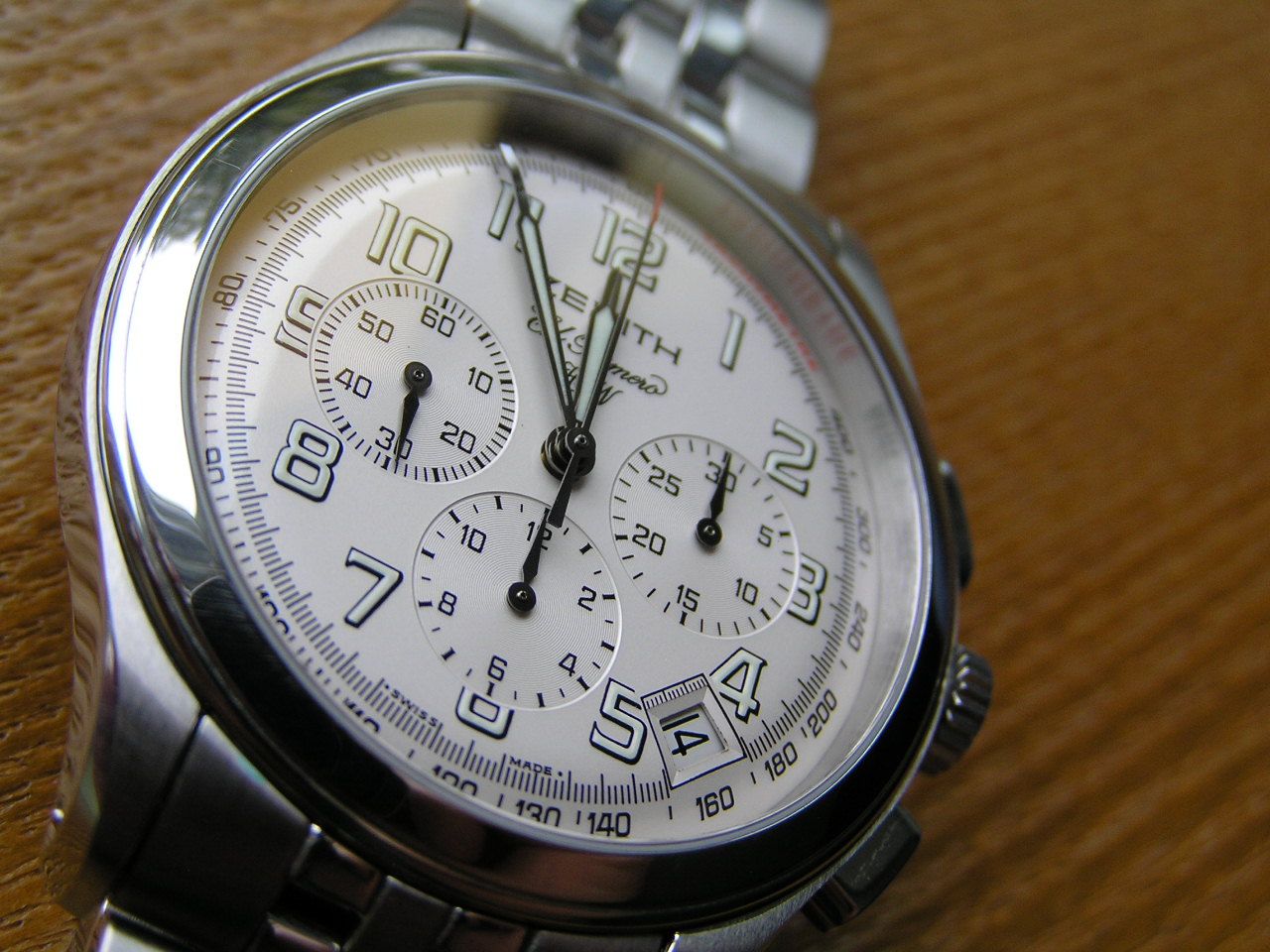
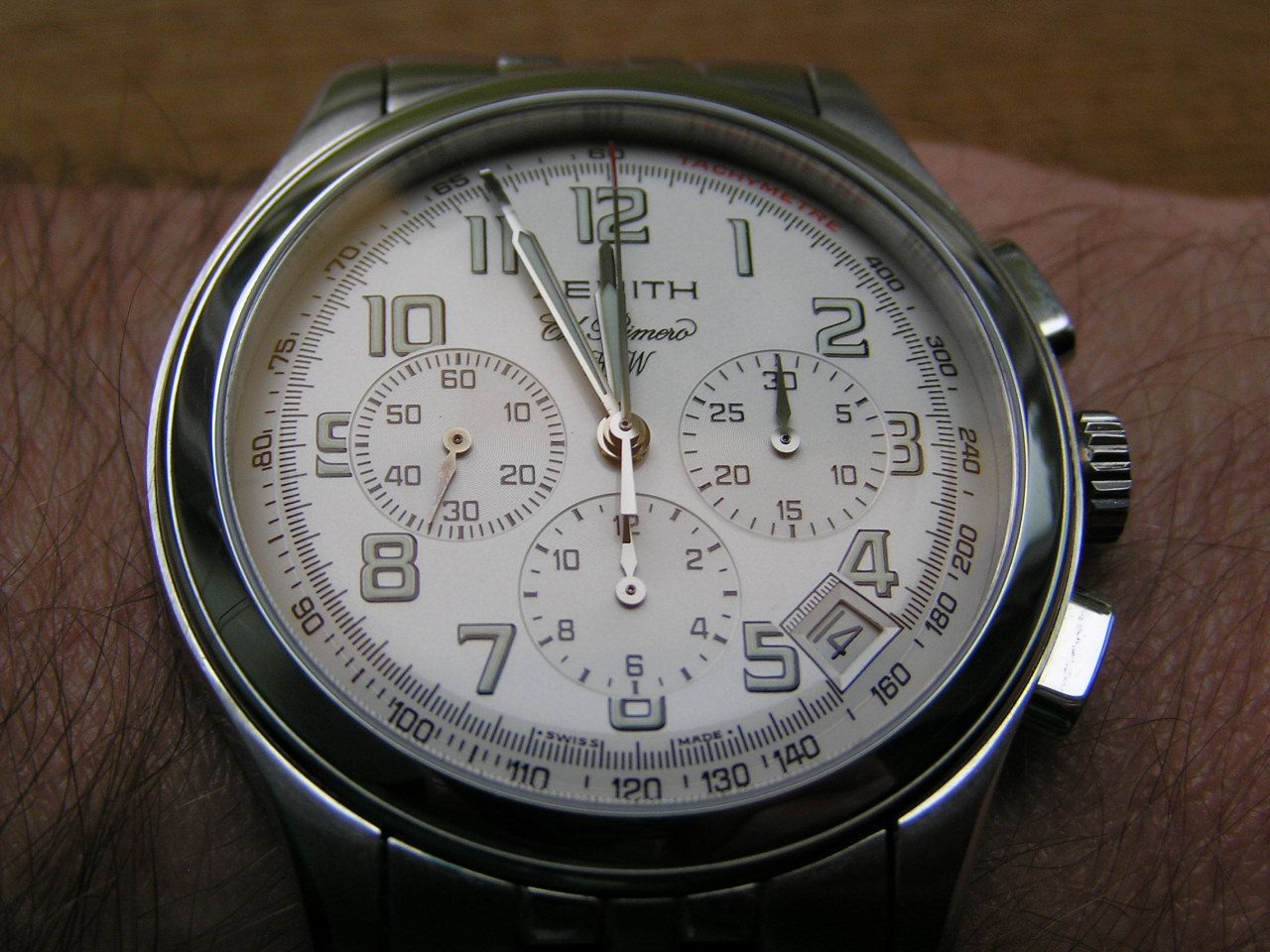
The HW came in black dial and cream dial selections.  Both versions are very handsome.  The dial is convex at the edges, with the tips of the hour hand and chrono second hand curved as well to match the convex dial edge.  The dial features vintage-style lumed arabics and simple lume-filled pointer style hands in silver (but that look black in many lighting situations).  Same for the hands on the chronograph subdials, they look black but are actually silver.  Lume quality is good.

The subdial at 9 is the watch seconds hand.  The subdial at 6 is the chronograph 12-hour totalizer and the subdial at 3 is the chronograph 30-minute totalizer.  The main center second hand is the chronograph’s second hand, which is silver with a very subtle red tip.  A tachymeter scale runs around the perimeter of the dial.  The shade of cream that my HW dial exhibits is very pleasing, not too creamy, but not white, either.  I think it adds to the vintage style look of this watch.

The quickset date is located at the 4:30 mark and here are two interesting facts about this function.  Look closely and you’ll see that Zenith continued the seconds markings from the dial on the inside edge of the date window.  Pretty slick.  Also, this quickset date is set by pulling the crown out to the second position instead of the first position as with most quickset mechanisms.  The time is set at the first position.

The stainless steel bracelet is polished and brushed, with a five-link arrangement reminiscent of a jubilee design.  The end links are solid, but for some reason, Zenith elected not to use standard spring bars to secure the bracelet to the case.  Instead, they drilled the lugs and use a push-pin design that results in the push pin not seating fully flush with the drilled lug holes.  This is cheap in my opinion and gets demerits from me.  The bracelet links are suitably thick, and almost seem a tad too thick for the svelte case dimensions and overall thickness of the watch itself.

The bracelet is continuous length with a pushbutton butterfly clasp that is signed, polished and machined, but still looks and feels somewhat cheap.  The bracelet measures 20mm at the lugs and tapers to 17mm at the clasp.  If there’s any place this watch disappoints, it would be the bracelet, it just doesn’t seem to measure up to the vaunted quality that Zenith is known for.

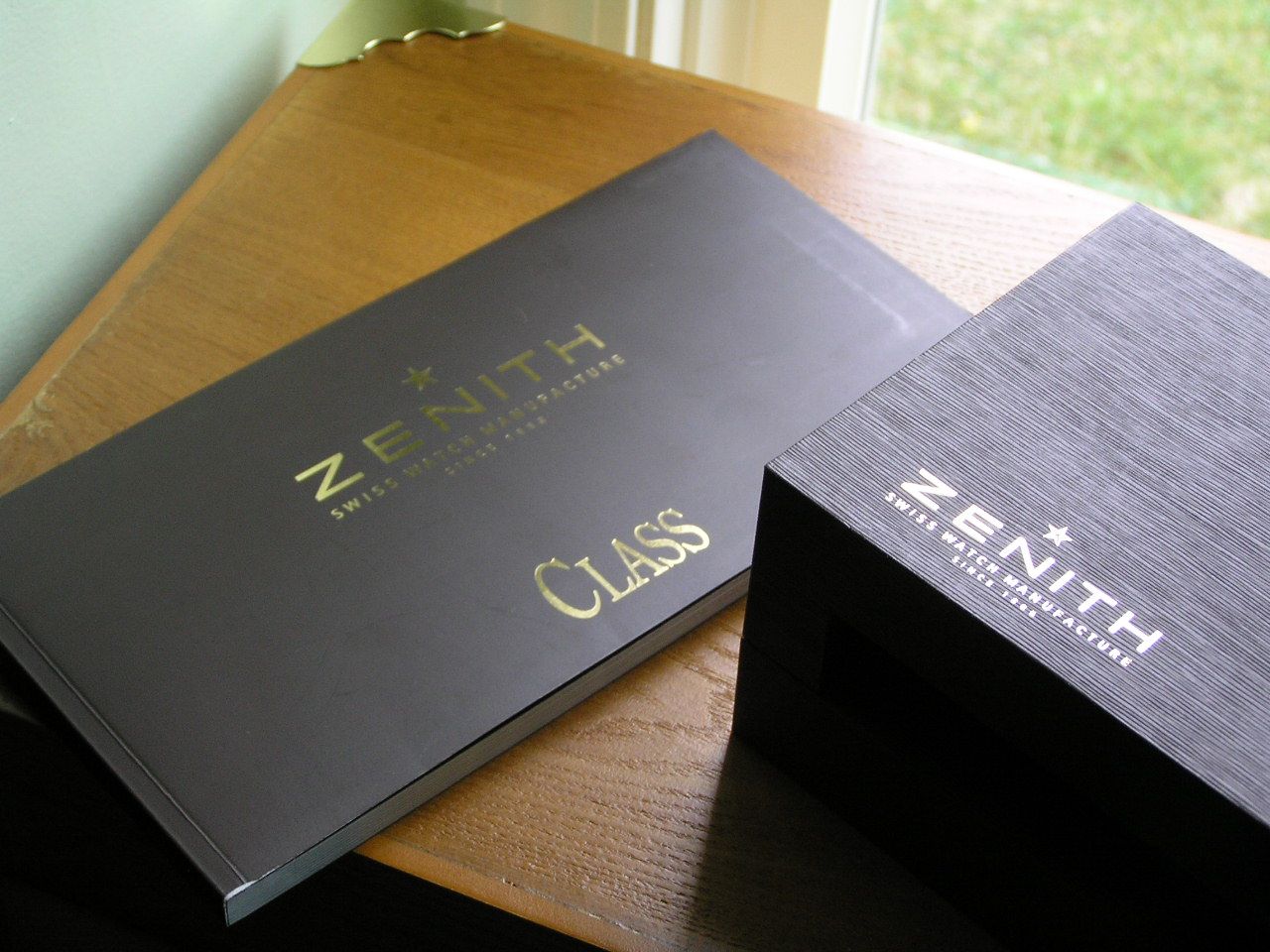
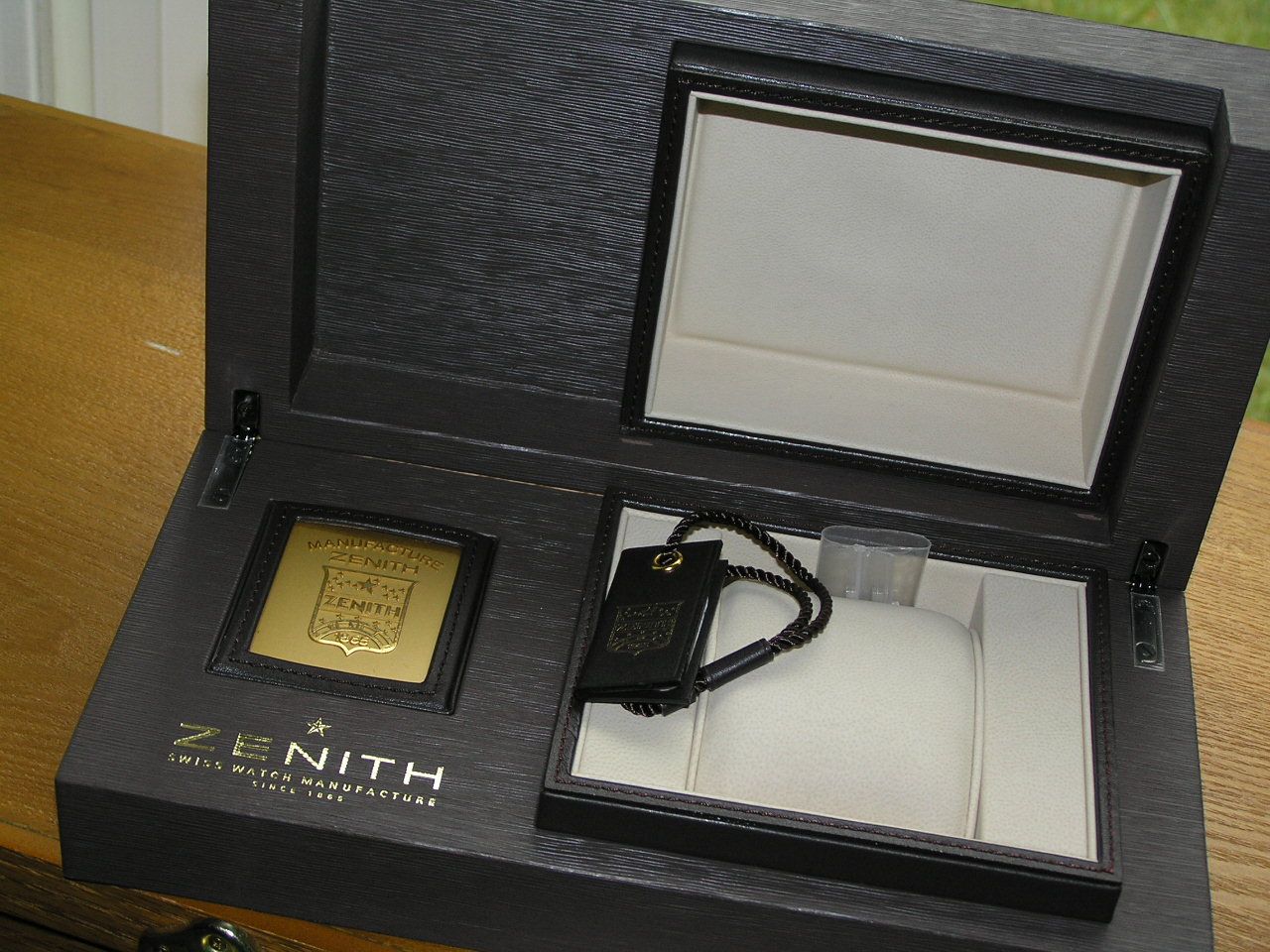
Presentation is very nice, with a two-piece offset outer box and a low-profile inner box with removable gold tone Zenith emblem.  The instruction manual resembles a brochure.

Overall, the El Primero HW is a watch you buy because of its movement, plain and simple.  The watch itself has great proportions and if you want a true in-house movement from a storied and well-respected Swiss watchmaker, this Zenith won’t disappoint.  Most HWs on the market are used, as this model was discontinued several years ago, although supplies of NOS (new old stock) pieces can be found if you look hard enough.  A worthy quest, as this watch is worth its value on its name alone.


Pros:  storied in-house El Primero movement, storied Zenith name, 36,000 vph frequency, long power reserve, appropriate dimensions

Cons:  non-hacking movement, bracelet seems cheap in some regards, push pins instead of spring bars to secure bracelet to case, snap on caseback

Verdict:  if you want to get a watch with a real in-house movement without breaking the bank that also has true Swiss lineage and cache, the Zenith El Primero HW is your pick.  Nothing frivolous here, which is exactly the point.


Thanks for reading and enjoy the pictures.

Excelsior!

-Marc